DbcultAccessing Vault...
5.9/10
Senior Film Conservator
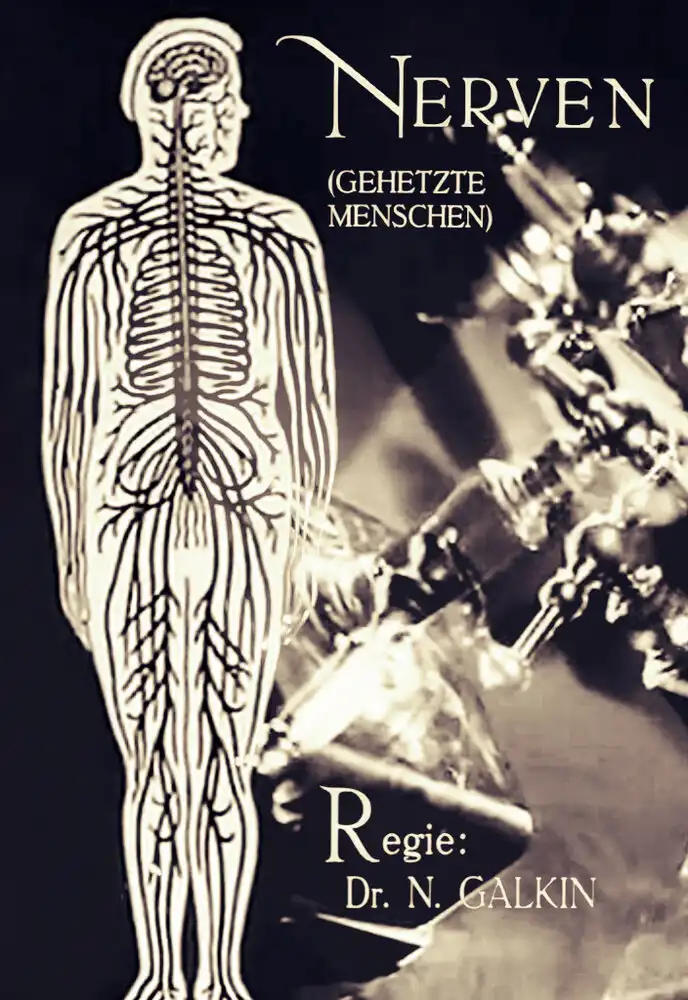
A definitive 5.9/10 rating for a film that redefined the boundaries of cult cinema. Bolnye nervy remains a cornerstone of transgressive art.
If you're someone who thrives on tracking down forgotten gems from the silent era, then Bolnye nervy might just be your kind of peculiar treasure. For everyone else, especially those who prefer dialogue and a plot that moves at, well, *any* pace, this one's probably going to feel like a long, quiet evening.
It's a film steeped in that early 20th-century melodrama, all grand gestures and furrowed brows. Sergei Minin, for instance, has this incredible way of conveying distress that involves his entire torso, not just his face. You can practically hear the dramatic organ music even without it.
The story, what you can piece together from the intertitles and the sweeping hand movements, centers around someone dealing with, you guessed it, 'sick nerves.' It’s a very *internal* kind of suffering, played out in stark, almost brutal close-ups.
There’s a scene, I think it’s with Yelena Yegorova, where she’s just staring out a window for what feels like a full minute. The silence stretches, and you find yourself wondering what she had for breakfast, or if the prop department ran out of things for her to do. ☕️ It's _so_ long that it almost becomes a meditation on waiting.
G. Slatanakh and Gerdta Slatanakh, they play a pair that feels perpetually on the verge of either a breakdown or a duel. Their scenes together have this crackling, almost uncomfortable tension. You never quite know if they’re going to embrace or just... *shove* each other.
The direction by L. Sukharebsky and Noi Galkin often favors these wide shots that seem to emphasize the vast emptiness around the characters. It makes their personal agonies feel even more isolated. Like, *the whole world is just watching them suffer from a distance*.
One shot really stuck with me: a teacup, just sitting there, steaming lightly. It’s tiny, yet the camera holds it. Why? Was it symbolic of a fragile mind? Or did someone just forget to yell 'cut'? That's the beauty and the frustration of these old films.
The pacing, oh boy. It drifts. Sometimes it’s a slow, deliberate waltz through someone’s mental state. Other times, it just… stops. You get these bursts of intense emotion, then a sudden calm where nothing much happens. It’s _definitely_ not for the TikTok generation.
There are moments when the film tries to be quite profound, especially with its use of shadows. A lot of shadows. But then you get a reaction shot that lingers so long on someone’s exaggerated gasp, it almost becomes funny. You can almost feel the movie trying to convince you this moment matters. 😂
It's a window into how people understood mental distress almost a century ago. The way characters clutch their heads, pace rooms frantically, or just stare blankly into space — it's all there, in full, glorious, *silent* display.
So, is it a masterpiece? Probably not in the conventional sense. But it's an experience. A slow, sometimes baffling, often intensely emotional experience that makes you appreciate how much film language has evolved. It’s a *vibe* more than a tight narrative.
You probably won't be recommending it to your casual movie-watching friends, but for those curious about early cinema's raw, unvarnished attempts at psychological drama, it's worth a look. Just bring some patience. And maybe a cup of tea. ☕
IMDb 7.2
1934
Community
Log in to comment.