DbcultAccessing Vault...
4.9/10
Senior Film Conservator
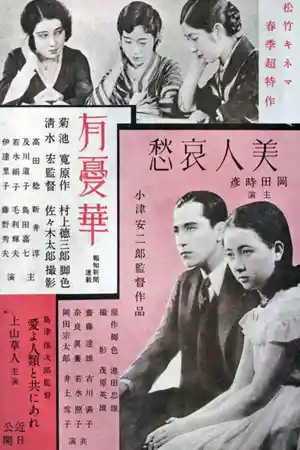
A definitive 4.9/10 rating for a film that redefined the boundaries of cult cinema. The Sorrow of the Beautiful Woman remains a cornerstone of transgressive art.
Alright, straight talk: if you're not usually one for silent films, especially Japanese ones from almost a hundred years ago, then The Sorrow of the Beautiful Woman might be a bit of a stretch for you. It really takes its time, and the lack of dialogue means you have to lean in a little more. But honestly, for anyone curious about early cinema, or especially the beginnings of Yasujirō Ozu's storied career (he co-wrote this one!), it's got a really peculiar, understated charm. It’s a slow burn, but it holds a strange, quiet fascination.
The whole thing is built around this one statue. It's supposed to be the ultimate beautiful woman, right? And the movie really works to convince you of its power, mostly through the actors' faces. The sculptor, played by Sôtarô Okada, looks genuinely consumed by his creation. You catch him just staring at it, almost having a silent argument with the marble. It’s pretty intense without being loud.
Then two other people, a younger man (Tokihiko Okada as Ryukichi) and a woman (Teruko Wakamizu as Yoshie), get completely fixated on this piece of art. Their obsession isn't just a simple admiration. It feels more like a quiet, almost unsettling possessiveness. The way they just *stand* there, looking at it, can feel endless, but it really sells the idea that this statue has a hold on them.
There's this moment where Ryukichi, the younger man, just keeps gently touching the statue's face. It’s a tiny gesture, but it’s so revealing. To him, it’s more than just art; it’s almost alive, something he can connect with physically. A bit creepy, maybe, but very human in its yearning. 🥰
And Yoshie, she looks at the statue with this mix of longing and, I think, a little bit of envy. Like, she wants to embody that perfect, idealized beauty herself. Of course, it’s not said, but her expressions, how her eyes trace every curve of the sculpture – you just *feel* what she's thinking. It’s all about those silent cues. 💔
Considering Ozu co-wrote this, you can definitely spot glimmers of his later style, even in these early days. That quiet observation of everyday human behavior, the way the camera just patiently *waits*. It lingers on faces, on small actions. It's not showy at all. It’s just… there, letting things unfold.
The pacing, for sure, is a challenge for modern eyes. There are long stretches where not much 'happens'. Just characters sitting, deep in thought, looking at things. But it forces you to slow down, too. To really *look* at what’s being conveyed through their expressions, through the subtle shifts in their posture. Which, honestly, is kinda the whole point of watching silent films, isn’t it?
The “sorrow” in the title? It kinda sneaks up on you. It's never shouted. It's buried in the longing glances, the unspoken desires these characters project onto this inanimate object. The statue becomes like a mirror, reflecting their own internal battles and unfulfilled hopes. It's a pretty smart way to do it.
Sometimes the acting feels a little... *big*. You know, exaggerated gestures to convey emotion. But that's just how silent film was. They had to really sell it. Teruko Wakamizu, as Yoshie, does a particularly good job with her facial expressions. You never really question what she’s feeling, even in pure silence.
There’s a quick shot where the sculptor just collapses, totally spent from his work. It’s brief, but it really drives home the immense toll creating something like that can take. Or maybe it's the weight of letting it go, of having it take on a life beyond his own intentions. 🤔
This isn't a film that will leave you pumped up or even particularly cheerful. It's much more of a mood piece. A quiet, melancholic reflection on art and human connection. And for that, it absolutely nails it. If you’re into exploring early cinema, or seeing the very beginnings of a master like Ozu, then this is definitely one worth seeking out. It’s a fascinating, if a bit slow, window into a different time and a different kind of storytelling.
IMDb 4.9
1916
Community
Log in to comment.