DbcultAccessing Vault...
8.7/10
Senior Film Conservator
A definitive 8.7/10 rating for a film that redefined the boundaries of cult cinema. I Believe remains a cornerstone of transgressive art.
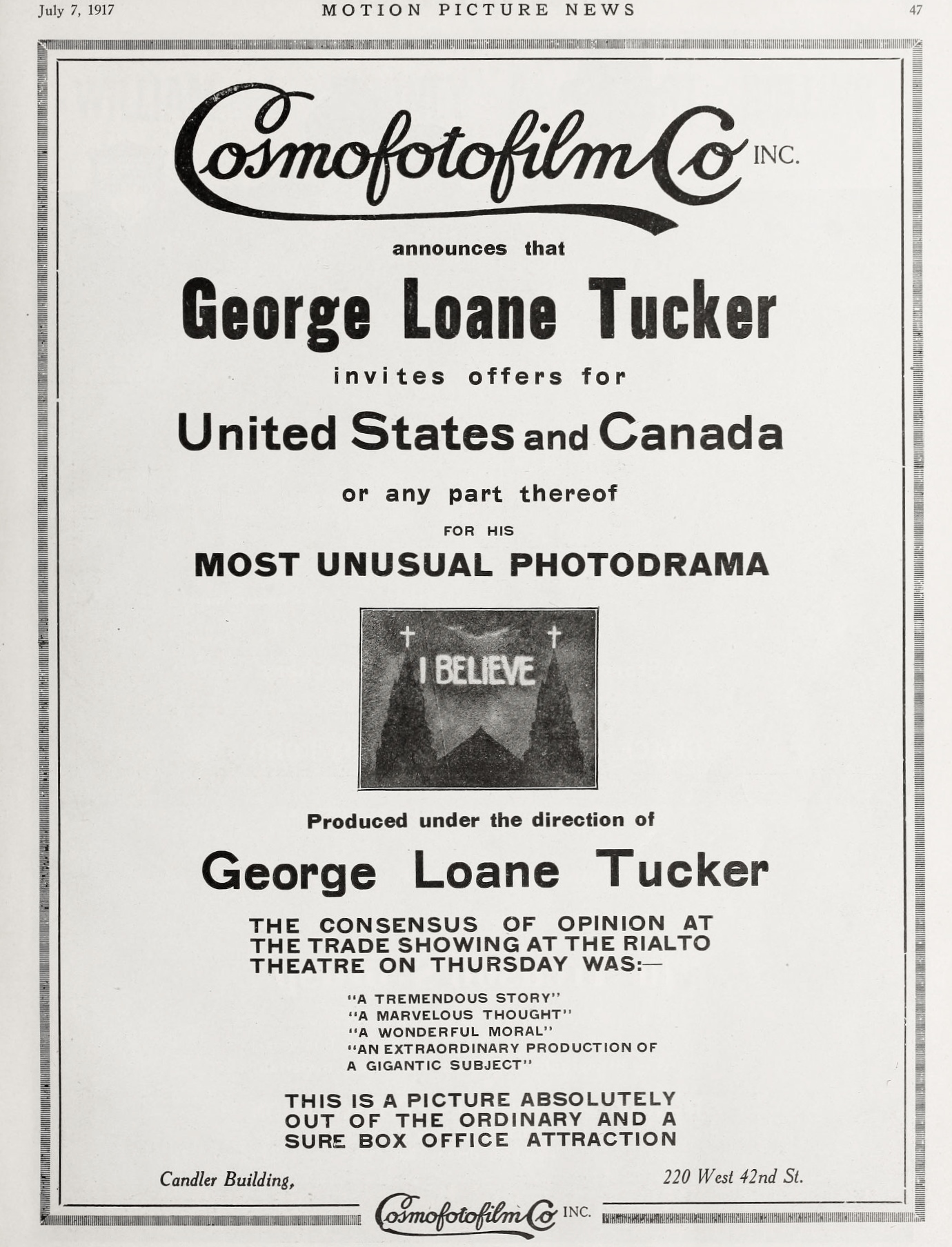
In the vast, often contemplative tapestry of early cinema, certain films emerge not just as entertainment, but as profound philosophical inquiries, daring to grapple with the most fundamental questions of human existence. Kenelm Foss and George Loane Tucker’s I Believe stands as a remarkable testament to this ambition, a silent-era masterpiece that transcends its temporal constraints to offer a timeless meditation on faith, life, and the very essence of the soul. Released at a time when cinema was still finding its voice, this film dared to tackle a narrative so audacious and deeply spiritual that it continues to resonate with a haunting power.
The premise alone is enough to pique the curiosity of any discerning viewer: a divinity student, brought back from the precipice of death, awakens to a world where he is physically present but spiritually vacant. This isn't merely a tale of resurrection; it's a chilling exploration of what it means to be alive without that intangible spark, that divine essence we often call the soul. The film posits a reality where the absence of this spiritual core renders a man a philosophical phantom, a walking paradox that challenges the very foundations of theological and scientific understanding. It’s a concept that immediately sets I Believe apart from its contemporaries, positioning it as an intellectual and spiritual endeavor rather than mere dramatic spectacle.
The central figure, portrayed with an unnerving subtlety that defines silent film acting, becomes a canvas for this existential crisis. Frank Stanmore, as the revived divinity student, delivers a performance that speaks volumes without uttering a single word. His eyes, often vacant yet searching, convey the profound disorientation of a man grappling with an inexplicable internal emptiness. He moves through the world, interacts with others, yet there’s a discernible distance, a lack of true connection that hints at the spiritual chasm within him. This isn't madness, nor is it mere amnesia; it's a more fundamental severance, a theological amputation that leaves him intellectually capable but emotionally and spiritually inert.
The genius of the film lies in its ability to externalize this internal void. How do you portray the absence of a soul? Foss and Tucker, along with their stellar cast, achieve this through meticulous direction and nuanced acting. Kitty Cavendish, whose presence often brings a crucial emotional anchor to the narrative, likely plays a pivotal role in observing and reacting to this spiritual desolation, her anguish and confusion serving as a mirror to the audience's own questions. The supporting cast, including Barbara Everest and Bertram Burleigh, would have been instrumental in building the community around this man, their reactions ranging from fear and pity to steadfast hope.
This exploration of a man without a soul invites fascinating comparisons with other films that delve into the nature of identity and existential transformation. While perhaps not direct thematic parallels, one might consider the character transformations in films like The Impostor, where a character assumes a new persona, or even the moral quandaries faced in Sonad skuld, where characters grapple with profound guilt and spiritual reckoning. In I Believe, the transformation is not one of choice or consequence, but of a fundamental, almost metaphysical alteration of being.
The narrative arc of I Believe hinges on a daring proposition: that the human soul, once lost, can be reclaimed through divine intervention, specifically through the potent, collective force of prayer. This isn't a mere plot device; it's the very theological engine of the film, elevating it from a simple drama to a spiritual parable. The film meticulously builds towards this climax, depicting the despair and desperation of those who care for the soulless man.
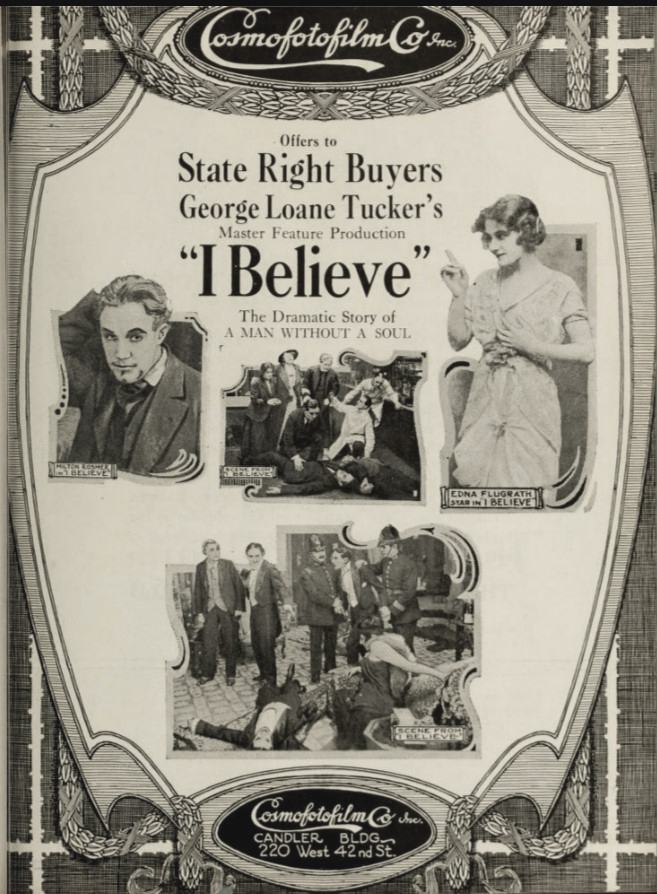
The scenes depicting communal prayer are undoubtedly among the most powerful. In the silent era, conveying such abstract spiritual fervor required exceptional visual storytelling. One can imagine the close-ups on faces etched with earnest hope, the collective bowing of heads, the subtle yet profound shifts in lighting to suggest a divine presence. It’s a testament to the directorial prowess of Foss and Tucker that they could translate such an internal, spiritual phenomenon into a compelling visual narrative. The performances of actors like Edna Flugrath, Charles Rock, and Milton Rosmer, in their roles as supplicants or concerned observers, would have been critical in conveying the depth of this communal belief.
This theme of spiritual redemption through collective effort finds echoes, albeit in different contexts, in other cinematic narratives. Films like Souls in Bondage, while perhaps more focused on societal and moral chains, nonetheless explore characters striving for liberation, often through shared struggle or a collective awakening. I Believe, however, pushes this concept into the purely spiritual realm, suggesting that faith, when truly shared and earnestly expressed, possesses a transformative power that can mend even the most profound spiritual wounds.
Directing a film like I Believe in the silent era presented unique challenges. How do you convey the nuances of a theological debate, the internal struggle of a soulless man, or the overwhelming power of spiritual grace without spoken dialogue? Kenelm Foss and George Loane Tucker rise to this challenge with remarkable ingenuity. Their direction relies heavily on visual symbolism, expressive performances, and a carefully crafted mise-en-scène. The use of light and shadow, prevalent in many early films, would have been particularly effective here, perhaps depicting the soulless man often in stark, isolated lighting, contrasting with the warmth and communal glow of the prayer scenes.
The cinematography, though limited by the technology of the time, would have been crucial in establishing mood and conveying abstract ideas. Close-ups on the eyes of Kitty Cavendish or Frank Stanmore would have been paramount in communicating unspoken emotions – despair, confusion, hope, and eventually, the return of spiritual vitality. The pacing, too, would have been deliberate, allowing the audience to absorb the profound implications of each scene, building tension and anticipation for the miraculous resolution.
The performances are a cornerstone of I Believe's success. Silent film acting is a distinct art form, demanding exaggerated yet truthful expressions, precise gestures, and an ability to convey complex emotions through physicality alone. Kitty Cavendish, Frank Stanmore, Barbara Everest, Bertram Burleigh, Kenelm Foss (who was also an actor), Edward O'Neill, Edna Flugrath, Charles Rock, Milton Rosmer, Hubert Willis, and Lewis Gilbert collectively contribute to a tapestry of human emotion, from profound grief to unwavering faith. Each actor, through their subtle shifts in posture and facial expressions, helps to articulate the film's ambitious spiritual narrative.
Beyond its compelling narrative, I Believe functions as a deep dive into theological and philosophical questions that continue to puzzle humanity. What constitutes a soul? Is it merely a religious concept, or does it represent an undeniable aspect of human consciousness and vitality? The film suggests a tangible, albeit invisible, reality to the soul, making its absence and subsequent return a dramatic event rather than a symbolic one. This literal interpretation of spiritual concepts is bold for its time and forces viewers to confront their own beliefs about the unseen world.
The narrative also touches upon the age-old conflict between scientific understanding and religious faith. While the film doesn't explicitly pit a scientist against a cleric, the very premise of a soulless man brought back to life, and then having his soul restored through prayer, implicitly challenges a purely materialist worldview. It champions the power of the divine and the efficacy of spiritual practice in a world increasingly influenced by scientific rationalism. This makes I Believe a fascinating document of its era, reflecting societal anxieties and hopes concerning the limits of human knowledge and the enduring power of faith.
In this regard, one might draw a parallel to the more fantastical yet equally philosophical explorations of human nature and identity found in serials like Fantômas: The False Magistrate or Judex, where characters often grapple with moral ambiguity and the very definitions of good and evil within a heightened reality. While I Believe roots itself in spiritual drama rather than crime, the shared thread is a profound questioning of human essence and the forces that shape it.
I Believe, though a product of its time, possesses a remarkable timelessness. Its central themes—the nature of life, death, the soul, and the power of faith—are universal and continue to be debated and explored across cultures and generations. The film's audacious premise and its earnest exploration of spiritual concepts ensure its place as a significant, if perhaps lesser-known, work of early cinema. It reminds us that cinema, even in its nascent stages, was capable of tackling profound, complex ideas with grace and conviction.
For modern audiences, watching I Believe offers more than just a glimpse into cinematic history; it provides an opportunity to engage with questions that remain as relevant today as they were a century ago. It encourages introspection, challenging viewers to consider their own beliefs about the spiritual dimensions of existence. The film's ultimate message—that collective prayer and unwavering faith can indeed bridge the gap between the material and the divine—is delivered with an sincerity that transcends the limitations of its silent format.
In an age where special effects often overshadow thematic depth, I Believe serves as a powerful reminder of cinema's ability to provoke thought and stir the soul through compelling storytelling, nuanced performances, and a profound respect for its subject matter. It stands as a testament to the enduring power of human belief and the miraculous potential that lies within the unseen architecture of the spirit. It’s a film that asks us not just to watch, but to ponder, to question, and ultimately, to believe.
IMDb 1.6
1935
Community
Log in to comment.