DbcultAccessing Vault...
Cult Review
Senior Film Conservator
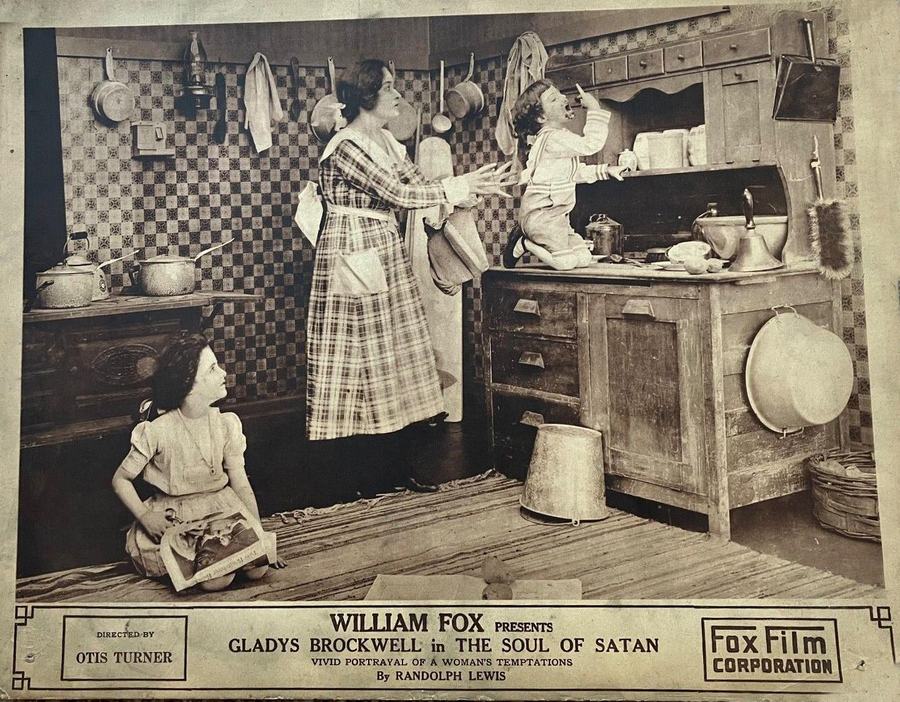
Step into the dim, flickering light of early cinema, where shadows dance with moral ambiguity and human frailty takes center stage. In the vast tapestry of silent films, some narratives resonate with a particularly potent, almost haunting, quality. Randolph Lewis's "The Soul of Satan" is precisely one such cinematic artifact, a potent melodrama that delves into the treacherous currents of ambition, exploitation, and the devastating cost of a soul's compromise. More than just a tale of vice, it's a stark psychological portrait, painted with the broad, expressive strokes characteristic of its era, yet possessing a timeless pertinence that continues to provoke contemplation. It’s a journey into the heart of a woman’s entrapment, where the glitter of a high-stakes world slowly corrodes the essence of her being, leaving behind a profound sense of loss and disillusionment. This film doesn't merely tell a story; it unravels a tragedy, piece by agonizing piece, inviting viewers to witness the slow, inexorable descent into a gilded cage.
At its core, "The Soul of Satan" introduces us to Miriam Lee, portrayed with poignant vulnerability by the inimitable Gladys Brockwell. Miriam begins her narrative arc as a diligent, unassuming young woman carving out a meager existence in the bustling metropolis of New York. Her life is one of honest toil, a quiet rhythm of daily struggle and modest aspirations. There's an implied purity, an unblemished quality to her initial circumstances that sets up a stark contrast for the moral maelstrom that is soon to engulf her. She represents the everywoman of her time, striving for stability and perhaps a touch of comfort in a world that often offered little. Her simplicity makes her both relatable and tragically susceptible to the predatory forces lurking just beneath the city's veneer of civility. This foundation of innocence is crucial, for it amplifies the severity of her subsequent fall, underscoring the profound transformation she undergoes. The film cleverly uses her initial state as a benchmark against which to measure the extent of her eventual degradation, making her journey all the more heart-wrenching.
Miriam’s carefully constructed world shatters with the magnetic entrance of Joe Valdez, brought to life with a captivating blend of charm and menace by William Burress. Valdez is not merely a man; he is a force of nature, a handsome and utterly ruthless gambler whose charisma acts as a deceptive veil for his predatory instincts. Their meeting is less a serendipitous encounter and more a fateful collision, a spark igniting a dangerous, irreversible chain of events. Valdez, with his alluring promises and intoxicating lifestyle, represents everything Miriam’s humble existence lacks – excitement, luxury, and a thrilling escape from the mundane. The romance, swift and intoxicating, culminates in marriage, an event that, in a more conventional narrative, would signify a happy beginning. Here, however, it serves as the sinister prelude to Miriam’s calculated exploitation. It’s a union forged not in genuine affection, but in Valdez’s cold, calculating assessment of Miriam’s potential utility, a chilling premonition of the dark path she is about to tread. This pivotal moment underscores the film's exploration of trust betrayed and innocence corrupted, hinting at the tragic echoes of films like The Unfortunate Marriage, where marital bonds become chains rather than anchors.
Following their marriage, Valdez wastes no time in leveraging his new wife to fuel his illicit ambitions. He establishes an opulent, high-stakes gambling house, a den of lavish deceit and ruin, and positions Miriam as its dazzling centerpiece. She is rechristened "the queen of the night," a title that, while outwardly glamorous, is heavy with the weight of her subjugation. Her role is not that of a beloved spouse or a partner in enterprise, but rather a meticulously crafted lure, an exquisite piece of bait designed to attract the city's wealthiest and most susceptible clientele. Her captivating presence, her beauty, her very essence are commodified, transformed into a strategic asset in Valdez's ruthless pursuit of fortune. She is, in essence, a prisoner in a gilded cage, surrounded by luxury but devoid of freedom or genuine affection. The shimmering gowns, the sparkling jewels, the adulation from the patrons – all serve to highlight her profound isolation and the moral compromise she is forced to embody. This transformation is central to the film's critique of materialism and the insidious ways in which individuals can be stripped of their dignity and autonomy for the sake of profit.
Gladys Brockwell’s portrayal of Miriam Lee is nothing short of masterful, particularly within the expressive constraints of silent cinema. Brockwell navigates Miriam’s arc with a nuanced performance that speaks volumes without a single spoken word. We witness her initial vivacity slowly dim, replaced by a haunting melancholy that flickers in her eyes and settles into the subtle slump of her shoulders. Her face, a canvas for silent emotion, conveys the growing unease, the internal struggle against the role forced upon her, and the profound despair that eventually consumes her. Through her gestures, her posture, and the subtle shifts in her gaze, Brockwell communicates Miriam’s loss of agency, her transformation from a vibrant individual into a beautiful, yet tragic, object. The film allows us to feel Miriam’s silent screams, her longing for a life unburdened by deceit, and the crushing weight of her moral predicament. Her plight resonates deeply, echoing the struggles of other female protagonists of the era who found themselves in dire circumstances, such as those depicted in The Strength of the Weak, where women often battled against overwhelming societal and personal challenges, or the disillusionment captured in Her Shattered Idol, where ideals crumble under harsh realities.
Conversely, William Burress’s Joe Valdez is a chilling embodiment of the film’s titular 'soul of Satan.' Burress crafts a character who is outwardly captivating, possessing a suave demeanor that masks a cold, calculating heart. Valdez is not merely greedy; he is a master manipulator, devoid of empathy, who views human connections as mere tools for personal gain. His ruthlessness is palpable, communicated through a steely gaze and an almost predatory confidence. He represents the destructive allure of unchecked ambition, a figure whose moral compass is utterly broken, pointing only towards self-enrichment. The film contrasts Miriam’s internal suffering with Valdez’s seemingly unburdened ascent, highlighting the stark dichotomy between the exploited and the exploiter. It’s a portrayal that makes Valdez a truly memorable antagonist, a figure who embodies the film’s central thematic concern: the corrupting power of vice and the ease with which human dignity can be sacrificed on the altar of material desire. His character serves as a stark reminder that true evil often wears a charming disguise.
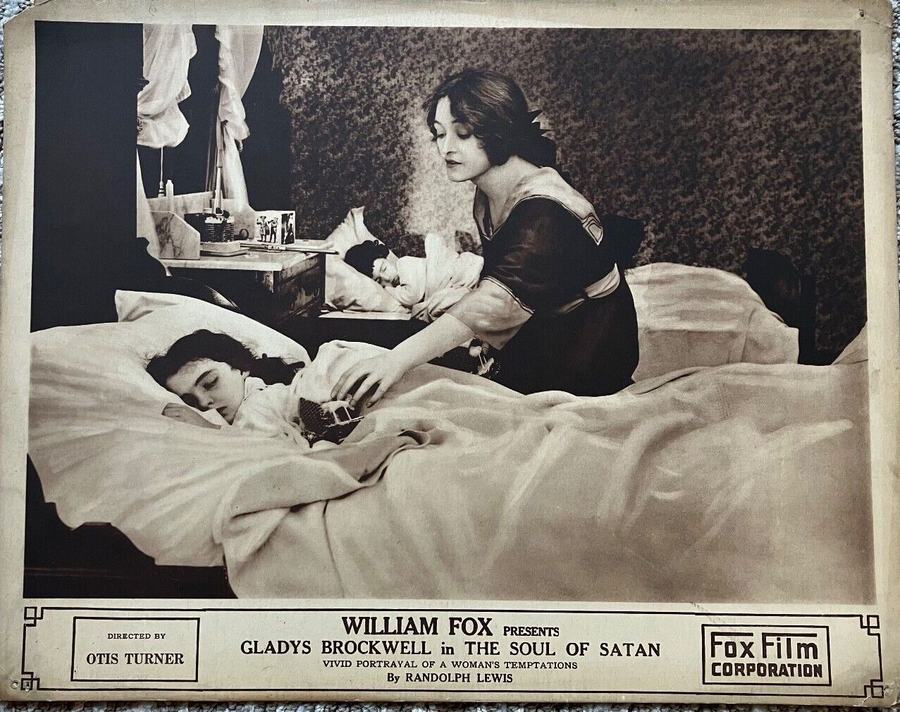
Thematically, "The Soul of Satan" is a rich tapestry exploring the corrupting influence of opulence and the insidious nature of moral compromise. The film meticulously illustrates how the glittering facade of wealth can conceal a profound spiritual decay. The lavish setting of the gambling house, with its constant flow of money and high-stakes drama, becomes a crucible where Miriam’s spirit is slowly incinerated. It’s a world where appearances are paramount, and genuine human connection is a liability. The film questions the true cost of luxury, suggesting that sometimes, the price paid is nothing less than one’s soul. This exploration of the dark side of ambition and the allure of forbidden gains is a powerful commentary on societal values, particularly relevant in an era grappling with rapid industrialization and the rise of new forms of wealth. The narrative dissects the psychological toll of living a lie, the constant tension between Miriam’s inherent goodness and the morally dubious role she is compelled to play. The film’s genius lies in its ability to show, rather than tell, the gradual erosion of her inner world, making her struggle profoundly empathetic.
Furthermore, the film delves into the prevalent themes of exploitation and the struggle for female agency. Miriam's transformation into "the queen of the night" is a blatant act of objectification, reducing her to a beautiful commodity in a man's world. Her allure is exploited, her emotional well-being disregarded, all for the financial benefit of her husband. This narrative thread resonates powerfully with the societal constraints faced by women during the early 20th century, where their roles were often circumscribed and their autonomy frequently compromised. The film subtly critiques the patriarchal structures that allowed such exploitation to flourish, showcasing Miriam’s powerlessness despite her outward glamour. Her predicament is a poignant illustration of how women, even those in seemingly privileged positions, could be trapped by circumstances beyond their control. This thematic exploration offers a compelling parallel to films like The Woman in the Case, where female characters often found themselves entangled in complex legal or moral dilemmas, their fates largely dictated by the actions of men.
Randolph Lewis's screenplay, while designed for the silent screen, demonstrates a keen understanding of narrative progression and character development. The story unfolds with a deliberate pace, allowing the audience to absorb the emotional weight of each scene. The use of intertitles, far from being mere expository text, often serves to heighten the drama, providing insights into the characters' inner thoughts or advancing the plot with impactful declarations. The direction effectively uses visual storytelling, employing evocative imagery and expressive performances to convey complex emotions. The cinematography, though perhaps rudimentary by modern standards, focuses on compelling compositions that draw the viewer into Miriam’s plight, often isolating her within the opulent yet suffocating settings. The interplay of light and shadow, a hallmark of early cinema, is used to great effect, mirroring the moral chiaroscuro of the narrative. The film's visual language is as articulate as its dramatic beats, ensuring that even without dialogue, the audience grasps the profound tragedy unfolding before them.
In its historical context, "The Soul of Satan" stands as a compelling example of silent cinema’s capacity for social commentary. The early 20th century was a period of immense social upheaval, and films often served as a mirror reflecting societal anxieties about morality, wealth, and changing gender roles. This film, with its unflinching look at the underbelly of high society and the corrupting influence of the gambling world, offered audiences a cautionary tale. It tapped into a collective fascination with vice and virtue, presenting a moral fable that, despite its melodramatic flourishes, felt deeply resonant. The film's examination of the grip of jealousy, perhaps hinted at in Valdez's possessiveness or the rivalries within the gambling world, also connects it to other contemporary dramas like The Grip of Jealousy, where destructive emotions frequently drove the narrative. It wasn't just entertainment; it was a reflection on the human condition, packaged within an accessible and emotionally charged narrative.
The supporting cast, including Bertram Grassby and Charles Clary, though perhaps in less prominent roles than Brockwell and Burress, contribute significantly to the film’s atmosphere. Grassby, often playing figures of authority or moral counterpoints, would likely have added a layer of gravitas or judgment to the proceedings, while Clary, in a more typical henchman or loyal associate role, would have underscored Valdez's dangerous network. Their presence helps to flesh out the world of the gambling den, making it feel more tangible and menacing, emphasizing the pervasive nature of Valdez's influence and the sheer difficulty of Miriam's escape. These characters, though secondary, are vital cogs in the narrative machine, each contributing to the oppressive environment that slowly suffocates Miriam's spirit, reinforcing the sense of an inescapable web of deceit and danger.
Ultimately, "The Soul of Satan" endures not merely as a relic of its time, but as a timeless exploration of human nature's darker impulses. Its themes of temptation, moral decay, exploitation, and the profound cost of sacrificing one's integrity remain as pertinent today as they were over a century ago. The film serves as a powerful reminder of silent cinema's ability to craft narratives of profound emotional depth and social relevance, proving that the absence of spoken dialogue does not diminish, but often enhances, the universality of its message. It prompts viewers to consider the subtle ways in which one can be ensnared by circumstance and the enduring struggle to reclaim one's true self amidst a world of artifice and avarice. It is a compelling work that deserves to be revisited, appreciated for its artistry, and contemplated for its enduring insights into the human condition.

IMDb 6.5
1936
Community
Log in to comment.