DbcultAccessing Vault...
Cult Review
Senior Film Conservator
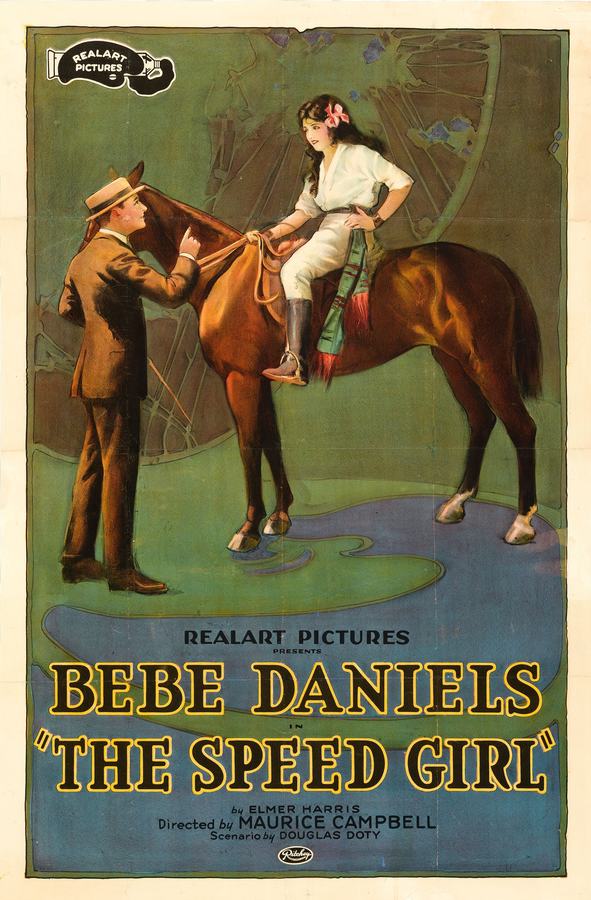
The Speed Girl (1929), a briskly paced silent film directed by Douglas Z. Doty and Elmer Harris, is a relic of the transitional era when cinema began to embrace the visual language of modernity—speed, spectacle, and the cult of the star. Centering on Betty Lee (Truly Shattuck), a young woman who turns her life into a series of stunts with cars, planes, and horses, the film is a curious blend of romantic melodrama and proto-cinematic action. It’s a story where the machinery of Hollywood itself—the studio, the press, the publicity machine—plays as pivotal a role as the characters, reflecting the industry’s self-awareness during its rise as a cultural force.
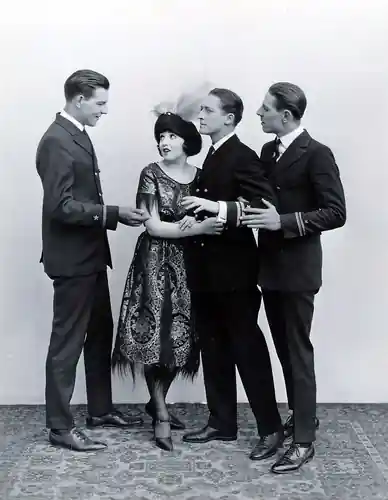
Betty’s character is a fascinating inversion of traditional gender roles in silent film. Rather than being a passive damsel in distress, she is a trailblazer, using her physical prowess to dominate spaces typically reserved for men. Her stunts—swinging on horseback, leaping from moving vehicles, or weaving through traffic—evoke the same reckless energy as contemporaneous race films like Down to Earth (1929), yet with a distinctly feminine flair. The film’s plot hinges on a love triangle that’s less about romantic depth than about the collision of ambition and ego. Ensign Tom Manley (William Courtright) represents the idealized everyman, while Carl D’Arcy (Frank Elliott) embodies the corrupt capitalist, a classic archetype in pre-Code Hollywood narratives.
The film’s first act is a masterclass in visual storytelling. Betty’s horseback ride, where she cunningly allows Tom to believe he’s rescued her from a runaway, is staged with a deceptive simplicity that belies its narrative complexity. The camera lingers on her face, capturing the flicker of amusement as she lets the illusion play out. This scene, reminiscent of the physical comedy in Cinderella Cinders, uses silence to amplify the irony—the audience knows the truth, Tom does not, and Betty thrives in this gap. The interplay between her and Carl, the smitten suitor, is charged with a tension that foreshadows the film’s central conflict: the battle between authenticity and artifice.
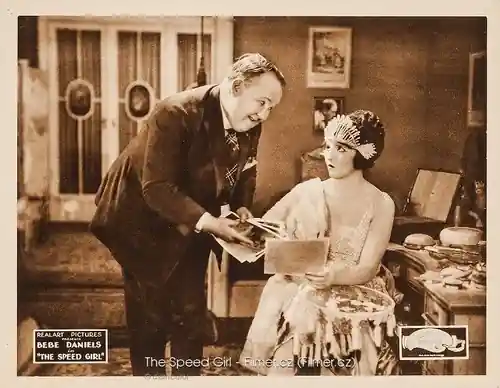
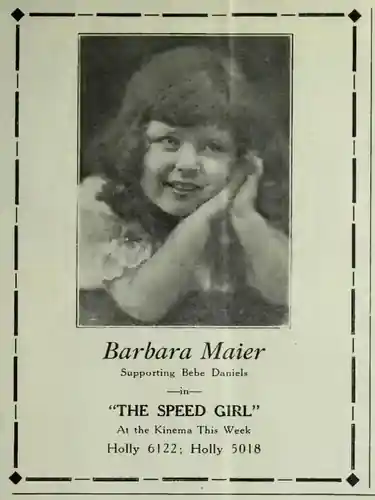
Carl’s machinations—arresting Betty for speeding and attempting to frame Hilda (Barbara Maier), a chambermaid, for a crime he himself commits—unravel like a poorly sewn costume. His schemes are transparent, yet they serve a narrative purpose: to highlight Betty’s resourcefulness. Her jailbreak sequence, orchestrated with the help of her press agent Soapy Taylor (Norris Johnson), is a marvel of silent film ingenuity. The use of a jail wedding as a publicity stunt is both a critique and a celebration of Hollywood’s obsession with image. This meta-commentary on the studio system is subtle but acute, echoing the themes of Old Brandis’ Eyes, where truth and perception are in constant dissonance.
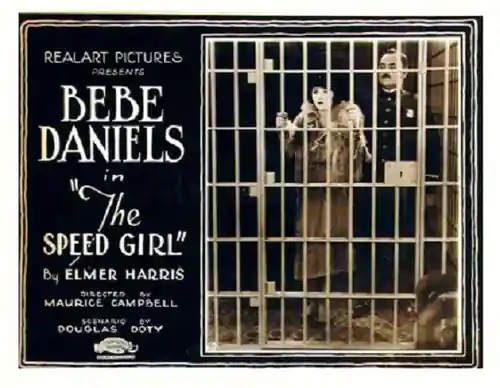
Technically, The Speed Girl is a triumph of its era. The stunts are executed with a daredevilry that modern CGI struggles to replicate, and the editing—though rudimentary by today’s standards—creates a sense of urgency. The film’s use of color is limited to sepia tones, but the cinematography compensates with dynamic angles and clever lighting. One standout sequence involves a high-speed pursuit along a coastal highway, the camera panning to capture the ocean’s vastness juxtaposed with the characters’ claustrophobic desperation. The sound design, though nonexistent, is compensated for by the exaggerated physicality of the actors and the exaggerated expressions that convey emotions in a world without dialogue.
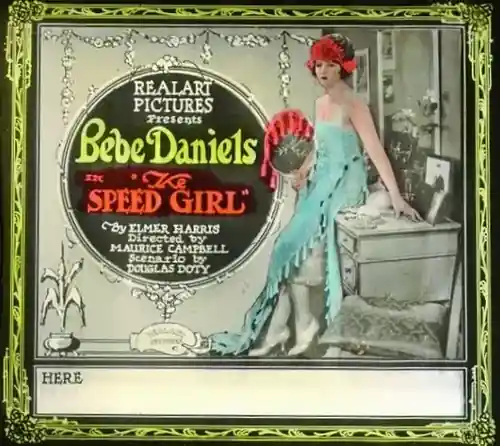
The supporting cast, particularly Soapy Taylor, adds texture to the film’s satirical undercurrent. Soapy’s role as the publicist who prioritizes ratings over morality mirrors the rise of the press agent in Hollywood, a figure who would become central to the myth-making of stars. His character’s arc—culminating in the jail wedding—serves as a darkly comic reminder of how easily truth can be manipulated for mass appeal. Meanwhile, Hilda, the chambermaid, functions as a red herring, her innocence exploited by Carl’s greed. Her presence underscores the film’s class-conscious undertones, a theme also explored in Shot in the Dumbwaiter, where the lower classes are both victims and pawns in the schemes of the elite.
Thematically, The Speed Girl is a study in contrasts: speed and stillness, illusion and reality, ambition and integrity. Betty’s character exists in a liminal space between the old Hollywood glamour of Triumph and the emerging grittiness of the 1930s. She is both a product of her time and a precursor to the modern action heroine, a figure who would gain prominence decades later. The film’s resolution—Tom exposing Carl’s treachery and winning Betty’s hand—is a tidy, if predictable, conclusion, but it serves the narrative’s purpose of reinforcing the value of sincerity in a world of artifice.
The film’s pacing is relentless, a reflection of Betty’s own lifestyle. There are no lulls in the action, and this relentless energy keeps the audience engaged despite the limitations of the silent format. The use of intertitles is sparse yet effective, allowing the visuals to carry the weight of the narrative. The score, though not discussed in detail in surviving archives, must have played a crucial role in heightening the tension, particularly during the car chases and jail scenes.
In retrospect, The Speed Girl is a fascinating artifact of the late silent era. It captures the industry’s grappling with its own identity, balancing the whimsy of early cinema with the seriousness of the emerging studio system. The film’s focus on stunts and speed reflects the cultural obsession with technology and progress during the 1920s, while its romantic subplots harken back to the more theatrical dramas of the pre-sound era. For modern viewers, it offers a window into a time when cinema was still a novelty, and every frame was a potential marvel.
Comparisons to other films of the period are inevitable. Like A Fool There Was, it uses a love triangle to explore themes of manipulation, but The Speed Girl distinguishes itself with its focus on physical stunts and the female protagonist. Unlike Little Miss Grown-Up, which leans into slapstick, The Speed Girl maintains a tone of earnestness, even in its most absurd moments. Its blend of action and romance would later influence the screwball comedies of the 1930s, but it stands on its own as a unique product of its time.
Ultimately, The Speed Girl is more than a period piece. It’s a testament to the ingenuity of early filmmakers who worked without the crutch of dialogue to tell compelling stories. Betty Lee’s journey—from stunt performer to romantic heroine—is a microcosm of the broader evolution of cinema, where form and content began to converge in ways that would redefine the medium. For cinephiles and historians alike, this film offers a glimpse into the mechanics of Hollywood’s golden age, a time when every frame had to earn its place on screen.
IMDb 5.1
1926
Community
Log in to comment.