DbcultAccessing Vault...
4.2/10
Senior Film Conservator
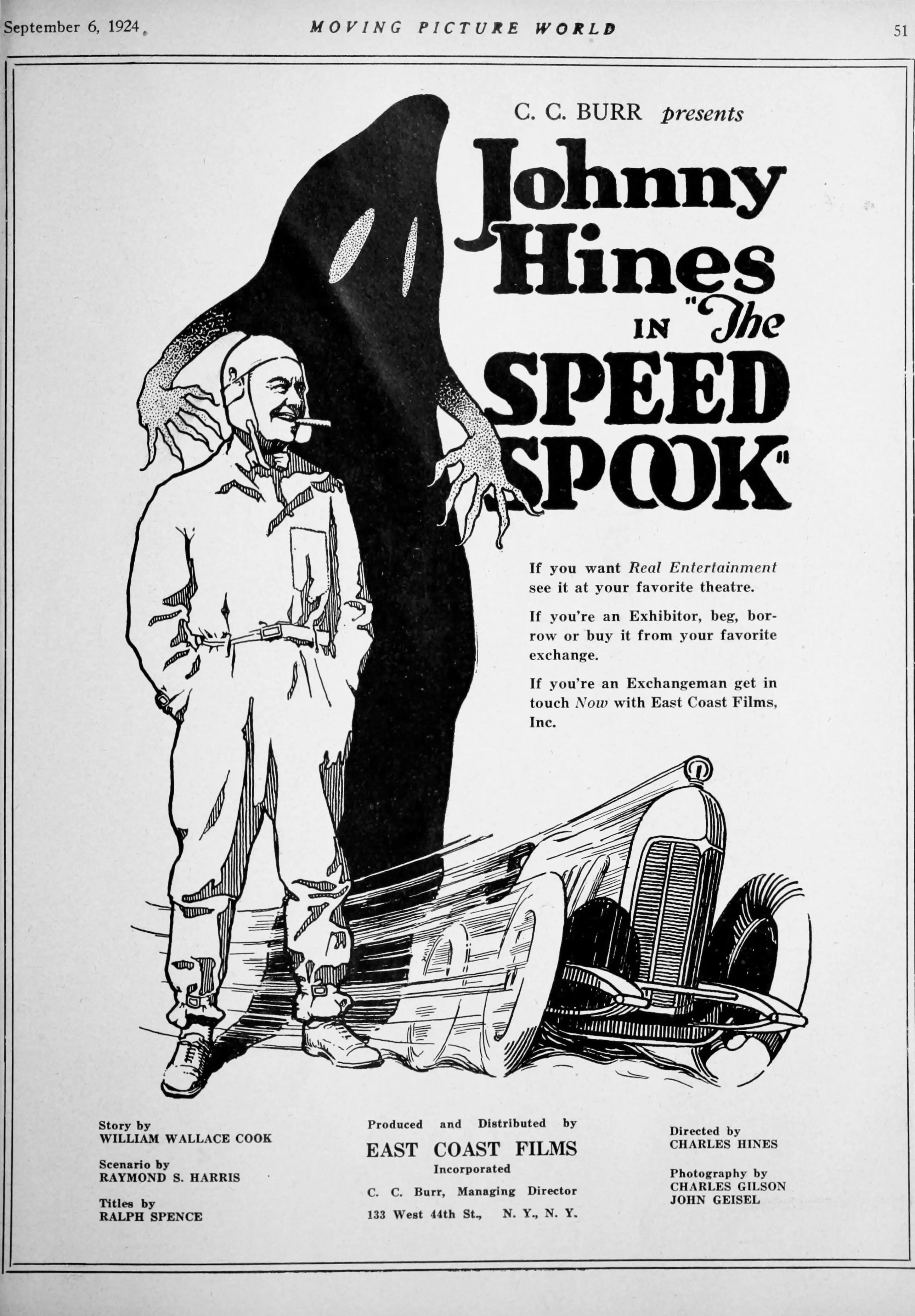
A definitive 4.2/10 rating for a film that redefined the boundaries of cult cinema. The Speed Spook remains a cornerstone of transgressive art.
Step back in time, dear reader, to an era when the silver screen was truly silent, yet resonated with a symphony of human emotion, daring escapades, and the nascent thrill of the machine age. The Speed Spook, a fascinating relic from that golden age, beckons us into a world where gasoline and political machinations collide, all under the shadow of a truly spectral automotive enigma. It’s a film that, even in its quietude, speaks volumes about the anxieties and excitements of a rapidly modernizing society, where the supernatural often served as a convenient cloak for very human machinations.
Our story ignites with the arrival of an intrepid auto racer, a figure emblematic of progress and speed, hurtling into a sleepy, yet surprisingly agitated, small town. This isn't merely a pit stop; it's an unwitting immersion into a maelstrom of local politics, where an election looms heavy, casting long shadows of ambition and deceit. The racer, a man of action and mechanical prowess, finds himself an accidental detective, drawn into the town's most perplexing mystery: a phantom car, a 'speed spook,' that tears through the streets without a visible driver, only to vanish into thin air before any witness can grasp its elusive form. It's a narrative concoction that blends the thrill of the chase with the cerebral pleasure of a whodunit, all seasoned with a dash of the uncanny.
The brilliance of The Speed Spook lies in its ability to harness a seemingly supernatural element – the driverless car – as a narrative device to expose very terrestrial corruption. This isn't a ghost story in the traditional sense; rather, the 'haunted' vehicle acts as a red herring, a carefully orchestrated illusion designed to manipulate public perception and sway the outcome of the local election. The writers, William Wallace Cook, Ray Harris, and Ralph Spence, demonstrate a keen understanding of how fear and superstition can be weaponized in the political arena. They craft a plot that cleverly uses the spectacular to mask the mundane, yet equally sinister, machinations of power-hungry individuals.
The film’s protagonist, portrayed with a robust earnestness by Henry West, embodies the spirit of logical inquiry against a tide of local folklore and manufactured panic. West’s racer isn't just a gearhead; he's a symbol of the emerging scientific mindset, someone who instinctively seeks a mechanical explanation for an apparently supernatural phenomenon. His journey from a casual visitor to a dedicated sleuth is compelling, as he peels back layers of small-town gossip and political maneuvering to uncover the truth. It's a performance that, even without spoken dialogue, conveys a strong sense of purpose and integrity, making him an easy hero to root for.
The supporting cast adds considerable texture to this intricate tapestry. Warner Richmond, often cast in roles of authority or menace during this era, likely brings a formidable presence to the film, perhaps as a key player in the political conspiracy or the driving force behind the 'spook' itself. His performances frequently possessed a gravitas that could swing between benevolent and malevolent with subtle shifts in expression, perfectly suited for the ambiguities of a political thriller. Faire Binney, a charming presence of the silent screen, would no doubt provide the romantic interest or the damsel-in-distress element, perhaps a local resident caught in the crossfire of the election and the mystery. Her ability to convey vulnerability and strength without words would have been crucial in grounding the more fantastical elements of the plot.
Edmund Breese, Frank Losee, and Johnny Hines round out a cast that collectively paints a vivid picture of a community in flux. Losee, often playing figures of authority or gravitas, could easily embody a corrupt official or a respected elder caught in the web of deceit. Breese and Hines, with their varied comedic and dramatic backgrounds, would contribute to the ensemble’s dynamism, perhaps as henchmen, unwitting accomplices, or even comic relief that punctuates the tension. The interplay between these characters, their unspoken alliances and rivalries, would be central to the film's dramatic heft, demonstrating how silent cinema could achieve complex character dynamics through gesture, expression, and clever staging.
The Speed Spook is more than just a standalone mystery; it’s a reflection of its time. The early 20th century was obsessed with speed, machines, and the breaking of perceived limits. The automobile, still a relatively new and wondrous invention, carried with it both the promise of progress and the lingering superstitions of a world not yet fully rationalized by science. The 'ghost car' trope, therefore, taps into a collective unconsciousness, marrying the modern with the ancient fear of the unknown. This film can be seen alongside other silent-era works that explored the intersection of technology and mystery, albeit often with a more straightforward approach. While not a direct comparison, one might consider the subtle tension and societal implications explored in films like The Lure, which often delved into urban mysteries and the hidden dangers of modern life, albeit from a different angle.
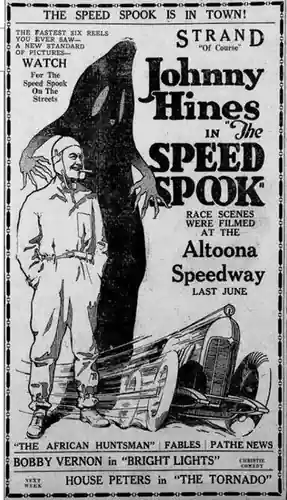
The film’s narrative structure, with its escalating mystery and eventual reveal, also echoes the popular serials and dime novels of the period. These forms of entertainment thrived on cliffhangers and intricate plots, designed to keep audiences returning for more. The Speed Spook, in its feature-length format, delivers a compressed version of this thrill, providing a satisfying resolution while maintaining a high level of suspense throughout its runtime. The pacing, a crucial element in silent films, would have been meticulously crafted to build tension during the car chases and moments of discovery, then ease into quieter scenes of investigation and character interaction.
Without dialogue, the visual language of The Speed Spook would have been paramount. Cinematography, even in its early forms, could evoke a sense of dread or excitement through clever camera angles, lighting, and editing. Imagine the shadowy streets where the 'spook' makes its appearance, the frantic expressions of townsfolk, and the determined gaze of Henry West as he pursues the elusive vehicle. The visual contrast between the sleek, modern racing car of the protagonist and the spectral, almost anachronistic 'haunted' car would have been particularly striking. This interplay of light and shadow, speed and stillness, logic and illusion, would have been the film's true voice.
The small-town setting itself is a character. These communities, often portrayed as idyllic, frequently harbored undercurrents of gossip, rivalries, and deeply ingrained secrets. The political controversy serves as a magnifying glass, bringing these hidden tensions to the surface. The film likely uses the town's familiar landmarks – its main street, its local government building, its quiet backroads – as backdrops for dramatic confrontations and thrilling chases. This grounding in a recognizable, albeit idealized, American locale would have made the fantastical elements of the 'speed spook' all the more unsettling and effective.
Even a century later, the themes explored in The Speed Spook remain remarkably relevant. The manipulation of public opinion through manufactured spectacles, the corruption inherent in local politics, and the enduring human fascination with both mechanical marvels and unexplained phenomena continue to resonate. The film, in its own silent way, offers a timeless commentary on these aspects of the human condition. While other films of the era, such as A Friend of the People, might have tackled political themes more overtly, The Speed Spook cleverly wraps its critique in the guise of a thrilling mystery, making it accessible and engaging for a wider audience.
The silent film era, often dismissed by casual viewers today, was a period of incredible innovation in storytelling. Directors and actors had to convey complex narratives and deep emotions through purely visual means, relying on pantomime, expressive acting, and dynamic cinematography. The Speed Spook stands as a testament to this artistry, demonstrating how a compelling plot, well-drawn characters, and a touch of the fantastical could captivate audiences without a single spoken word. It’s a reminder that true cinematic magic transcends the need for dialogue, relying instead on the universal language of action and emotion.
Reflecting on the legacy of such films, one realizes their profound influence on subsequent generations of filmmakers. The car chase, the political thriller, the mystery genre – all owe a debt to these early pioneers. The Speed Spook, with its unique blend of these elements, occupies a special place in this lineage. It’s a film that, if rediscovered and properly appreciated, offers not just historical insight but genuine entertainment, a thrilling ride into the heart of a bygone era's anxieties and triumphs. Its narrative ingenuity, particularly in using a seemingly supernatural element to drive a very human drama of political ambition and intrigue, makes it a compelling watch even today, proving that a good story, well told, never truly loses its speed.
The allure of the unknown, combined with the grounded reality of human greed and power struggles, creates a potent cocktail of suspense. The ultimate reveal of the 'spook's' true nature would undoubtedly have been a satisfying conclusion for audiences, validating the protagonist's logical pursuit while exposing the moral failings of the antagonists. It’s a narrative arc that speaks to the enduring human desire for justice and truth, even when shrouded in the most elaborate of deceptions. This film, therefore, is not just a glimpse into the past, but a mirror reflecting timeless human drama.
In an age where special effects often overshadow narrative depth, re-engaging with a film like The Speed Spook offers a refreshing perspective. It reminds us that compelling storytelling doesn't require CGI or booming soundtracks; it requires ingenuity, strong characterization, and a plot that keeps you guessing. The film’s ability to weave together a high-stakes election, a charming hero, and a baffling mystery into a cohesive and thrilling experience is a testament to the craft of silent cinema. It’s a cinematic sprint through a political minefield, propelled by a phantom force, and ultimately, a triumph of human wit over cunning deception. A true gem, waiting to be rediscovered by those who appreciate the foundational artistry of film.
IMDb 5.9
1920
Community
Log in to comment.