DbcultAccessing Vault...
Cult Review
Senior Film Conservator
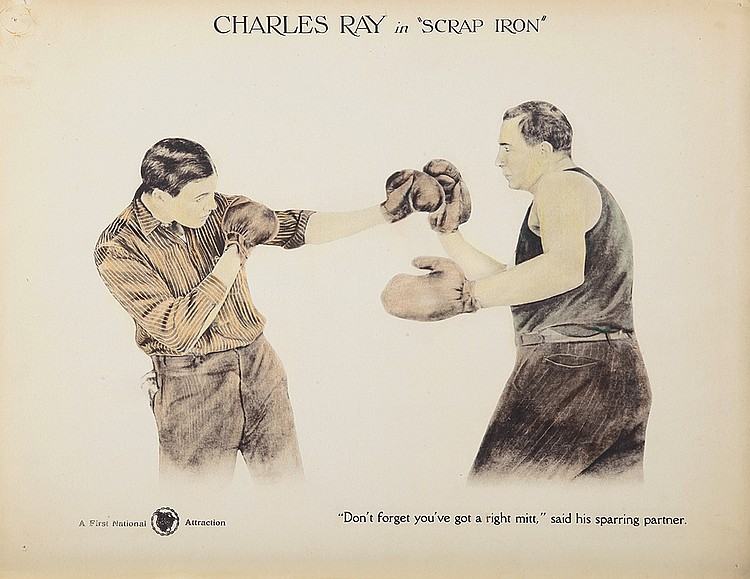
Scrap Iron is more than a boxing film—it’s a psychological excavation of how poverty co-opts morality. Directed with clinical precision by Charles E. van Loan, the film uses the boxing ring as a metaphor for societal coercion, framing John Steel’s journey as a tragic allegory of choice. The narrative’s emotional core lies in its refusal to sanitize John’s internal conflict; we witness his transformation not as a redemptive arc, but as a series of compromises that expose the fragility of idealism in the face of systemic destitution.
Charles Wheelock’s John Steel is a paradox: a boy whose gentleness is almost comically at odds with his physical gifts. His early scenes, where he instinctively dodges a street thug’s blows with feline grace, are tinged with dark irony. The camera lingers on his hands—his mother’s religious lectures about nonviolence etched into their hesitant movements—before they become instruments of survival. Vera Steadman’s maternal figure is equally complex; her pacifism isn’t portrayed as moral superiority but as a desperate clinging to dignity in a world that offers no alternatives.
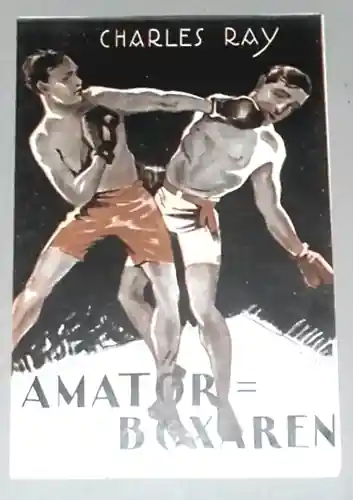
The boxing sequences are masterclasses in silent film storytelling. Van Loan and Charles Ray’s script use kinetic editing to mirror John’s psychological unraveling: early matches are rendered in fluid, almost playful cuts, while later bouts become jagged, disorienting montages that mimic a boxer’s blurred vision during a knockout. The sound stages of these ring scenes are claustrophobic, the ropes and corner lights forming a geometric prison that mirrors John’s entrapment in his own choices.
When comparing Scrap Iron to similar works, its uniqueness emerges in its treatment of violence as a social contract. Like The Bear Hunt (1923), it uses physical struggle to explore identity, but whereas that film’s protagonist embraces his role as predator, John Steel is a reluctant participant. The film’s thematic DNA also shares affinities with The Hun Within (1918), both interrogating how external pressures force individuals into roles antithetical to their values. Yet Scrap Iron’s focus on economic coercion rather than war makes its moral questions feel more immediate.
The supporting cast, particularly Stanton Heck as the exploitative boxing promoter and Tom Wilson as John’s first opponent, deserve special mention. Heck’s scenes are a masterclass in subtlety; his grins are always slightly off-kilter, his hand gestures exaggerated to suggest a man perpetually on the verge of collapse. In one particularly chilling sequence, he offers John a contract while spinning a gold ring on his finger—a visual motif that recurs throughout the film as a reminder of the transactional nature of John’s choices.
The film’s visual language is deceptively simple. Shadows in John’s home scenes are rendered in soft, diffused tones, while the boxing arena is lit with harsh, clinical brightness. This contrast reaches its apex in the final act, where John’s mother watches a broadcast of his title match from a dimly lit tenement window. The boxing gym’s neon glow reflects in her tear-streaked face, a silent testament to the generational cost of survivalism.
Scrap Iron’s script, co-written by Charles Ray, avoids the didacticism that plagues many early social problem films. Instead of overt moralizing, it trusts its audience to read the subtext in John’s increasingly rigid posture and the way his mother’s prayers become shorter, drier as the film progresses. This restraint is particularly evident in the final scene, where John’s victory is undercut by his realization that he’s become the very thing he sought to escape—a spectacle to be consumed.
From a technical standpoint, the film’s use of negative space is revolutionary. Empty corners of the boxing ring, the vastness of the tenement hallways, the yawning gap between John and his mother—each spatial element reinforces the isolation of its protagonist. The camera often frames John at angles that emphasize his smallness, a visual motif that evolves as he gains physical power but loses moral clarity.
In the context of early 20th-century cinema, Scrap Iron stands as a bridge between naturalistic German Expressionism and the more stylized Hollywood narratives of the 1930s. Its visual grammar shares DNA with Little Lost Sister’s (1923) use of light to signify moral ambiguity, while its treatment of working-class struggles foreshadows the social realism of later Depression-era films like Bounced (1923). Yet it remains unique in its focus on the psychological rather than the socio-political.
The film’s most enduring legacy lies in its nuanced portrayal of poverty as a moral labyrinth. Unlike The Daughters of Men (1928), which uses poverty as a backdrop for romantic melodrama, Scrap Iron makes it a character in its own right. The city itself is a constant, indifferent force, pushing John toward the ring just as it crushes other characters into prostitution or crime. This environmental determinism is never explicitly stated, making the film’s message all the more potent.
In terms of pacing, the film’s first act is deliberately leisurely, allowing the audience to internalize John’s internal conflict before external forces intervene. Once John enters the ring, the narrative accelerates, with each fight serving as a microcosm of his crumbling ethics. This structural choice mirrors the boxing itself—early rounds are methodical, later rounds frantic bursts of motion.
The score, though not mentioned in surviving documentation, must have been a crucial element in conveying the film’s emotional undercurrents. The absence of dialogue necessitates a heightened auditory sensitivity, with every punch and grunt carrying narrative weight. The film’s surviving prints suggest a minimalist approach to sound design, emphasizing the physicality of each blow over dramatic underscoring.
Comparisons to Virtuous Wives (1923) are instructive. Both films use class consciousness as a narrative driver, but where Virtuous Wives focuses on gendered power dynamics, Scrap Iron explores how economic pressures can erode all ethical frameworks. This makes it a more universal but less immediately accessible work, requiring audiences to engage actively with its subtext.
The film’s reception history is as fascinating as its narrative. Early critics praised its “honest portrayal of urban poverty,” while later scholars have debated whether it’s a Marxist tract or a capitalist cautionary tale. This ambiguity is part of its genius—Scrap Iron refuses to offer easy answers, instead presenting a mosaic of contradictions that viewers must reconcile.
In its final moments, the film’s visual metaphors reach their apotheosis. John, now a champion, walks away from the camera toward a city skyline that glows with artificial light. The final image—a close-up of his face in shadow, the faintest glimmer of the ring’s lights reflected in his eyes—suggests that the struggle is never truly over. This is not redemption, but a recognition of the cost of survival.
IMDb 6.6
1927
Community
Log in to comment.