DbcultAccessing Vault...
3.8/10
Senior Film Conservator
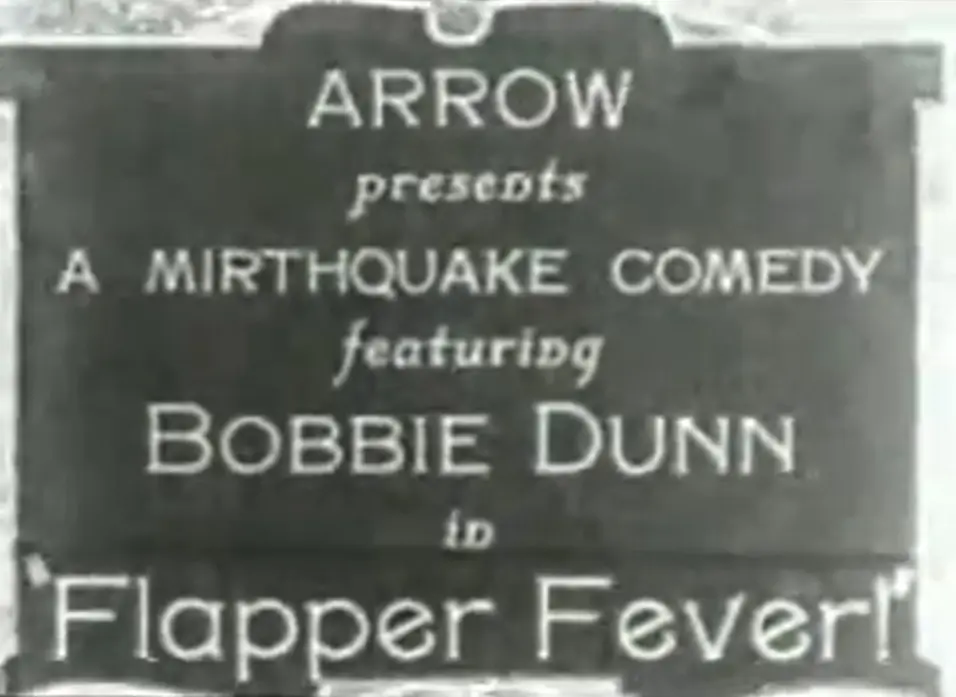
A definitive 3.8/10 rating for a film that redefined the boundaries of cult cinema. Flapper Fever remains a cornerstone of transgressive art.
In the cinematic landscape of 1924, Flapper Fever stands as a biting, if kinetic, indictment of the provincial American psyche. Bird Center is not merely a setting; it is a psychological pressure cooker. The film establishes its geography with a ruthless efficiency—one hotel, one theater—symbolizing the dual altars of commerce and culture upon which the town’s residents sacrifice their authenticity. Unlike the sprawling urban angst seen in Life's Shop Window, Bird Center’s claustrophobia is internal. The arrival of the Rawsbury Sisters isn't just an event; it's a structural threat to the town's carefully curated facade of Victorian rectitude.
The dichotomy between the 'sheiks' and their wives—the vanguard of the Purity League—presents a masterful study in gendered hypocrisy. These men, desperate to inhabit the persona of the modern, Valentino-esque lover, find themselves trapped in a feedback loop of performative virtue. When they welcome the Rawsbury Sisters with presents, they aren't just buying affection; they are attempting to purchase a reprieve from the stifling atmosphere of their own homes. The hotel, serving as a neutral zone of potential transgression, becomes the stage for a farce that is as much about socio-economic power as it is about physical comedy.
Censorship in the silent era was often a blunt instrument, and Flapper Fever satirizes this with surgical precision. The Purity League’s 'swoop' is choreographed with the rhythmic aggression of a military raid. Their verdict—that the act is a contaminant—reflects the era's genuine anxiety regarding the 'New Woman.' The Rawsbury Sisters represent a mobility that the Censors cannot quantify. While films like The Humming Bird explored the grit of the underworld, Flapper Fever finds its conflict in the mundane cruelty of the 'morality board.'
The financial disenfranchisement of the sisters after the ban is a pivotal narrative turn. It strips away the glamour of the stage, revealing the precariousness of the independent female artist in the 1920s. Without the 'wherewithal' to pay their bill, they are reduced to fugitives within the very hotel that once welcomed them. This shift from comedy to existential threat is handled with a deftness that mirrors the tonal shifts in The Bomb Idea, where the absurdity of the situation only highlights the underlying social fragility.
Bobby Dunn’s performance is a masterclass in the 'slapstick of misunderstanding.' Dunn, whose physical vocabulary was honed in the trenches of silent shorts, brings a frantic energy to the role of the sheik who overhears the sisters' plan. His character is the embodiment of the male gaze gone wrong—he listens, but he does not hear; he watches, but he does not see. The sequence where the sisters decide to dye their hair blonde to secure work is the film’s comedic zenith. The peroxide bottle becomes a MacGuffin of life and death, a chemical catalyst for a civic-scale panic.
The fire department’s intervention is a classic trope, yet here it feels uniquely chaotic. It serves as a metaphor for the town’s over-inflated sense of self-importance. A private conversation about hair dye escalates into a public emergency, involving the entire apparatus of the state. The 'uproar' created is a physical manifestation of the town’s internal noise. In this regard, the film shares a DNA with the frantic pacing of L'autobus della morte, where the momentum of the plot threatens to derail the characters entirely.
The blonde motif is particularly resonant. In the 1920s, the 'blonde' was often associated with a specific type of cinematic artifice and desirability. By making the sisters' employment contingent on their hair color, the film comments on the commodification of female identity. The act of dyeing their hair is a survival tactic, yet it is interpreted by the 'sheik' as a suicidal gesture. This suggests that the provincial mind is so unaccustomed to the idea of female agency that it can only process a woman’s transformation through the lens of tragedy or self-destruction.
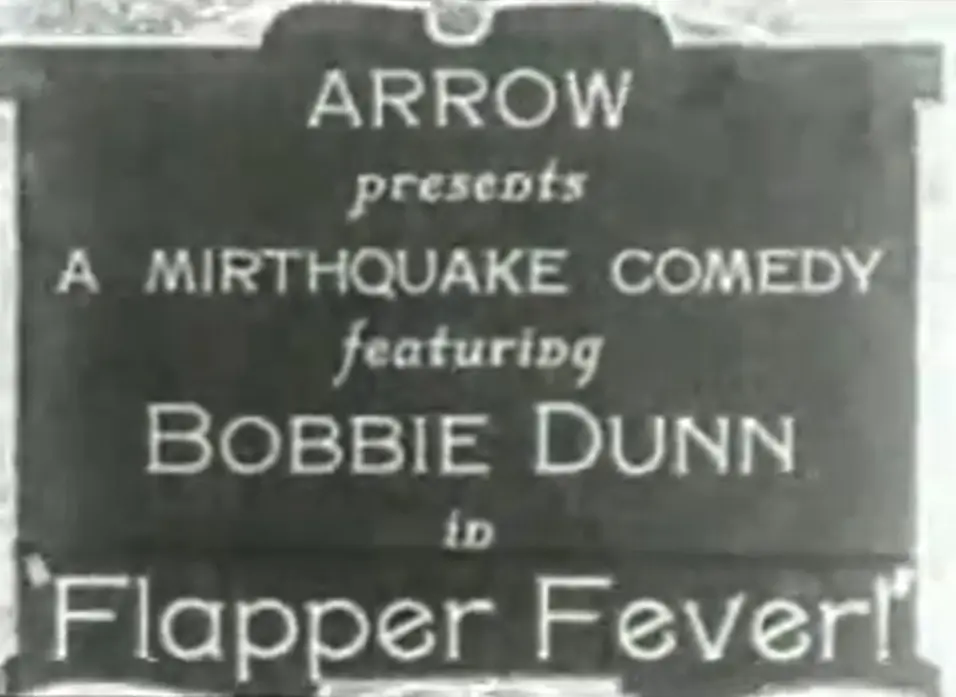
Dunn’s character, in his rush to 'save' them, is actually seeking to preserve the status quo. His subsequent coma is a brilliant narrative device. It provides a temporary escape from the consequences of his own idiocy. Awakening in his wife’s arms, he is reintegrated into the domestic sphere, the 'fever' of the flapper era broken by a literal blunt force trauma. This resolution is profoundly cynical; it suggests that the only way for the 'sheik' to survive the modern world is to be knocked unconscious and returned to the custody of the very morality he sought to escape.
When comparing Flapper Fever to its contemporaries, one can see the evolution of the comedic syntax. While The Tame Cat deals with domestic friction through a more traditional lens, Dunn’s work pushes the boundaries of the farcical. The film’s preoccupation with reputation and the 'Purity League' echoes the moral panics found in The Other Woman, yet it strips away the melodrama in favor of a more acerbic, physical critique. Even the sense of mistaken identity and hair-trigger social responses can be seen in The Impersonation, though Flapper Fever grounds these themes in the dirt of a small-town hotel rather than the high-stakes world of espionage.
The technical aspects of the film—the use of title cards to punctuate the 'uproar' and the rhythmic editing of the fire department’s arrival—showcase a director in full command of the medium’s kinetic potential. The use of space in the hotel scenes, where characters move through doors and hallways with the precision of a clockwork mechanism, highlights the 'trap' of Bird Center. There is no off-screen space; everyone is always being watched, either by the Purity League or by a 'sheik' with a misinterpreted sense of heroism. This surveillance culture is a precursor to the themes explored in Caught Bluffing.
The finale of Flapper Fever is perhaps its most unsettling element. The 'happy ending'—the sheik safe in his wife's arms—is a surrender. It is the death of the 'sheik' persona and the rebirth of the henpecked husband. The Rawsbury Sisters, presumably now blonde and gainfully employed elsewhere, have exited the frame, leaving Bird Center to its stagnant peace. The film leaves us wondering: who was truly in a state of fever? Was it the sisters, seeking a living, or the town itself, hallucinating sin at every turn?
In the broader context of silent comedy, Bobby Dunn’s work here deserves a reassessment. He captures the frantic, often violent transition of the American small town into the modern age. The film functions as a bridge between the innocent slapstick of the early 1910s and the more sophisticated social satires of the late 1920s like Fast Company. It shares the rugged, outdoorsy energy of The Cactus Kid or In the River, but applies that energy to the domestic interior, creating a unique sub-genre of 'civic slapstick.'
Ultimately, Flapper Fever is a testament to the power of the short-form narrative to diagnose the ills of its time. It is a film about the fear of change, the absurdity of moral policing, and the ultimate safety of the status quo. Whether viewed as a light comedy or a dark satire, it remains a vibrant piece of celluloid history, as complex as the era that birthed it. It stands alongside international works like Revolutionens datter or A London Bobby in its exploration of the individual versus the institution, even if its battleground is merely a peroxide-soaked hotel room in Bird Center.
IMDb 6.3
1928
Community
Log in to comment.