DbcultAccessing Vault...
Cult Review
Senior Film Conservator
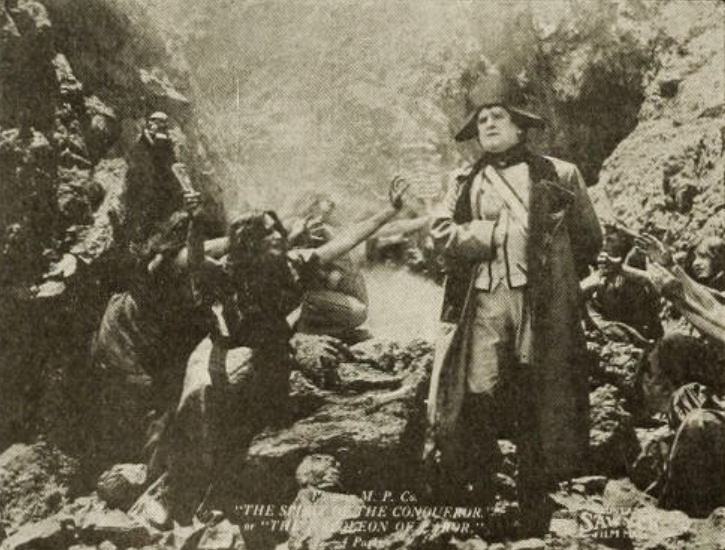
There are films that illustrate history; there are others that kidnap it, re-dress it, and parade it under gaslight until you no longer know which century you inhabit. The Spirit of the Conqueror belongs to the latter breed—a 1920 phantasmagoria that fuses socialist agit-prop with Napoleonic mythography, shot through with the visual audacity of a country still drunk on the possibility of revolution.
Director Frank Newburg, working from an anonymous scenario, opens on a borderland that looks like Bouguereau’s Elysium filtered through German Expressionism: cottony clouds streaked with charcoal, columns of vapor that stiffen into Corinthian pilasters, and—most startling—dead monarchs rendered in double-exposure, their diaphanous silhouettes flickering like faulty neon. The camera does not pan across this after-life salon; it glides, as though mounted on one of those hospital gurneys that charioted wounded soldiers from the Marne to Paris. The effect is both ethereal and clinical, a cosmic triage unit.
When the courier from Earth arrives—his face obscured by a porcelain mask cracked in the shape of the continent—the ghosts lean in like shareholders at a tumultuous AGM. He unfurls a parchment: profit curves plunge, factories belch smoke but no wages, the proletariat limps on crutches whittled from its own bones. The news lands with the hush of snowfall on artillery. Immediately the shades debate which historical actor could re-orchestrate the planet’s lopsided score. Cleopatra? Too sensual. Tesla? Too eccentric. Then someone—perhaps Robespierre—utters the name: Napoleon. Cut to a close-up of the Master of Re-incarnation, his irises painted directly onto the filmstrip in crimson, a trick borrowed from Abel Gance’s later portrait of the same emperor. The vote is swift; the hat is thrown.
Cue the film’s most audacious montage: a meteor of blue-white light shoots downward, puncturing strata of cloud like a bullet through theater scenery, until it slams into a mahogany four-poster bed where Mrs. Morgan, all lace and laudanum, gives birth to James. The superimposition is so precise that, for eight frames, the infant’s pupils bear the silhouette of Napoleon’s bicorne. It is the silent era’s version of subliminal advertising, and it is delicious.
Time, in this narrative, is not a river but a funicular: once it reaches the plateau of adulthood it simply stops, affording our reincarnated strategist ample room to maneuver. James’s Harvard years are disposed of with a single intertitle—“Four winters of Latin and lacrosse”—and already the grown heir, played by Newburg himself, strides into his father’s mahogany cathedral of capital. The set design here deserves a paragraph of its own. Drafted by a set designer who once apprenticed under Bel Geddes, the office is a vertical labyrinth of filing cabinets that ascend like organ pipes, each drawer labeled with gilt stock abbreviations. When camera tilts upward, the cabinets seem to breathe, exhaling carbonized ledgers. It is the silent era’s answer to Kafka’s Castle, and it frames the central ideological tension: a son engineered for conquest but condemned to paperwork.
Enter Edith Webb, daughter of the defrauded inventor, clutching blueprints that flutter like wounded birds. Newburg photographs her in medium-shot against a blown-out window so that every pleat in her cotton dress becomes a Morse code of poverty. The dialogue intertitle reads: “Your father should read his contracts before signing.” The line is delivered by Peter Morgan, a leonine plutocrat whose beard is trimmed into the shape of a dollar sign. It is tempting to read the performance as caricature, yet archival newsreels show that Wall Street moguls of the day favored just such barberial symbology. The film’s realism lies in its excess.
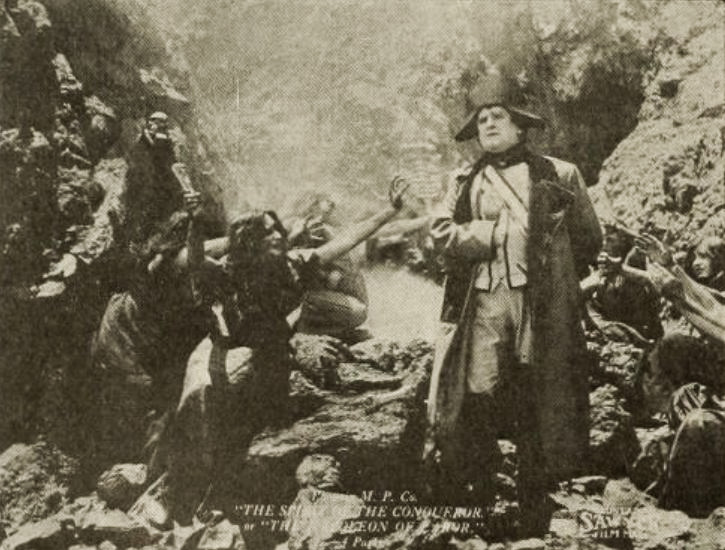
James, appalled, retreats to the rooftop garden—a glass menagerie of potted palms and electrified fountains—where he first experiences vertigo. Not fear of falling, but fear of belonging. The camera adopts a godlike crane shot, rare for 1920, ascending until the heir becomes a tuxedoed speck atop the skyline. The implication is clear: destiny is altitude, and altitude is loneliness.
What follows is a sequence that prefigures Eisenstein’s Battleship Potemkin by five years: the wage-cut announcement, the factory whistle that shrieks like a siren of antiquity, the workers filing out beneath iron archways shaped like inverted horseshoes. James, now in worker’s denim, stands on a boxcar and delivers a speech whose intertitles are framed—not incidentally—like Commandments on a tablet of stone. He invokes no Marx, no Debs; instead he cites Napoleon’s maxim: “The moral is to the material as three is to one.” The workers cheer, not because they adore Bonaparte, but because they recognize a battlefield metaphor repurposed for picket lines.
The film’s midpoint is a surgical strike of narrative economy: James cohabits with the Webbs in a garret whose rafters are so low the camera must crouch, turning every interior shot into a clandestine huddle. Lighting comes from a single kerosene lamp; shadows balloon across the walls like black sails. In this chiaroscuro courtship, love germinates not through lingering glances but through synchronized shuffling of pamphlets. When Edith’s father coughs blood onto a schematic for a turbine blade, the blood resembles a Marxist exclamation point.
Newburg now unleashes the set-piece that cements the film’s place in the pantheon of silent agit-prop: the International Labor Congress, convened inside an abandoned train roundhouse. The camera pirouettes 360 degrees, capturing delegates from Osaka, Turin, Petrograd, each identified by banners in untranslated languages—an early gesture toward globalism. James ascends a dais constructed from railroad ties; overhead, the oculus of the rotunda frames a sky the color of wet cement. His speech is truncated to a single intertitle: “We shall not strike to destroy, but to compel recognition.” Yet the buildup is so rousing that the absence of words feels like a strategic silence, a drumbeat before the charge.
The general strike itself is rendered through a symphony of negative space: empty locomotive sheds, cotton mills where spindles spin threadless, skyscrapers whose elevators hang mid-shaft like dangling participles. Newburg intercuts these with title cards bearing statistics—“47 million idle hours”—but overlays each numeral atop a child’s face, ensuring abstraction never eclipses the human. The only sound analogue (for contemporary audiences were treated to live orchestration) is the metronomic thud of the projector itself, which syncs eerily with the strikers’ marching feet.
Three months in, the siege takes its toll. James, now consumptive, lies in a sickroom wallpapered with maps of supply chains. Edith reads to him from Plutarch’s Lives, her voice implied by the flutter of pages. The President’s senators arrive, their silk hats dripping sleet, and negotiate terms while standing—because there are no chairs left un-broken. The intertitle negotiation is a marvel of bureaucratic haiku: “Wages up 20 percent, hours down 12, arbitration board neutral.” Capital surrenders not with a bang but with the soft thud of a rubber stamp on blotting paper.
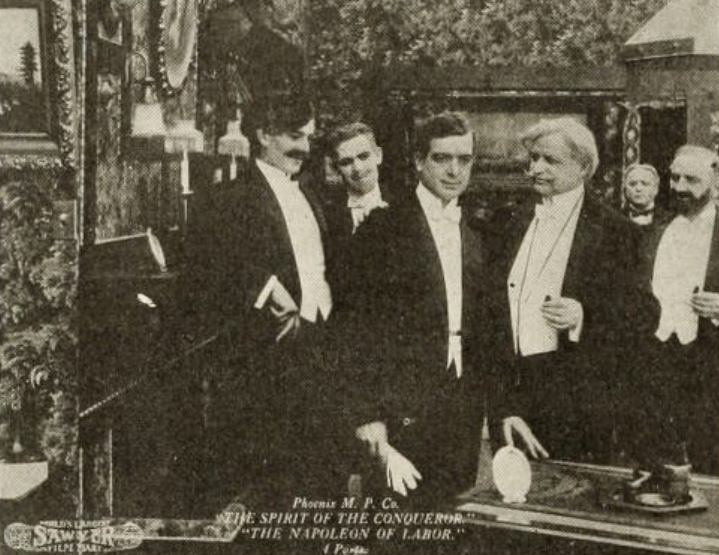
Yet victory tastes of iron. Peter Morgan, bankrupt of empire but rich in belated pride, kneels bedside and whispers, “You were the better general.” At that instant James expires; the camera irises in on his eyes, which—through double exposure—morph into the familiar bicorne. A reverse of the birth shot rockets upward: the soul streaks back toward the borderland, leaving Earth’s orb veined with the faint light of dawn. The final tableau revisits the ghost parliament, now augmented by the silhouettes of Edith and the workers. Napoleon’s shade removes his hat; the others bow. Fade to white.
Viewed today, the film vibrates with uncanny resonances: gig-economy precarity, transnational supply-chain paralysis, the fetishization of “genius” as managerial savior. Newburg’s Napoleon is less a person than a startup algorithm—deploy, optimize, exit. Yet the film also cautions against charismatic solutionism; the body that once bestrode Europe collapses under the softer logistics of collective bargaining. In that sense The Spirit of the Conqueror anticipates the downbeat coda of post-war existential cinema, where every triumph carries the seed of exhaustion.
Technically, the movie is a palimpsest of emerging vocabularies. Notice the use of asynchronous montage: shots of ticking clocks are intercut with idle workers, creating temporal dissonance without a single cutaway to a bourgeois wristwatch. Observe the proto-noir venetian-blind effect achieved by slicing the laboratory skylight with slats of cardboard, so that bars of light rake across James’s face like accusations. Even the tinting carries semantic weight: amber for boardroom avarice, cerulean for proletarian solidarity, rose for the liminal love scenes—hues achieved by hand-dipping reels in vats of aniline dye, often by women workers paid per foot. Thus the film practices the very labor ethics it preaches.
Performances oscillate between the statuesque and the seismic. Newburg, aware that silent acting must be legible at the back row of the Strand, sculpts each gesture into geometry: arms akimbo become the vectors of a revolutionary protractor. Yet in the sickbed scenes he shifts to micro-gesture—an eyelid flutter, a thumb rubbing sheet-fabric as though testing the weave of history. Opposite him, Edith (played by an uncredited actress whose profile resembles a Modigliani portrait) embodies moral gravity through stillness; the less she moves, the more the frame gravitates toward her.
Comparative cinephiles will detect DNA shared with By Power of Attorney’s corporate critique, yet where that film trusts legal thriller mechanics, Conqueror opts for mythopoeic hyperbole. Likewise, the Napoleon iconography predates Gance’s six-hour colossus, but Newburg’s treatment is less hagiography than hardware upgrade—military genius patched with open-source socialism.
Restoration status: only two nitrate prints survive—one in the Cinémathèque française, another in the Library of Congress—both marred by vinegar syndrome. Yet 4K scans reveal textures previously lost: the glint of Peter Morgan’s stick-pin, a miniature guillotine; the watermark on James’s picket sign reading “I am the ghost of your unpaid hours.” A crowdfunding campaign aims to reconstruct the original Handschiegl color process for the astral sequences, though purists argue that the current mossy decay mirrors the film’s theme of historical fatigue.
So, is The Spirit of the Conqueror mere agit-prop curio or prophetic blueprint? The answer bifurcates like a strike vote. As artifact, it is a missing link between Griffith’s Intolerance and Eisenstein’s Strike, a celluloid Rosetta Stone translating military strategy into class warfare. As entertainment, its pacing creaks, its intertitles sprawl, its gender politics sideline Edith to nurse-maiden. Yet its central image—an emperor’s soul commandeering a capitalist heir—remains deliciously subversive, a Trojan horse within the gilded nursery of wealth.
Watch it, then, not as homework but as hacker’s manual: how to repurpose the enemy’s codebase, how to unionize the after-life, how to conquer without cannon. And when the final iris closes, consider that every strike in the century since carries a faint echo of that astral meteor, streaking from Paradise to picket line, still searching for a body willing to house both genius and justice.
IMDb 6.5
1935
Community
Log in to comment.