DbcultAccessing Vault...
7.4/10
Senior Film Conservator
A definitive 7.4/10 rating for a film that redefined the boundaries of cult cinema. Ship Ahoy remains a cornerstone of transgressive art.
The allure of early twentieth‑century cinema often lies in its ability to convey complex narratives without a single spoken word, and Ship Ahoy exemplifies this paradoxical elegance. Set against the briny backdrop of a coastal boarding house, the film invites viewers into a microcosm where the ordinary collides with the illicit, and where a simple act of hospitality spirals into a labyrinth of criminal intrigue.
From the opening tableau, the camera lingers on weather‑beaten planks and the rhythmic slap of waves against the pier, establishing a mood that is simultaneously nostalgic and foreboding. Billy West’s Charlie arrives with a suitcase of untold stories, his eyes reflecting both curiosity and caution. The boarding house, populated by grizzled sailors and the ever‑watchful landlady, becomes a stage upon which the drama unfolds, each character a distinct instrument in the film’s orchestral score.
The inciting incident erupts when a hulking sea captain, his visage shadowed by a weather‑soaked tricorn, attempts to abduct the landlady’s daughter—a bright‑spirited girl whose laughter once echoed through the corridors. This brazen act ignites a chain reaction, thrusting Charlie into the orbit of a gang of crooks whose leader, Stanton Heck, exudes a cold charisma that both intimidates and intrigues. Heck’s gang, a motley crew of opportunists, is bound together by a shared hunger for wealth and a fragile code of honor that unravels as the plot thickens.
The screenplay, penned by Charley Chase, deftly balances slapstick comedy with moments of genuine suspense. Chase’s signature wit surfaces in the rapid‑fire physical gags—Charlie’s clumsy attempts at stealth, the sailors’ exaggerated shuffles, and the ever‑present slap‑stick mishaps that punctuate tense scenes. Yet, beneath the levity lies a darker undercurrent: the moral ambiguity of characters who oscillate between self‑preservation and altruism.
Ethelyn Gibson’s portrayal of the landlady’s daughter is a study in contrast. Her innocence is not naïve; it is a calculated resilience that challenges the captain’s predatory designs. Gibson’s expressive eyes convey a spectrum of emotions—fear, defiance, and ultimately, agency—without uttering a single syllable, a testament to the silent era’s reliance on nuanced physicality.
Stanton Heck, as the gang’s mastermind, delivers a performance that oscillates between menacing authority and reluctant camaraderie. His interactions with Charlie are laced with a tension that feels both theatrical and authentic, each glance a silent negotiation of power. Leo White, in a supporting role, provides comic relief through exaggerated gestures, yet his timing never undermines the film’s overarching tension.
Visually, the film employs a chiaroscuro palette that accentuates the starkness of the harbor night. The use of shadows against the dimly lit interiors creates a visual metaphor for the characters’ hidden motives. The cinematographer’s choice to frame the dock’s wooden planks in tight close‑ups amplifies the sense of claustrophobia, while wide shots of the sea convey an indifferent vastness that dwarfs human scheming.
Comparative analysis reveals resonances with contemporaneous works such as The Mystery of No. 47, where a seemingly innocuous setting becomes a crucible for intrigue, and Chickens in Turkey, which similarly blends comedy with a caper narrative. However, Ship Ahoy distinguishes itself through its maritime ambience and the way it leverages the sea as both a literal and symbolic force.
The film’s pacing is meticulously calibrated; the early acts linger on character introductions, allowing the audience to absorb each individual’s quirks. Mid‑film, the tempo accelerates as the kidnapping plot thickens, culminating in a frenetic chase along the pier where the clatter of boots and the creak of wooden boards become a percussive soundtrack to the visual chaos.
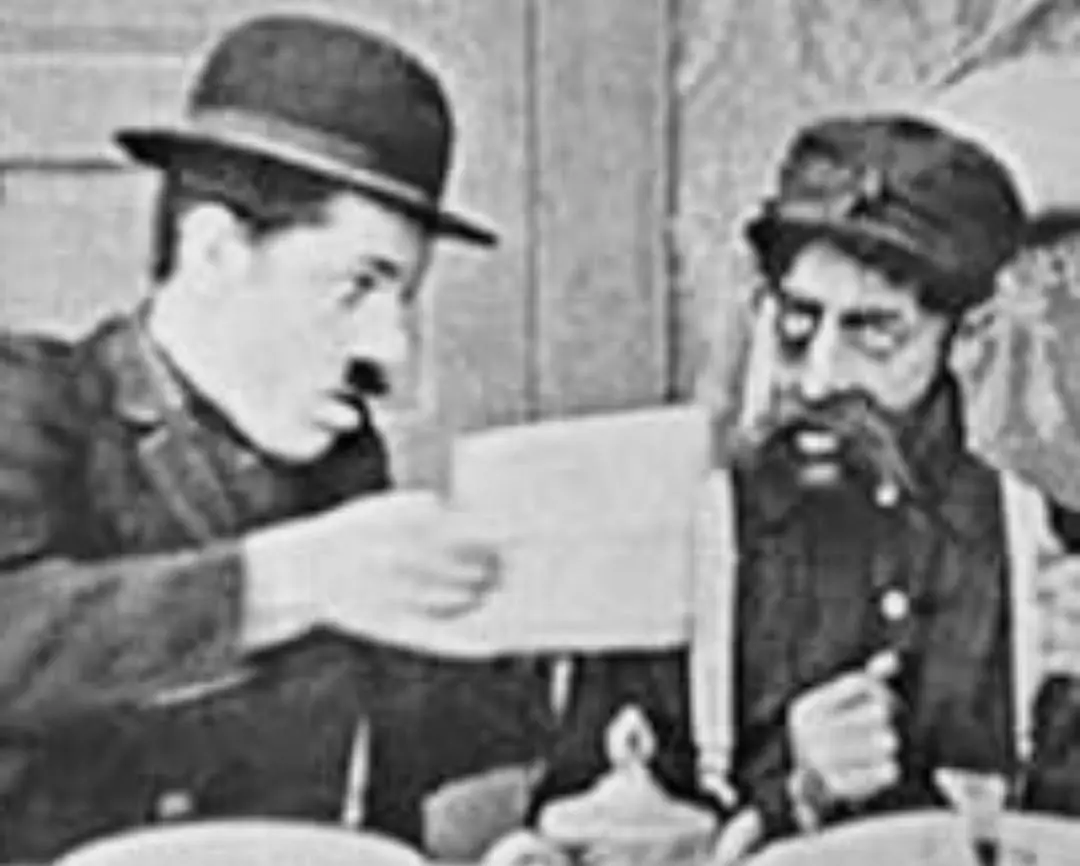
The climactic showdown on the dock is a masterclass in silent‑film choreography. Charlie, armed with nothing but a battered lantern and a resolve forged through adversity, confronts the captain in a duel of wits and physicality. The scene’s tension is heightened by the interplay of light and darkness—flames flickering against the night sky, casting elongated silhouettes that dance across the water’s surface.
Beyond the immediate narrative, the film subtly interrogates themes of loyalty, redemption, and the fluidity of identity. Charlie’s evolution from a peripheral drifter to an active agent of change mirrors the broader societal shifts of the post‑World War I era, where individuals grappled with newfound freedoms and responsibilities.
The supporting cast contributes layers of texture: the landlady’s stoic resolve, the sailors’ boisterous camaraderie, and the gang’s internal discord. Each performance is calibrated to the silent medium’s demands, relying on exaggerated gestures that never slip into caricature, but rather enhance the emotional stakes.
In terms of production design, the boarding house’s cramped rooms and the dock’s weathered timbers are rendered with meticulous attention to period detail. Props such as oil lamps, rope coils, and nautical charts serve not merely as set dressing but as narrative devices that reinforce the film’s maritime motif.
The film’s legacy endures in its influence on later caper comedies and maritime adventures. Its narrative structure—an ordinary setting disrupted by criminal intent—can be traced forward to modern genre hybrids that blend humor with heist elements. Moreover, the film’s deft handling of visual storytelling offers a blueprint for contemporary filmmakers seeking to convey complex plots without reliance on dialogue.
For aficionados of silent cinema, Ship Ahoy provides a rich tapestry of performance, direction, and visual composition. Its interplay of comedy and suspense, anchored by strong character arcs, makes it a compelling study in how early filmmakers navigated the constraints of the medium to produce stories that resonate across decades.
Further exploration of the era’s thematic preoccupations can be found in Christophe Colomb, which examines exploration and ambition, and He Fell in Love with His Wife, a domestic drama that juxtaposes personal desire against societal expectation. Both films, like Ship Ahoy, illuminate the silent era’s capacity for nuanced storytelling.
The film’s auditory experience, though silent, is complemented by the rhythmic intertitles that punctuate the action, offering witty commentary and clarifying plot points without disrupting the visual flow. The intertitles themselves are stylized with ornamental borders, echoing the maritime aesthetic and reinforcing the film’s cohesive visual language.
In sum, Ship Ahoy stands as a testament to the ingenuity of silent‑era filmmakers, marrying comedic timing with a suspenseful narrative, all while navigating the constraints of a black‑and‑white palette. Its characters are etched with depth, its plot twists are meticulously plotted, and its visual composition remains strikingly effective. For scholars, cinephiles, and casual viewers alike, the film offers a rewarding journey through a world where the sea’s relentless tide mirrors the ebb and flow of human ambition and redemption.
IMDb 7.1
1916
Community
Log in to comment.