DbcultAccessing Vault...
Cult Review
Senior Film Conservator
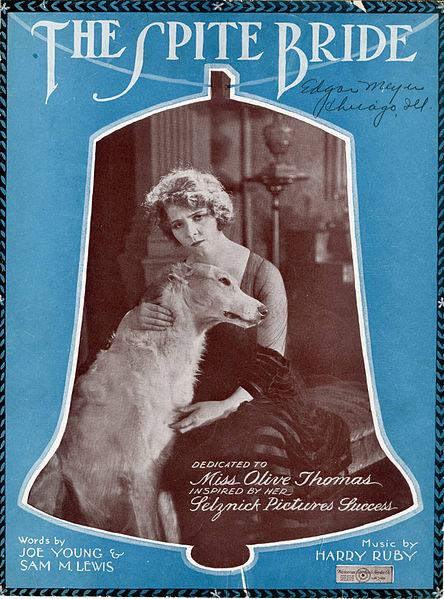
Tracing the lineage of early American cinema often leads us to the doorstep of films like The Spite Bride (1919), a work that oscillates between the gritty realities of the vaudeville stage and the gilded cages of Manhattan’s elite. Directed during a period where narrative conventions were still in a state of fluid evolution, this film serves as a fascinating specimen of the 'marriage of convenience' trope, albeit one draped in the heavy velvet of post-Victorian morality. While contemporaneous works like Eyes of Youth sought to explore the metaphysical possibilities of choice, The Spite Bride remains grounded in the visceral consequences of impulse and the commodification of the female form in the urban jungle.
At the heart of this celluloid tapestry is Dorothy Wallace as Tessa Doyle. Wallace possesses a luminously expressive face, a prerequisite for the era, but she imbues Tessa with a specific brand of stoicism that elevates the character beyond the typical 'damsel in distress' archetype. Her transition from the rustic simplicity of the country to the neon-lit artifice of New York is handled with a subtlety that avoids the histrionics often associated with silent melodrama. When she enters the sister act with Trixie Dennis, played with a sharp, predatory edge by Claire Du Brey, the contrast is palpable. Trixie represents the cynical survivalism of the city, a character who views relationships as mere leverage, much like the desperate figures in The Man Who Came Back.
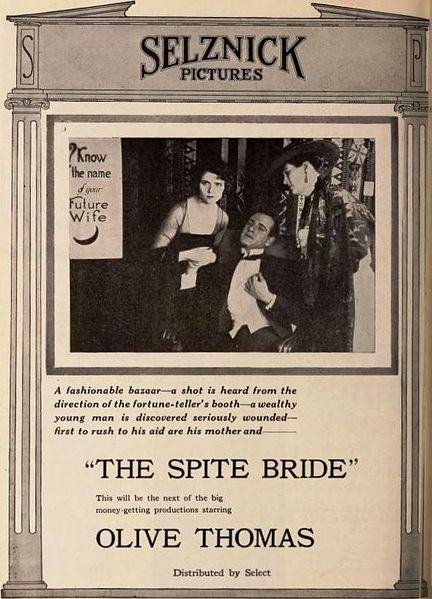
The inciting incident—a drunken marriage pact between Billy Swayne (Robert Ellis) and Rodney Dolson—serves as a scathing, if perhaps unintentional, critique of patriarchal privilege. Billy’s decision to marry the first woman he encounters as a 'spite' against his former lover, Millicent Lee, is a grotesque display of how women were often viewed as interchangeable tokens in a game of male honor. The cinematography during these sequences utilizes the claustrophobic interiors of high-society lounges to emphasize the stifling nature of these social contracts. It is a thematic cousin to the social stratification seen in Men, Women, and Money, where the titular trio dictates the worth of human connection.
The narrative pivot occurs when Trixie attempts to transform a legal farce into a financial windfall. The blackmail subplot is where the film finds its grit. Tessa’s refusal to participate in this extortion—and her subsequent decision to walk away from the money—is the film’s moral meridian. In an era where characters often succumbed to the lure of easy wealth, as seen in the darker corners of The Price of Her Soul, Tessa’s rejection of the 'blood money' establishes her as a figure of radical integrity. Her disappearance into the workforce, eventually becoming a secretary, mirrors the industrious spirit found in The Source, highlighting a shift from victimhood to agency.
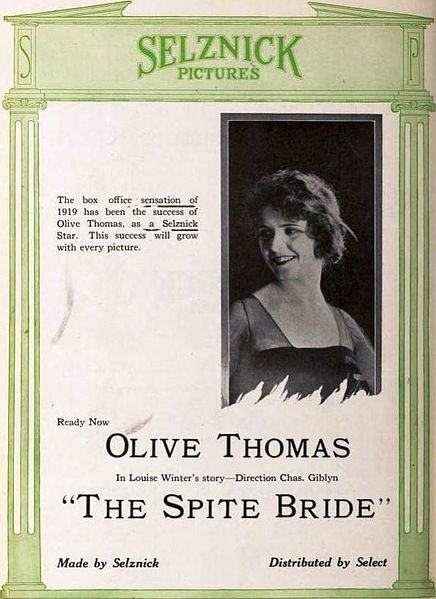
The second act’s reliance on the 'coincidence' of Tessa working for Billy’s mother (Katherine Griffith) is a hallmark of the genre. Modern audiences might find this plot point contrived, yet within the logic of 1919 cinema, it functions as a form of karmic realignment. The domestic space of the Swayne household acts as a purgatory where both Billy and Tessa must shed their past identities to find a common ground. The direction here slows down, focusing on the minutiae of their interactions—the stolen glances over correspondence, the shared silence of the library. It lacks the frantic energy of The Kid Is Clever, opting instead for a simmering emotional resonance.
While much of the film’s original visual luster has been softened by the ravages of time and preservation challenges, the extant frames reveal a sophisticated understanding of lighting. The vaudeville scenes are bathed in a harsh, flattening light that exposes the weariness of the performers, while the Swayne estate is rendered with softer, more diffused shadows, creating a sense of ethereal safety. This visual dichotomy reinforces the film’s central theme: the search for authenticity in a world of performance. The use of intertitles is remarkably restrained, allowing the physical presence of the actors to carry the burden of the narrative, a technique that would be further refined in international works like Die Ratte.
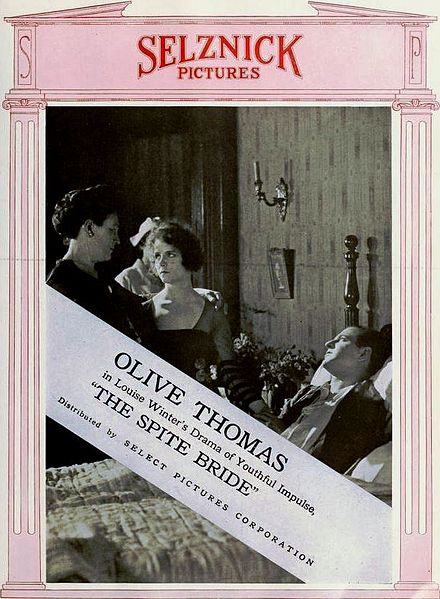
Contextualizing The Spite Bride requires an understanding of the post-WWI American psyche. The world was reeling from global conflict, as touched upon in contemporary war dramas like With Serb and Austrian, and audiences were hungry for stories of personal redemption and moral clarity. Tessa’s journey from a pawn in a drunken game to a woman of independent means—and finally to a partner in a marriage of choice—resonated with a society attempting to reconstruct its own shattered values. The film avoids the cynicism of We Can't Have Everything, instead offering a blueprint for the possibility of a 'second chance' that is earned rather than inherited.
When we compare Tessa to the waifs of D.W. Griffith’s era, such as those in The Fairy and the Waif, we see a distinct evolution. Tessa is not a passive recipient of fate; she is a character who makes active moral choices even when they lead to temporary hardship. This strength of character is also evident in the works of writers Lillian Ducey and Louise Winter, who infuse the script with a distinctly feminine perspective on the vulnerabilities of the working-class woman. Even in more genre-bending films like The Face in the Dark, the focus on the female lead's internal compass remains a vital narrative engine.
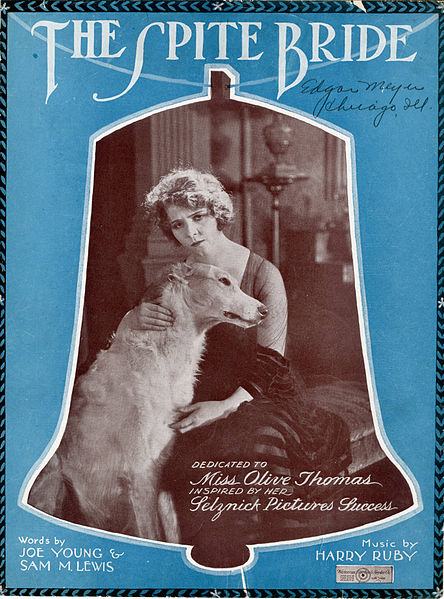
The depiction of the 'sister act' provides a rare glimpse into the logistical and emotional toll of the vaudeville circuit. Unlike the idealized versions of show business found in later musicals, The Spite Bride treats the stage as a site of labor and potential exploitation. This realism aligns it with films like Sorvanets, which explored the lives of those on the fringes of respectability. The film’s climax, which necessitates a second marriage ceremony, is not merely a romantic trope but a symbolic exorcism of the first, 'spiteful' union. It is a reclamation of the institution of marriage from the clutches of petty vengeance.
The direction (often attributed in part to the collaborative efforts of the studio system of the time) shows a keen eye for spatial dynamics. The way characters occupy the frame—Tessa often positioned in the periphery during the early scenes, only to dominate the center by the film’s conclusion—mirrors her burgeoning self-actualization. This is a far cry from the more static compositions of The Empty Cab. Furthermore, the film’s pacing, while deliberate, ensures that the transition from the frantic energy of the New York night to the quietude of the Swayne estate feels earned. It shares the thematic weight found in the more rugged narratives of Hell's Hinges, albeit in a metropolitan setting.
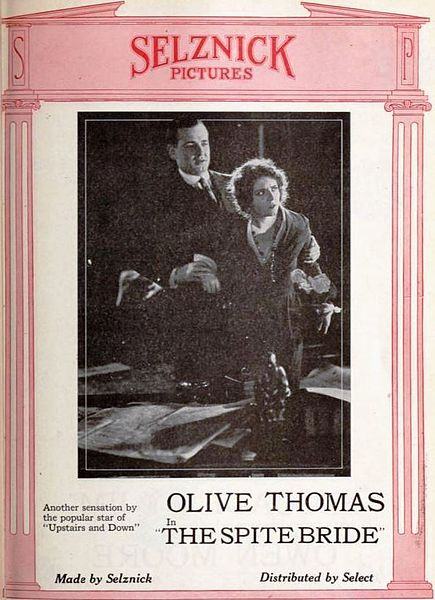
Ultimately, The Spite Bride stands as a testament to the power of silent cinema to convey complex ethical dilemmas through the sheer force of visual storytelling. It is a film that demands to be viewed not just as a historical curiosity, but as a sophisticated exploration of the intersections between class, gender, and personal integrity. By the time the final intertitles roll, the audience has witnessed a profound transformation. The 'spite' that initiated the story has been entirely transmuted into a genuine, hard-won affection. It is a cinematic journey that, much like the protagonist in The Americano, finds its ultimate destination in the reconciliation of one's past with a hopeful, self-determined future.
In the pantheon of 1919 releases, this film remains a brilliant example of how melodrama can be used as a scalpel to dissect social mores. Its characters are flawed, their motivations are often murky, and yet the resolution provides a satisfying sense of justice that feels remarkably modern. For any serious student of film history or lover of silent narrative, 'The Spite Bride' is an essential chapter in the story of the American screen.
IMDb 4.8
1927
Community
Log in to comment.