DbcultAccessing Vault...
4.1/10
Senior Film Conservator
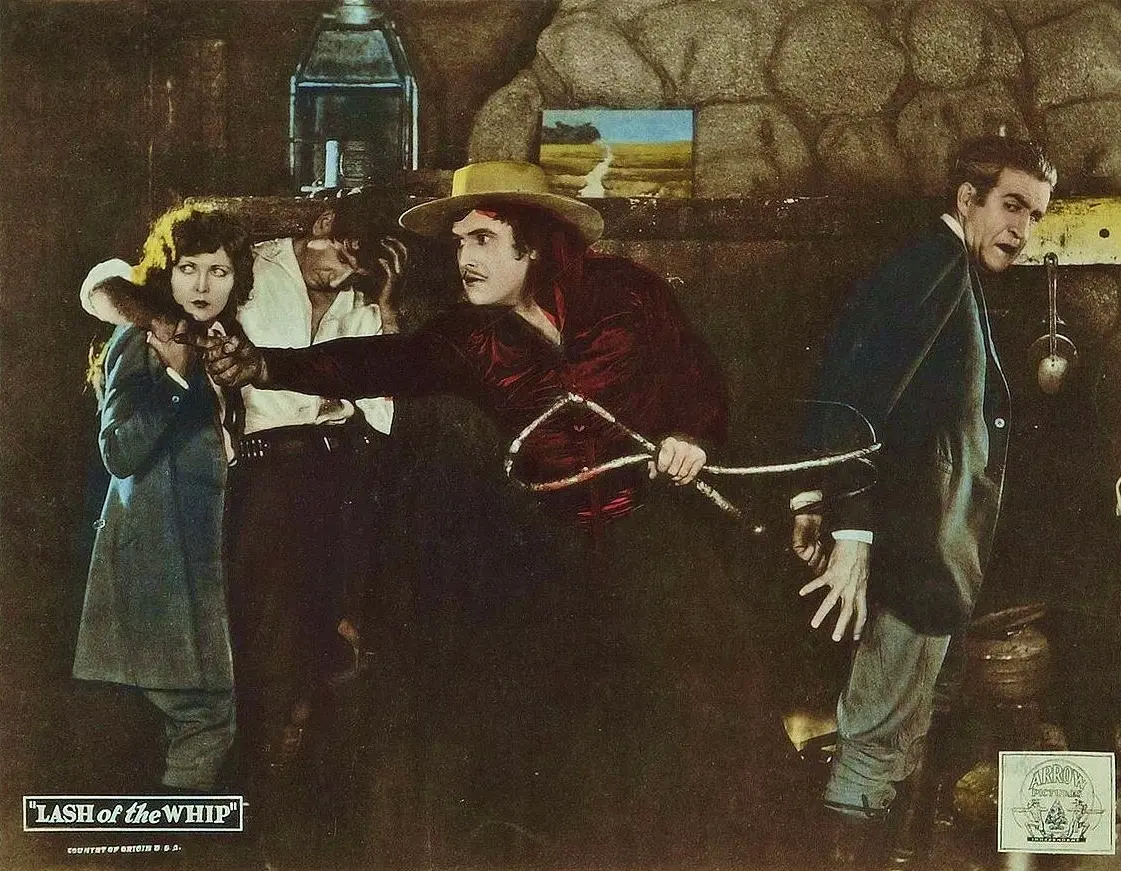
A definitive 4.1/10 rating for a film that redefined the boundaries of cult cinema. Lash of the Whip remains a cornerstone of transgressive art.
To watch Lash of the Whip (1924) is to witness the intersection of pulp heroism and the genuine anxiety of a world in flux. While many contemporary viewers might dismiss the silent Western as a relic of simplistic moral binaries, Francis Ford—brother to the legendary John Ford—crafts a narrative that is as much about the claustrophobia of corporate greed as it is about the expansive freedom of the plains. The film positions its antagonist, "Hurricane" Smith, not merely as a common outlaw, but as a tycoon of the old guard. His resistance to the railroad isn't born of a love for the land, but a desperate, clutching need to maintain a monopoly on transport. This thematic depth elevates the film beyond its contemporaries like A Yankee Go-Getter, which, while energetic, lacks the specific socioeconomic venom found here.
The visual vocabulary of the film is striking. Ford utilizes the stark contrasts of black-and-white cinematography to emphasize the isolation of Florence and Blake. When they are pursued by Smith’s gang, the landscape itself seems to tighten around them. The map—the literal paper trail of progress—becomes a heavy burden, a symbol of a future that many are willing to kill to prevent. In this regard, the film shares a spiritual kinship with The Brute Breaker, where the environment acts as a secondary antagonist, testing the mettle of the protagonists through sheer physical attrition.
Ashton Dearholt’s performance as "Pinto Pete" is nothing short of revolutionary for the mid-1920s. While the era was saturated with gun-toting lawmen, Pete’s reliance on the whip introduces a tactile, auditory (even in silence) quality to the action. The whip is an extension of his will—a flexible, snapping serpent that disarms and demoralizes. There is a specific sequence where Pete rescues Florence from a cabin that rivals the kinetic energy found in Bucking Broadway, yet it feels more intimate, more grounded in the specific physics of Dearholt’s weapon of choice.
Critics often overlook the choreography required for such a performance. Unlike the broad slapstick of Jumping Beans or the more theatrical posturing of Les frères corses, Dearholt must maintain a stoic, almost feline presence. Every flick of the wrist is a calculated risk. The whip is not just a tool for violence; it is a tool for control in a world that is spinning out of it. The way Pete navigates the terrain, always appearing at the precise moment of maximum peril, suggests a character who is intrinsically linked to the geography, a guardian of the soil against the corruptive influence of Smith’s steamship empire.
It is a rare delight to see a director cast himself as the villain, and Francis Ford does so with palpable relish. Hurricane Smith is a character defined by his moniker—destructive, unpredictable, and overwhelming. Unlike the domestic complications found in Why Smith Left Home, this Smith is an existential threat. He represents the dark side of the American Dream: the man who builds an empire and then burns the bridges behind him so no one else can cross. Ford’s performance is subtle; he uses his eyes to convey a sense of entitlement that justifies any atrocity. He isn't just fighting a railroad; he's fighting time itself.
This conflict between the old and the new is a recurring motif in 1920s cinema, but Lash of the Whip handles it with a grit that is often absent in more sanitized productions like A Flirt There Was. There is a dirt-under-the-fingernails realism here, despite the melodramatic flourishes. The stakes feel genuine because the film spends time establishing the desperation of the railroad workers and the arrogance of the steamship crew. It’s a proletarian struggle dressed in the garb of a Western adventure.
The pacing of Lash of the Whip is relentless. Francis Ford understands that in a silent medium, visual momentum is everything. The editing during the chase sequences is remarkably modern, utilizing rhythmic cuts that build tension far more effectively than the static compositions of The Discard. We see the map changing hands, the close-ups of straining horses, and the wide shots of the desolate landscape, creating a sense of scale that makes the pursuit feel epic.
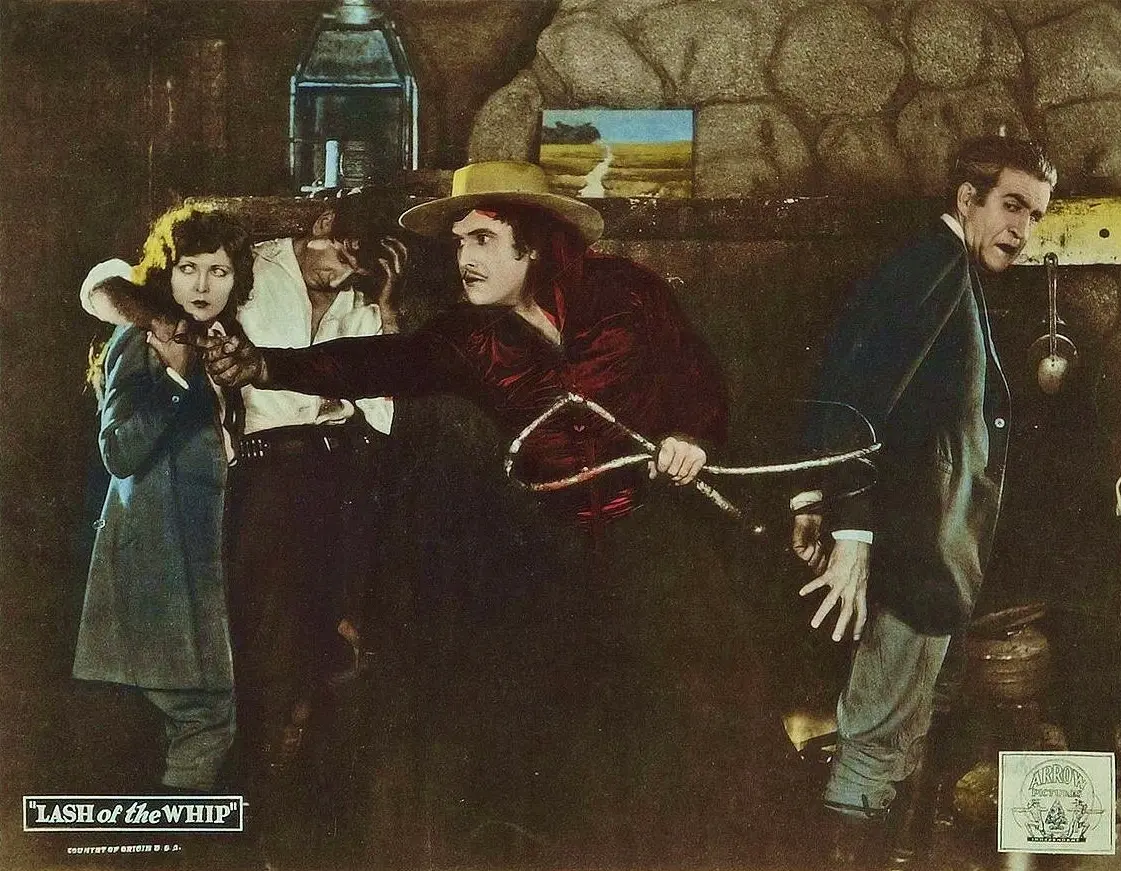
Florence Gilbert, as the female lead, provides more than just a damsel-in-distress archetype. While she is frequently the target of Smith’s harassment, her character exhibits a resilience and a quiet intelligence that mirrors the protagonists in Boots. She is the moral anchor of the film, the reason Pete fights, and the reason the railroad must succeed. Her chemistry with Frank Baker’s Blake is understated, allowing the action to remain the primary focus while still grounding the film in human emotion. They are the pioneers of a new era, facing the atavistic rage of a dying one.
When placed alongside international works like the Japanese Iwami Jûtarô or the Soviet Dzhymmi Hihhins, Lash of the Whip stands out for its uniquely American obsession with infrastructure and property. While other films were exploring historical legends or revolutionary fervor, Ford was looking at the actual mechanics of how the West was won—through maps, deeds, and the violent suppression of competition. It lacks the whimsical escapism of Beach Nuts or Up in the Air, opting instead for a somber, high-stakes atmosphere that prefigures the noir-Westerns of the 1940s.
Even the smaller, more obscure titles like The Blue Streak cannot match the sheer physical presence of the whip-work here. It is a signature element that defines the film’s identity. The whip is a medium of communication; it speaks when the characters cannot. It cracks with the authority of a gavel, delivering a sentence of justice upon Smith’s henchmen. This isn't the lighthearted spectacle of Join the Circus; it is a grim, necessary application of force.
It is impossible to discuss this film without acknowledging the shadow of the Ford family. Francis was a mentor to John, and in Lash of the Whip, we see the DNA of the great American Western being sequenced. The use of the horizon line, the emphasis on the community versus the individual, and the respect for physical labor are all hallmarks that John would later refine. However, Francis has a more jagged, experimental edge. He is less concerned with myth-making and more concerned with the visceral thrill of the moment.
The film’s conclusion, which I will not spoil for the uninitiated, provides a satisfying resolution to the industrial conflict while leaving the viewer with a sense of the immense cost of such progress. It is a film that demands to be seen not just as a historical curiosity, but as a vibrant piece of action cinema that still carries a surprising amount of weight. The map is eventually unrolled, the tracks are eventually laid, but the memory of Pinto Pete’s whip remains etched in the viewer’s mind long after the final title card fades to black.
In an era where we are inundated with CGI and hyper-edited action, there is a refreshing honesty to Lash of the Whip. Every stunt is real, every lash of the whip is performed with genuine skill, and every dusty gallop across the screen is a testament to the endurance of the silent film pioneers. It is a masterclass in visual storytelling, proving that even without a single spoken word, a film can articulate the complex tensions of a nation in the throes of transformation. If you seek a Western that offers more than just gunfights—a film that delves into the very heart of the industrial struggle—then look no further. This is Francis Ford at his most potent, and Ashton Dearholt at his most iconic.
IMDb —
1924
Community
Log in to comment.