DbcultAccessing Vault...
4.8/10
Senior Film Conservator
A definitive 4.8/10 rating for a film that redefined the boundaries of cult cinema. Newman Laugh-O-Grams remains a cornerstone of transgressive art.
In the annals of cinematic history, certain films function not merely as entertainment, but as vital archaeological fragments, offering profound insights into the genesis of artistic movements and the formative years of legendary creators. Newman Laugh-O-Grams, a humble yet monumental silent short from 1921, unequivocally belongs to this rare category. It is less a conventional narrative and more a precious, candid glimpse into the very crucible of creation, featuring none other than a young, unheralded Walt Disney, meticulously plying his craft. Far removed from the opulent, multi-million dollar productions that would later bear his name, this film presents Disney in his purest, most elemental form: a man with a pencil, a drawing board, and an inexhaustible wellspring of imagination. The sheer simplicity of its premise belies the colossal significance of its content, serving as a foundational document for understanding the trajectory of one of the 20th century's most influential figures in entertainment. It’s a moment frozen in time, capturing the nascent stirrings of an artistic vision that would eventually redefine storytelling itself.
The film’s setting is unassuming: a desk, a lamp, and the focused intensity of a budding animator. Walt Disney, then a largely unknown artist in Kansas City, is depicted in a moment of profound concentration, his hands deftly navigating the paper to conjure a series of four distinct, humorously observational drawings. These aren't polished, fully animated sequences, but rather the preliminary sketches, the very bedrock upon which the edifice of animated storytelling would be constructed. The camera acts as an unobtrusive witness, capturing the rhythmic flow of his creative process, the subtle shifts in his posture, and the almost meditative quality of his work. It’s a testament to the raw, unvarnished dedication that characterized his early career, a period marked by relentless experimentation and an unwavering belief in the power of the moving image. Unlike the grand spectacles of films like The Girl and the Crisis or the historical documentation seen in Jeffries-Sharkey Contest, “Newman Laugh-O-Grams” doesn't seek to tell a dramatic story or record a public event; its narrative is the quiet, internal drama of artistic conception.
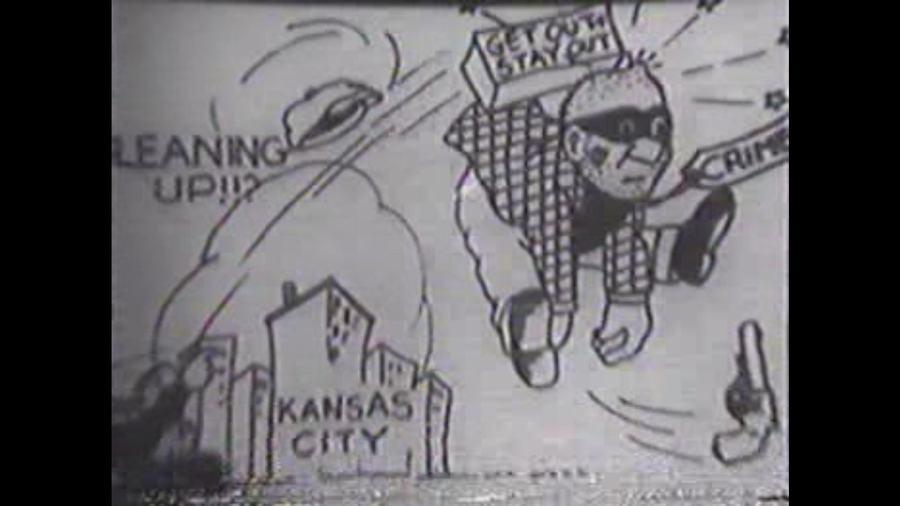
The first drawing to materialize under Disney's hand is titled “Cleaning Up!!?”. This seemingly innocuous phrase, accompanied by its playful punctuation, hints at a gentle, perhaps slightly satirical, commentary on civic responsibility or personal tidiness. In a city like Kansas City in the early 1920s, issues of urban sanitation and public appearance were likely common topics, and Disney, ever the keen observer, translated this into a universally relatable, if subtly humorous, visual gag. It’s a simple concept, yet it speaks volumes about Disney’s early inclination towards character-driven humor and a narrative accessible to a broad audience. Even at this nascent stage, his work possessed an intrinsic charm, an ability to distill everyday observations into engaging visual narratives. This early sketch already showcases the germ of the storytelling prowess that would later define his iconic characters and their enduring appeal.
Following this, Disney embarks on “Kansas City Girls are Rolling Their Own Now.” This particular drawing is an intriguing cultural artifact, reflecting the evolving social landscape of the era. The act of women rolling their own cigarettes was, for its time, a subtle defiance of traditional norms, a quiet assertion of independence and modernity. Disney, with his characteristic blend of observation and gentle wit, captures this burgeoning shift. It's not overtly political or scandalous, but rather an acknowledgment of contemporary trends, presented with a knowing wink. This piece demonstrates Disney's early ability to tap into the zeitgeist, reflecting the everyday lives and evolving behaviors of his audience. It’s a far cry from the escapist fantasies of later Disney works, grounding his early efforts in the tangible realities of his immediate environment. This grounded approach provided a relatable foundation, even for the fantastical elements that would eventually dominate his oeuvre.
The third drawing, “Take a Ride Over Kansas City Streets,” marks a fascinating precursor to the dynamic, immersive animation that would become a Disney hallmark. This sketch likely aimed to convey movement, perspective, and the bustling energy of an urban landscape. One can almost envision the early attempts to translate static lines into a sense of cinematic motion, foreshadowing the exhilarating sequences that would later define animated chases and journeys. It speaks to Disney's burgeoning understanding of how to manipulate visual elements to create a feeling of speed and depth, a fundamental challenge in the nascent field of animation. While films like Thunderbolt Jack focused on literal rides and action, Disney's sketch was grappling with the abstract representation of such experiences, a crucial step in the development of visual storytelling. This exploration of perspective and movement is a critical building block, demonstrating a keen spatial awareness that would be refined over decades.
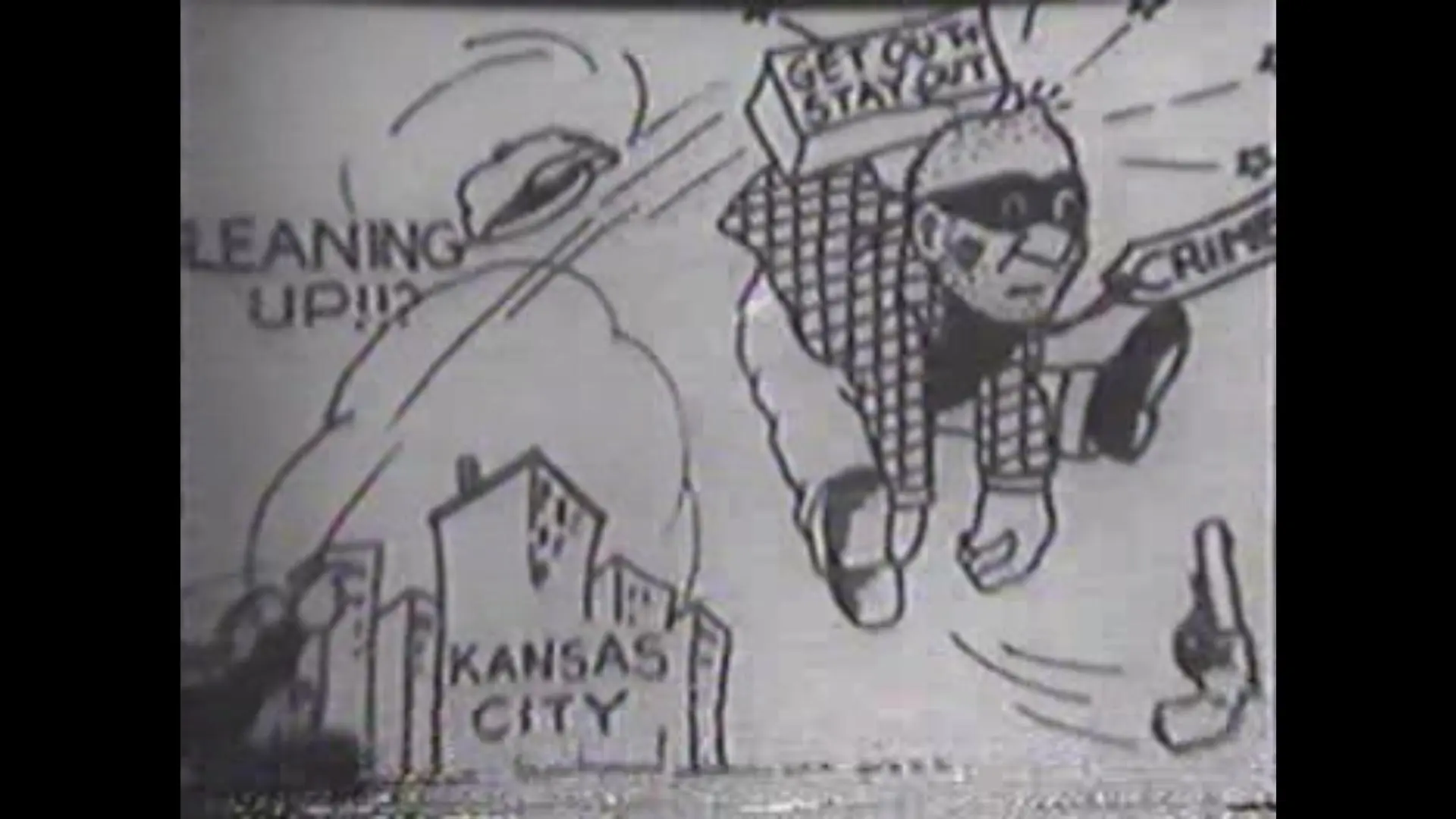
The final vignette is the charmingly seasonal “Kansas City’s Spring Clean-Up.” Like the first drawing, this piece anchors Disney’s creative output in the tangible, cyclical rhythms of local life. Spring clean-ups are a universal experience, evoking themes of renewal, community effort, and the simple pleasures of a fresh start. This drawing showcases Disney's gift for finding humor and narrative potential in the mundane, transforming everyday occurrences into engaging visual stories. It reinforces his commitment to relatability and an understanding of his audience's shared experiences. The consistent focus on Kansas City in these early works underscores the influence of his surroundings, providing him with a rich tapestry of local color and human experience from which to draw inspiration. This regional specificity ironically laid the groundwork for a global appeal, proving that universal themes often emerge from deeply personal observations.
From a technical standpoint, “Newman Laugh-O-Grams” is a marvel of early cinematic documentation. The unpolished, almost raw quality of the footage lends it an undeniable authenticity. It’s a silent film, relying entirely on visual cues and the implied narrative of Disney’s actions. The camera work, while straightforward, is effective in its purpose: to capture the meticulous detail of the artistic process. There are no elaborate camera movements or sophisticated editing techniques; the power lies in its directness and its subject. This stark simplicity, however, is precisely what makes it so compelling. It strips away all artifice, presenting the artist and his craft in their most unadorned state. This contrasts sharply with the more dramatic, narrative-driven productions of the time, such as Sold or Don't Ever Marry, which were already exploring complex plotlines. Disney’s film, by contrast, is a meditation on the very act of creation, a foundational text for understanding the evolution of animation as an art form.
The historical context of the Laugh-O-Gram Studio, where Disney honed his skills, is equally crucial. This small, struggling enterprise in Kansas City was a hotbed of youthful ambition and tireless experimentation. It was here, amidst financial precarity and creative fervor, that Disney and his early collaborators pushed the boundaries of what was possible with animation. “Newman Laugh-O-Grams” is a direct product of this environment, embodying the spirit of innovation and perseverance that would characterize Disney’s entire career. It showcases a foundational moment, a pivotal period where the conceptual leap from static drawings to fluid animation was being actively explored. This wasn’t just about making pictures; it was about making pictures move, imbuing them with life and narrative potential. The film is a snapshot of this transformative era, a testament to the relentless pursuit of an uncharted artistic frontier.
Comparing its direct, almost documentary-like approach to creation with more conventional narrative films of the same period reveals its unique value. While works like The Week-End or Pagan Love were perfecting the art of cinematic storytelling through actors and dramatic arcs, “Newman Laugh-O-Grams” offers a distinct form of storytelling: the story of an artist at work. It humanizes the creative process, making it accessible and tangible. It's a film about potential, about the unseen labor that precedes the polished product. It reminds us that behind every grand narrative, every captivating character, there is often a solitary figure, hunched over a desk, breathing life into lines and shadows. This intimate portrayal of creation is a stark contrast to the often larger-than-life stories presented in other films of the era, highlighting a different, yet equally compelling, facet of cinematic expression.
Ultimately, Newman Laugh-O-Grams transcends its modest origins to become a powerful testament to the transformative power of art and the enduring spirit of innovation. It is a film that demands repeated viewing, not for its complex plot or stunning visuals, but for the sheer weight of its historical and artistic significance. It allows us to witness a pivotal moment in the evolution of animation, to observe the very hand that would later shape generations of dreams and fantasies. For anyone interested in the history of cinema, the genesis of animation, or the extraordinary journey of Walt Disney, this short film is an indispensable, illuminating treasure. It’s a silent epic, charting the birth of a legend, one meticulous stroke at a time, echoing with the promise of a future filled with unparalleled animated wonders. Its simplicity is its strength, and its subject, a young man sketching, is a harbinger of a global cultural phenomenon.
IMDb 6.9
1935
Community
Log in to comment.