DbcultAccessing Vault...
Cult Review
Senior Film Conservator
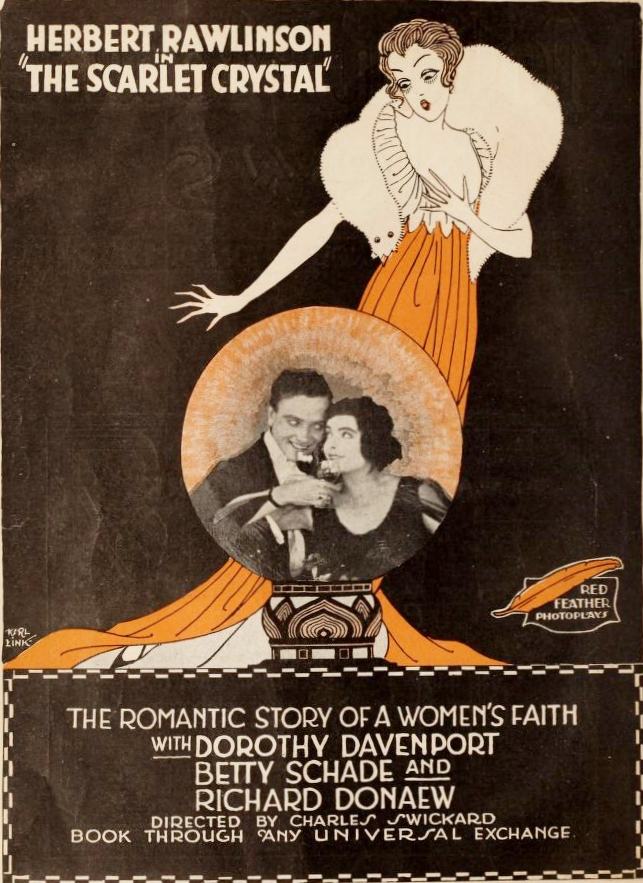
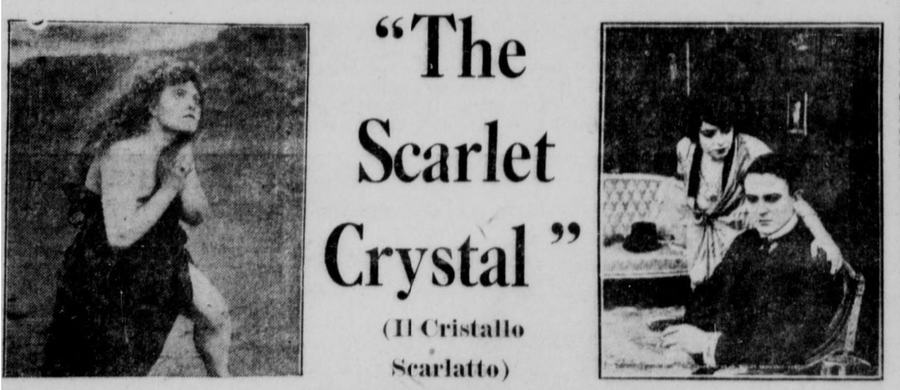
Stepping into the world of early cinema, one often encounters narratives that, despite their age, resonate with an astonishing contemporaneity. Such is the case with J. Grubb Alexander's 'The Scarlet Crystal' (1917), a film that, even a century later, continues to dissect the intricate anatomy of love, temptation, and the relentless pursuit of spiritual redemption. This is no mere period piece; it is a profound exploration of human frailty and resilience, wrapped in the opulent melodrama characteristic of its era, yet possessing a psychological depth that transcends simple categorization. It beckons us to consider the enduring battle between our higher and lower natures, a struggle as relevant now as it was then.
The film introduces us to Priscilla Worth, portrayed with luminous sincerity by Edith Johnson, a character embodying the untouched purity of the pastoral. Her arrival in the bustling metropolis, orchestrated by an aunt whose intentions, while perhaps initially benign, inadvertently set a perilous chain of events in motion, serves as the narrative’s inciting incident. The aunt, a 'society butterfly' herself, envisions Priscilla's simple charm as a refreshing antidote for the jaded palate of Vincent Morgan, a wealthy man-about-town played by Herbert Rawlinson. This calculated introduction, a common trope in stories of the era, immediately establishes the class dynamics and societal expectations at play. Vincent, initially captivated by Priscilla's unblemished spirit, swiftly succumbs to her allure, leading to a marriage that appears, at first blush, to be a fairytale come true. Their subsequent global tour paints a picture of marital bliss, a fleeting idyll before the storm of past transgressions gathers on the horizon.
However, the narrative quickly veers into darker territory with the re-emergence of Marie Delys, a 'vampire chorus girl' enacted with chilling intensity by Gertrude Astor. Marie represents the quintessential 'vamp' archetype, a figure of seductive danger and possessive jealousy prevalent in silent cinema, much like the femmes fatales found in films such as The Love Thief or even the more allegorical figures in The Secret of Eve. Her resentment at being discarded by Vincent is palpable, a simmering fury that eventually boils over, drawing Vincent back into her orbit despite his internal struggle. This struggle between his 'better nature' and the magnetic pull of his past vices forms the moral core of Vincent's character arc, a familiar narrative thread in many dramas of the time, including those exploring societal pressures like Idle Wives.
Priscilla, though deeply wounded by Vincent's infidelity, maintains a steadfast faith, a testament to the enduring power of her love and the memory of their initial happiness. Her quiet suffering stands in stark contrast to Marie's overt vindictiveness, highlighting a central thematic conflict between purity and corruption. Meanwhile, another soul is ensnared by Priscilla's grace: Maxfield Durant, the artist (Raymond Whitaker), who had captured her essence in a portrait upon her first arrival in the city. Durant's unrequited love is a poignant subplot, a silent devotion that never found its voice before Priscilla committed to Vincent. This storyline adds a layer of tragic romance, a melancholic echo of what might have been, and is beautifully rendered through Whitaker's nuanced performance.
In his artistic pursuit, Durant seeks a new muse, advertising for a model who possesses beauty without the 'brazen type' often associated with city life. He discovers Peggy Lovel (Dorothy Davenport), a young woman from the slums, whose innocence, though different from Priscilla's, holds a similar, compelling vulnerability. Peggy's introduction further complicates the already tangled web of relationships. Her presence inadvertently draws the attention of both Vincent, who is commissioning a portrait of Marie, and his dissolute friend, Billy Van Duyn (Nicholas Dunaew). This burgeoning interest in Peggy, a girl from a lower social stratum, predictably ignites Marie's jealousy, adding another volatile element to the already tense emotional landscape. The film subtly critiques the predatory gaze of the privileged upon those less fortunate, a theme that resonates with social dramas like I my kak liudi or even the stark realities depicted in Destruction.
The narrative escalates when Priscilla, yearning for a connection to her earlier, happier self, requests Durant to bring her portrait. The artist's inability to conceal his profound love in that moment is a devastating revelation for Vincent. His subsequent rage, born of guilt and possessiveness rather than genuine affection, underscores his flawed character. Yet, Priscilla, ever pure of heart and 'conscious of no wrong,' finds solace not in recrimination, but in the impending arrival of her child. This maternal instinct, a powerful symbol of hope and renewal, serves as a counterpoint to the surrounding moral decay.
It is at this juncture that the titular 'Scarlet Crystal' comes into play, a mystical artifact brought from Egypt. As Priscilla gazes into its depths, she is confronted with horrifying visions – scenes of degradation, despair, and death. These premonitions, rather than shattering her, paradoxically reinforce her unwavering love for Vincent, renewing her faith in his potential for redemption. The crystal acts as a narrative device, a window into a potential future, and a symbol of both fate and the power of human will to alter destiny. It’s a bold use of supernatural elements, adding a layer of spiritual warfare to the domestic drama, a technique that sets it apart from more straightforward melodramas. This element of premonition and spiritual struggle could be compared to the more philosophical undertones found in The Revolutionist, albeit in a different context.
Durant, unable to endure the agony of his unrequited love and the proximity to Priscilla, makes the painful decision to close his studio and embark on a solitary journey, becoming a wanderer. This act of self-imposed exile, while tragic for him, has unforeseen consequences for Peggy, who is thrown out of employment. Desperate, and with an invalid mother depending on her, Peggy turns to Vincent for help. Here, the film delves into the harsh realities faced by the vulnerable in the city, echoing the social commentary found in many films of the period that highlighted the plight of the working class, a thematic thread seen in films like David Harum.
Billy Van Duyn, in a state of inebriation, attempts to take advantage of Peggy, but Vincent, in a rare display of his 'better nature,' intervenes, sending Peggy away and taking Billy home. However, Peggy's mother's dire need compels her to return to Vincent's apartment, where she falls asleep. It is here that Vincent, as he uncorks a bottle of liquor, experiences a chilling vision mirroring Priscilla's earlier one. The crystal's influence, or perhaps his own burgeoning conscience, reveals a horrifying future: Peggy sacrificing herself, scorned by Billy, returning home to find her mother dead, succumbing to drug addiction, and ultimately collapsing dead in a café. The vision culminates in Marie stabbing both Vincent and herself, a gruesome tableau of mutual destruction. This sequence, masterfully constructed, is a powerful indictment of moral decay and the devastating consequences of unchecked desires.
The sheer horror of this prophetic vision jolts Vincent awake, activating his dormant moral compass. He sends Peggy home unharmed, effectively altering the tragic trajectory of her life and, by extension, his own. This pivotal moment marks Vincent’s true turning point, a profound act of self-redemption. Concurrently, Priscilla, patiently waiting with their newborn child, gazes once more into the scarlet crystal. She witnesses the spiritual battle for Vincent's soul, a cosmic struggle between good and evil, played out in the ethereal realm. The appearance of the 'face of the Christus' within the crystal signifies the victory of virtue, confirming Vincent's hard-won redemption and assuring Priscilla of his imminent, repentant return. The film concludes with Vincent's return, a man transformed, ready to embrace his family and a life of integrity.
'The Scarlet Crystal' is a testament to the evocative power of silent cinema, relying heavily on the expressive prowess of its cast and the ingenuity of its visual storytelling. Edith Johnson as Priscilla delivers a performance of remarkable subtlety and emotional depth, her innocence and unwavering faith serving as the moral anchor of the film. Herbert Rawlinson, as Vincent, navigates the complexities of a character torn between indulgence and burgeoning conscience with compelling realism. His journey from a jaded playboy to a repentant husband is genuinely affecting. Gertrude Astor, meanwhile, is captivating as Marie Delys, embodying the 'vamp' archetype with a magnetic, yet menacing, allure. Her portrayal is a masterclass in silent film villainy, ensuring Marie is not merely a caricature but a force of destructive passion. Dorothy Davenport's Peggy Lovel is equally memorable, conveying the vulnerability and desperation of a young woman caught in the harsh realities of urban poverty.
The film's direction and cinematography, while adhering to the conventions of its time, skillfully employ visual metaphors and dramatic framing to enhance the narrative. The use of the crystal as a literal and metaphorical lens into the characters' souls and potential futures is a particularly innovative device for the era. The pacing is deliberate, allowing the emotional arcs to unfold organically, drawing the audience deeper into the moral quandaries faced by the characters. The intertitles, crucial to silent film storytelling, are crafted with a poetic sensibility, articulating the characters' inner thoughts and advancing the intricate plot without feeling obtrusive. J. Grubb Alexander's screenplay is a remarkable achievement, weaving together multiple character arcs and thematic threads into a cohesive and emotionally resonant whole. The writer's ability to imbue each character with distinct motivations and internal conflicts elevates the material beyond simple melodrama, positioning it closer to the psychological dramas that would become more prevalent in later cinematic periods.
At its heart, 'The Scarlet Crystal' is a profound meditation on redemption. It explores the idea that even the most wayward soul can find its way back to virtue through a combination of love, faith, and a terrifying confrontation with the consequences of one's actions. The contrast between Priscilla's unwavering purity and Marie's destructive jealousy, set against the backdrop of Vincent's moral vacillation, creates a powerful allegorical framework. The film also touches upon themes of social class, particularly through Peggy's character, highlighting the vulnerability of those on the margins of society when confronted by the whims of the wealthy. This social commentary, while perhaps not as overtly political as some contemporary films, is nonetheless potent.
The role of fate versus free will is another compelling aspect. The crystal's visions present a seemingly predetermined future, yet Vincent's ultimate choice to act differently underscores the film's belief in the power of individual agency and the capacity for moral transformation. This nuanced exploration of free will in the face of prophetic warnings is a sophisticated thematic element for a film of this vintage. It suggests that while the paths of destruction may be laid out, the human spirit possesses the power to choose a different course, a message of hope that transcends generations. Such a struggle for moral rectitude and the triumph of the spirit has parallels in films like As Men Love, which also delves into complex ethical dilemmas.
In conclusion, 'The Scarlet Crystal' is more than just a historical artifact; it is a vibrant, engaging piece of cinema that continues to speak to universal human experiences. Its rich characterizations, intricate plot, and profound thematic explorations make it a compelling watch for anyone interested in the foundational narratives of film. The performances of Herbert Rawlinson, Marie Hazelton, Edith Johnson, Raymond Whitaker, Dorothy Davenport, Gertrude Astor, Nicholas Dunaew, Betty Schade, and Dick Ryan, under the guidance of J. Grubb Alexander's script, coalesce to create a deeply moving and thought-provoking experience. It reminds us that even in the silent era, filmmakers were crafting stories with immense emotional resonance and enduring philosophical weight, stories that continue to illuminate the complex beauty and profound challenges of the human condition. This film stands as a gleaming testament to the power of early cinema to captivate, challenge, and ultimately, inspire.
IMDb —
1927
Community
Log in to comment.