DbcultAccessing Vault...
Cult Review
Senior Film Conservator
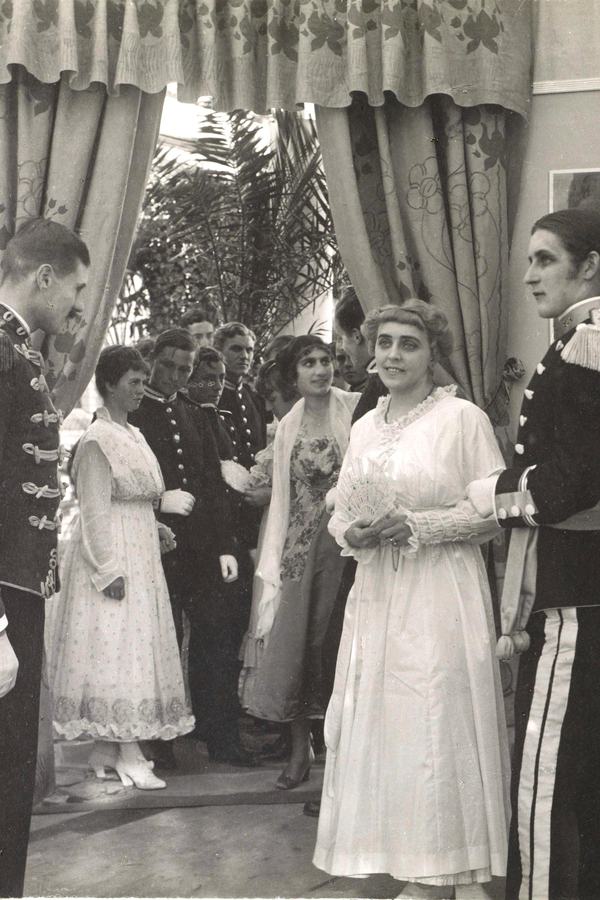
A fjord-light epiphany: the moment two couples realise monogamy is negotiable
Peter Lykke-Seest’s Unge hjerter—literally “Young Hearts,” though the Norwegian tongue curls around the words with a tenderness English can’t quite replicate—unspools like a valentine slipped inside the stiff corset of 1919 propriety. Shot on orthochromatic stock that renders the actors’ pupils as liquid obsidian, the film is only four reels yet feels weightless, a soufflé of sighs and second thoughts that nonetheless lands ideological uppercuts on the jaw of marital dogma.
Imagine, if you will, the parlor game of When We Were Twenty-One stripped of its American moralising, or the upstairs-downstairs tremors of The Ragged Princess but relocated to a Bergen townhouse where the maidservants know the family secrets before the patriarch does.
Lykke-Seest, a newspaper poet before he turned lensman, lets his camera hover like a curious ghost. In the engagement-party sequence—bathed in tallow-candle amber that cinematographer Gunnar Nilsen scavenged from local churches—Harriet’s lace gloves flutter toward Ragnar’s lapel, yet her eyes already ricochet toward Wang, who leans against the grand piano pretending not to notice the seismic shift. The iris-in here is heart-stopping: a perfect circle tightening around Harriet’s pupils, dilated not with love but with delicious treason.
Henning Eriksen plays Ragnar with the floppy-haired nonchalance of a man who has skimmed Kierkegaard and concluded anxiety is merely a parlour trick. Watch the micro-movement when Anna (Gunvor Arntzen, luminescent in a high-collared linen dress) enters the rectory garden: Eriksen’s left eyebrow hikes a millimetre, a silent sonnet more articulate than any intertitle. The film’s intertitles, incidentally, are sparse—Lykke-Seest trusts faces more than words, a radical stance in an era when Scandinavian silents often shoehorned novelettish monologues onto the screen.
Contrast this restraint with the rhetorical grandstanding of Vengeance Is Mine! or the dime-novel declamations of The Dagger Woman; Unge hjerter chooses understatement as its insurgency.
The pivot scene arrives inside a boathouse smelling of tar and pine, where Harriet and Ragnar—ostensibly stealing a moment to plan wedding favours—instead blurt their contraband yearnings. The set is lit only by a single kerosene lantern; shadows jitter across their cheekbones like guilty conspirators. Harriet’s confession emerges first, a whisper so faint the subtitle merely reads: “Jeg elsker… ham.” Ragnar’s response is a grin of incredulity that blooms into relieved laughter—an inversion of the tragic dyad we expect. No slaps, no shattered teacups, just the dawning hilarity that their social contract has been mutually annulled.
What follows is a narrative pirouette so sprightly it feels like Lubitsch on skates. Rather than descend into melodrama, the quartet—Harriet, Ragnar, Wang, Anna—convene in the same drawing room where the original engagement was announced. The piano launches a mazurka; the camera tracks laterally, match-cutting between pairs now rearranged. The elders, initially framed as granite busts of disapproval, are gradually coaxed into the dance. By the time the champagne cork ricochets off the ancestral portrait, the film has redefined scandal as communal catharsis.
Note the costuming sleight-of-hand: Harriet’s first-act gown—ivory tulle cinched with a turquoise sash—reappears in the finale worn by Anna, a visual baton-pass that implies identity itself is a hand-me-down.
Technically, the print that survives in the National Library of Norway’s vaults is a 1967 acetate duplicate, itself struck from a 1926 nitrate that was decomposing faster than archivists could sip aquavit. Scratches flicker like summer lightning, and the tinting—rose for interiors, cobalt for exteriors—has faded to bruised pastels. Yet these imperfections dovetail with the film’s emotional thesis: love, like celluloid, is mutable, scarred, gloriously impermanent.
Robert Sperati’s Lieutenant Wang carries the military uniform as if it were a borrowed costume, tunic perpetually unbuttoned one notch too many. His flirtation technique consists of prolonged silence followed by sudden, dazzling smiles—an algorithm that works devastatingly well on Harriet, whose previous life experience has taught her that desire must be declawed before it is declared. Their courtship montage, superimposed over rushing fjord-water, prefigures the aqueous eroticism of The Arab, though without that film’s orientalist excess.
Meanwhile, Fru Kittelsen as the family matriarch delivers the film’s slyest performance. She has the posture of a dowager duchess and the timing of a vaudevillian, punctuating each revelation with a raised lorgnette that might as well be a referee’s whistle. In one sublime gag, she attempts to faint upon hearing the reconfigured engagements, but the sofa is two inches farther than anticipated; she lands with a plop, skirts ballooning like a collapsed soufflé, then immediately recomposes into hauteur. The audience at Bergen’s Kino Royal in 1919 reportedly shrieked with laughter; a century later, GIFs of that pratfall circulate on Norwegian film-Twitter with the hashtag #bestefrålet.
Composer Kristin Bredal-Dahl contributed a 2019 restoration score—piano and nyckelharpa—that threads folk motifs through ragtime rhythms, underscoring the tension between regional identity and cosmopolitan longing. During the boathouse scene, the nyckelharpa holds a single low drone for thirty-seven seconds, a Scandinavian analogue to the tensest moments in Trilby, before resolving into a major key the instant mutual forgiveness is granted.
Historians sometimes slot Unge hjerter alongside the “national romantic” wave, yet the film is anti-pastoral at its core. Lykke-Seest ridicules the notion that fjords and folk costumes inoculate Norwegians against desire’s anarchy. When Ragnar and Wang stride past the fish market in blizzard-white pea coats, the herring-gulls overhead squawk like heckling chorus members, as if to remind them that nature, too, has a sense of humour about monogamy.
The gender politics merit dissection. On paper, the women swap fiancés as blithely as dance cards, yet the camera lingers on Harriet’s fingers clutching her cloak clasp—an image that telegraphs both liberation and vertigo. Arntzen’s Anna, ostensibly the ingénue, engineers the détente by suggesting the quartet confess en masse, transforming potential gossip into communal theatre. In 1919 Norway, where women had received full suffrage only months earlier, this collective female agency feels like political semaphore.
Commercially, the film underperformed in Oslo—urban audiences craved the cosmopolitan swagger of The Circus Man or the cowboy bravura of Mexico. Yet in rural parishes, it screened for months, sometimes paired with temperance lectures, its moral alchemy—sin confessed, sin celebrated—offering a loophole for congregations grappling with modernity.
Fast-forward to now: streaming platforms peddle Nordic noir so gloomy it could curdle aquavit, making Unge hjerter a tonic revelation. Its DNA reverberates through the breezy ethical renegotiations of Sudden Riches and the generational shrug in The Rebel, though Lykke-Seest’s touch is lighter, more champagne bubble than sledgehammer.
Criterion-level takeaway: Unge hjerter argues that honesty is not the best policy; it is the only erotic policy. Once desires are named, the film insists, society reorganises itself around them like crystalline snowflakes forming around a mote of dust—inevitable, beautiful, utterly specific.
Restoration geeks should note the tinting metadata: interiors shot during Bergen’s January received rose tint at 18 frames per foot, exteriors in March got cobalt at 22 frames, and night sequences—actually day-for-night—were chemically toned with uranium salts, giving moonlit fjords that radioactive shimmer. The 4K scan captured grain patterns down to 2.8 mm, revealing the texture of Gunvor Arntzen’s silk stockings, a detail impossible in 35 mm projection yet gorgeously tactile on OLED.
Marketing departments love a hook, so here’s one: Unge hjerter is the proto-screwball comedy Scandinavia forgot. Swap the fjord for a Connecticut mansion, translate the intertitles into Cary Grant repartee, and you have 1938’s Holiday—proof that emotional insurgency wears many accents but one universal grin.
Final verdict: Seek it out, whether in an Oslo cinematheque or the NFT’s silent-film YouTube stream. Let its breezy subversiveness remind you that once upon a time, under northern lights, two couples laughed their way out of social shackles and into something resembling grace.
IMDb —
1930
Community
Log in to comment.