DbcultAccessing Vault...
5.8/10
Senior Film Conservator
A definitive 5.8/10 rating for a film that redefined the boundaries of cult cinema. His Own Law remains a cornerstone of transgressive art.
The year 1920 stood as a threshold for American cinema—a moment where the primitive thrills of the early nickelodeon era were being rapidly supplanted by nuanced psychological dramas and the burgeoning sophistication of the feature-length narrative. His Own Law, directed with a steady, if unpretentious, hand, serves as a fascinating specimen of this transitional period. It is a film that grapples with the masculine archetypes of the early 20th century, pitting the rugged individualism of the American frontier against the existential trauma of the Great War.
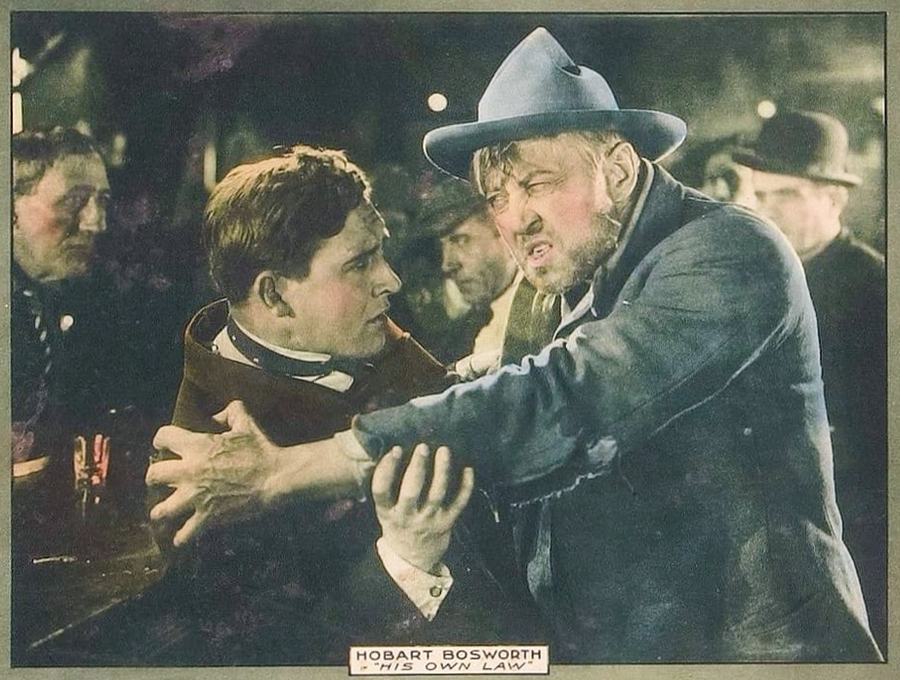
At the heart of this production is Hobart Bosworth, an actor whose very physiography suggested the granite cliffs of the Pacific coast. Bosworth, often celebrated for his roles in seafaring adventures like those seen in earlier iterations of That Devil, Bateese, brings a weathered, paternal gravitas to the role of J.C. MacNeir. MacNeir is not your typical cinematic hero; he is introduced through the lens of his vices. His "drunken sprees" are not merely plot devices but are presented as the necessary pressure-valve for a man who carries the weight of massive construction projects on his shoulders. This portrayal of functional alcoholism as a trait of the rugged laborer provides a grit that many contemporary melodramas, such as The Country Boy, often lacked.
Bosworth’s performance is a masterclass in silent-era subtlety. While many of his peers were still clinging to the exaggerated gesticulations of the stage, Bosworth utilizes his eyes and his stature to convey a complex internal life. When he offers the young Jean Saval (played with a contrasting Gallic lightness by Rowland V. Lee) a job after a night in a flophouse, we see the flicker of a lonely man seeking a surrogate son. This isn't just charity; it's a desperate grab for human connection in a world defined by cold steel and heavy stone.
The setting of Chinook functions as more than a backdrop; it is a crucible. The cinematography captures the raw, unpolished beauty of the construction site, echoing the themes of building something permanent out of chaos. It is here that the romantic triangle begins to take shape. The introduction of Sylvia Harris (Jean Calhoun) injects a soft, yet precarious, element into the hyper-masculine environment. Unlike the more whimsical romantic structures found in April Folly, the courtship between Saval and Sylvia is framed by the looming shadow of global conflict.
The film’s pacing in these middle acts is deliberate. It allows the audience to feel the weight of the promise MacNeir makes to Saval. This isn't the casual oath of a friend; it is a sacred bond, a "law" unto itself. When Saval departs for France to defend his homeland in World War I, the film shifts from a frontier drama to a home-front tragedy. The use of the war as a narrative disruptor was common in 1920, yet His Own Law handles the emotional fallout with a surprising lack of jingoism, focusing instead on the localized devastation of a family unit torn apart by false reports of death.
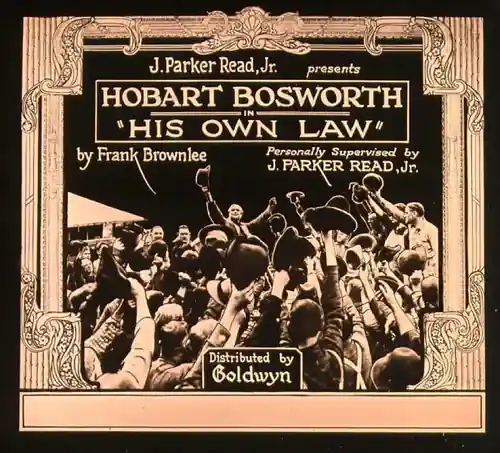
The most provocative segment of the film involves MacNeir’s decision to marry the pregnant Sylvia. In the social climate of 1920, a woman in Sylvia’s position faced total ostracization. MacNeir’s proposal is presented not as an act of romantic conquest, but as a supreme sacrifice of his own bachelorhood to preserve the honor of his friend’s beloved. This thematic exploration of "guardianship" vs. "betrayal" is far more sophisticated than the binary morality seen in films like Grim Justice.
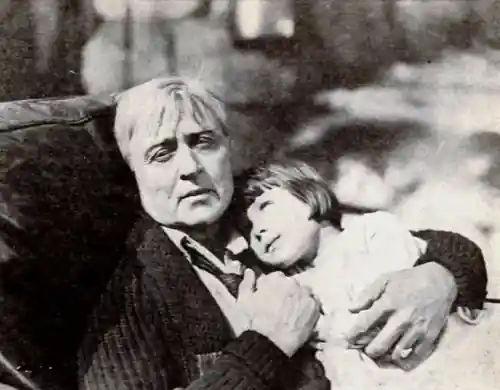
The tension that builds during the four-year jump is palpable. We see MacNeir as a devoted father to a child that is not his own, living in a marriage that is likely platonic yet legally binding. This domestic arrangement is a fragile peace, waiting to be shattered by the inevitable return of the "dead." When Saval finally emerges from the German prisoner-of-war camp, the film avoids the easy path of a violent confrontation. Instead, it leans into the psychological horror of a man who feels his life has been stolen by his closest confidant. The accusations of treachery are sharp and visceral, providing Rowland V. Lee with his most powerful scenes in the film.
When comparing His Own Law to international contemporaries like the Swedish För sin kärleks skull or the Danish I de unge Aar, one notices a distinctly American preoccupation with the "self-made man." MacNeir is a contractor—a builder of cities—and his moral code is as rigid as the structures he creates. Unlike the more fatalistic European dramas of the time, such as Udar v spinu, there is a sense here that through sheer force of will and integrity, a man can rectify even the most convoluted of misunderstandings.
Furthermore, the film’s handling of the return-from-the-dead trope is significantly more grounded than the sensationalist approach found in The Hundredth Chance. There are no convoluted conspiracies or mustache-twirling villains. The conflict arises entirely from the collision of two honorable men who have been victimized by the chaos of war and the limitations of communication. It shares a certain rustic honesty with the Australian classic On Our Selection, though it swaps the outback’s humor for a more somber, industrial pathos.
The climax, in which Sylvia is given the agency to choose her own path, is a remarkably progressive moment for 1920 cinema. Often, in films of this era, the woman is treated as a prize to be won or a piece of property to be returned. Here, Sylvia’s decision to return to Saval is met by MacNeir not with rage, but with a quiet, devastating acceptance. Bosworth’s final scenes are etched with a profound sense of loss, yet he maintains the dignity that has defined his character throughout. He accepts defeat "gracefully," but the audience understands that his victory was in his steadfastness during the years of Saval’s absence.
This ending elevates the film above the standard fare of its day. It doesn't offer a traditional "happy ending" for its protagonist, but rather a bittersweet meditation on the nature of duty. It reminds one of the stoic endurance depicted in Wild Youth, where the landscape itself seems to demand a certain level of emotional fortitude from those who inhabit it.
Technically, His Own Law demonstrates the high standards of the late silent period. The lighting, particularly in the interior scenes of the cheap lodgings and MacNeir’s home, utilizes a chiaroscuro effect that underscores the moral ambiguity of the situation. The editing by E. Magnus Ingleton (who also co-wrote) is tight, ensuring that the sprawling narrative—which covers over four years—never feels disjointed. The film avoids the pitfalls of over-titling, allowing the actors’ expressions to carry the narrative weight, a technique that was perfected in masterpieces like Gli spettri.
While it may lack the sheer spectacle of The Master Mystery or the high-stakes gambling of Die große Wette, its strength lies in its intimacy. It is a human story told on a grand scale, a cinematic bridge between the Victorian values of the past and the modern complexities of the post-war world. For fans of Hobart Bosworth, this remains one of his most quintessential performances, capturing the essence of the "Iron Man" of the screen in a role that required both physical presence and emotional vulnerability.
In the final analysis, His Own Law is a testament to the power of the silent medium to explore complex ethical dilemmas. It challenges the viewer to consider what they would do in MacNeir’s shoes—would you break your own code to protect another, knowing it might lead to your own undoing? It is a film about the laws we write for ourselves, the ones that no court can enforce, but which define the very fabric of our character. It is a forgotten gem that deserves a place in the conversation of early American cinematic excellence, standing alongside works like Won on the Post and Leoni Leo as examples of the diverse storytelling capabilities of the 1920s.
Reviewer's Note: The restoration of such films is vital for understanding the evolution of the narrative feature. The chemistry between Bosworth and Lee provides a fascinating look at the generational shift in acting styles that was occurring at the time.
IMDb —
1926
Community
Log in to comment.