DbcultAccessing Vault...
5.3/10
Senior Film Conservator
A definitive 5.3/10 rating for a film that redefined the boundaries of cult cinema. The Squatter's Daughter remains a cornerstone of transgressive art.
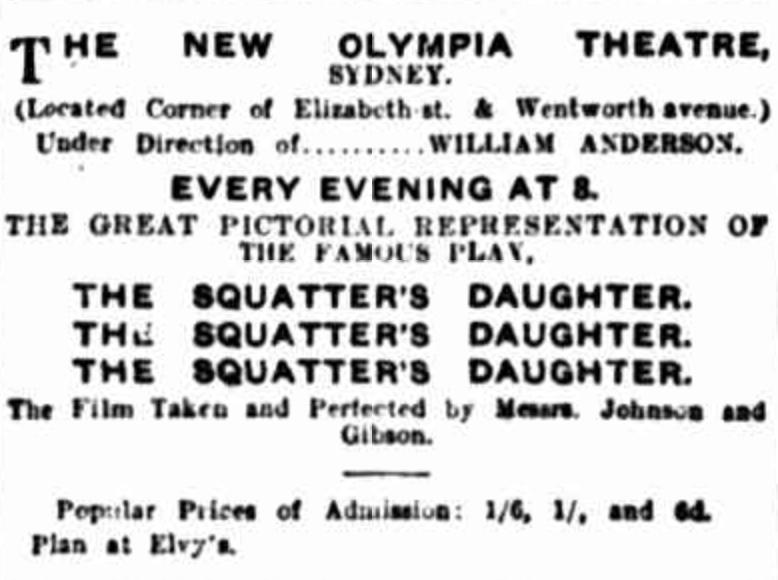
The first time I projected The Squatter’s Daughter on my makeshift garage-wall cinema, the 9.5-mm splice flared like a magnesium sun, and for a heartbeat the ghost of Ben Hall stepped straight through the emulsion, spurs ringing against bitumen. Ninety-odd years earlier, when Bert Bailey and Edmund Duggan adapted their smash stage melodrama to celluloid, they weren’t merely exporting bush folklore; they were distilling a continent’s anxious psyche—land lust, outlaw romance, the ache of daughters who refuse to be property—into flickering silver. The resultant 1910 feature is both a rusted compass pointing toward Australia’s future cinema and a cracked mirror reflecting its colonial wounds.
Set on the sweeping tablelands east of the Dividing Range, the narrative pits Enderby (ancestral stone homestead, patriarchal arrogance) against Waratah (weatherboard upstart, gambling on merino bloodlines). Between them runs a nameless creek that swells with thunderstorm and resentment in equal measure. Bailey, who also plays the hard-drinking station owner Angus McAlpin, allows the camera to linger on hooves churning ochre dust into tornadoes—an early Australian admission that wealth is literally torn from the earth’s hide. Olive Wilton’s Jean McAlpin, the titular squatter’s daughter, strides through these vistas in riding boots buckled tight enough to bruise convention. She is no passive heirloom; she trades stock secrets with drovers, reads Hall’s wanted notices as if they were love sonnets, and ultimately becomes the moral hinge on which two properties and one outlaw’s fate swing.
Ben Hall’s insertion is not historical garnish but narrative nitroglycerin. Played with laconic magnetism by Edmund Duggan (doubling as co-writer), the bushranger strides onto screen in a charcoal coat that drinks light like a negative of the surrounding sun-scorched fleece. His gang’s nighttime torching of a government tollgate becomes a pagan rite: flames lick the edges of the frame, embers swirl upward into the projection beam itself, as if cinema itself were combusting. Hall’s flirtation with Jean is less romance than mutual recognition—two trespassers mapping the fault lines of a society that criminalizes those who refuse to own or be owned.
What elevates the film above mere colonial horse-opera is how cannily it equates land accumulation with masculine fragility. The McAlpins obsess over boundary riders’ reports the way Wall Street titans later tickered stock prices. A single prize ram—its curled horns rendered in sculptural close-up—carries the symbolic weight of a treasury vault, so when rival stockmen swap the beast for a scrubber baited with arsenic, the act reverberates like insider trading. Credit intertitles (hand-lettered, some still stained with coffee and nicotine from touring showmen) announce "A FATHER’S SHAME—A DAUGHTER’S VOW," underlining that property and patriarchy are Siamese twins.
Technically, the movie is a mongrel beauty. Interior scenes rely on kerosene-lamp sidelighting that carves cavernous shadows under actors’ cheekbones—an aesthetic half Rembrandt, half campfire ghost-story. Exterior shots favor depth-staging: in one tableau, a dozen shearers form a receding diagonal, their blades catching sun-flares that punctuate the image like Morse code. The camera seldom moves, yet the choreography within the frame vibrates with urgency; sheep surge like pale torrents, horses rear silhouetted against cycloramic skies, and in the climactic cliff-top stampede the herd thunders past the lens close enough to kick stinging clods into audience memory.
Bailey’s Angus McAlpin bellows with Shakespearean excess, a man who treats pastoral leases as kingdoms. By contrast, Wilton underplays Jean’s rebellion—her stillness amid chaos reads as proto-feminist manifesto. When she confronts Hall in a moonlit stable, the outlaw twirls a rosewood stock-whip just inches from her unblinking gaze; she neither flinches nor leans into danger, embodying a defiance that feels modern. Duggan’s Hall smiles like a man who has already memorised his own epitaph: half-smirk, half-elegy.
Seen today with a live score—my preference is electric guitar run through spring reverb and eucalyptus-scented contact mics—the film acquires extra dimensions. Each chord bloom suggests horizons beyond the frame, while the scent of crushed gum leaves passed through the projector beam evokes an olfactory cinema impossible in 1910 but irresistible in revival houses. The National Film and Sound Archive’s 2022 4-K restoration deepens charcoal blacks until Hall’s coat becomes a moving void, a portable abyss.
Post-screening, what lingers is not the gunplay but the unease. The movie understands that Australia’s foundational myth is not discovery but foreclosure—the fencing of vast commons for wool kings who themselves would soon be swallowed by conglomerates. Jean’s final gesture—letting Hall’s horse gallop riderless into the sunrise—acknowledges that outlaws and squatters alike are footnotes to a continent that will outlast both fleece and firearms.
Place this alongside The Story of the Kelly Gang (1906) and you witness an evolutionary leap in moral ambiguity. Where Kelly’s gang are martyrs framed by copper tyrants, Hall’s crew are self-aware mercenaries, complicit in the very pastoral capitalism they rob. The camera’s willingness to frame Jean as co-conspirator rather than damsel anticipates the complex heroines of Robbery Under Arms, yet predates them by decades.
The Squatter’s Daughter crackles with the electricity of a culture still deciding whether it belongs to the empire, the outlaw, or the land itself. Imperfect, yes—some sequences echo the stageboard too literally, and intertitles occasionally belabour subtext—but its raw kinetic DNA sired everything from Forty Thousand Horsemen to The Proposition. Watch it for the hoof-beat thunder, stay for the squatter’s daughter who refuses to be either collateral or conquest.
In the scorched silence that follows the final reel, you realise the film’s true antagonist is not Hall, nor the rival station, but the horizon itself—an implacable line that promises infinity yet delivers property.
Rewind the spools, breathe in the gum-leaf smoke, and you’ll taste a nation’s birth-pang, sharp as fencing-wire and twice as hard to untangle.
IMDb 6.6
1923
Community
Log in to comment.