DbcultAccessing Vault...
Cult Review
Senior Film Conservator
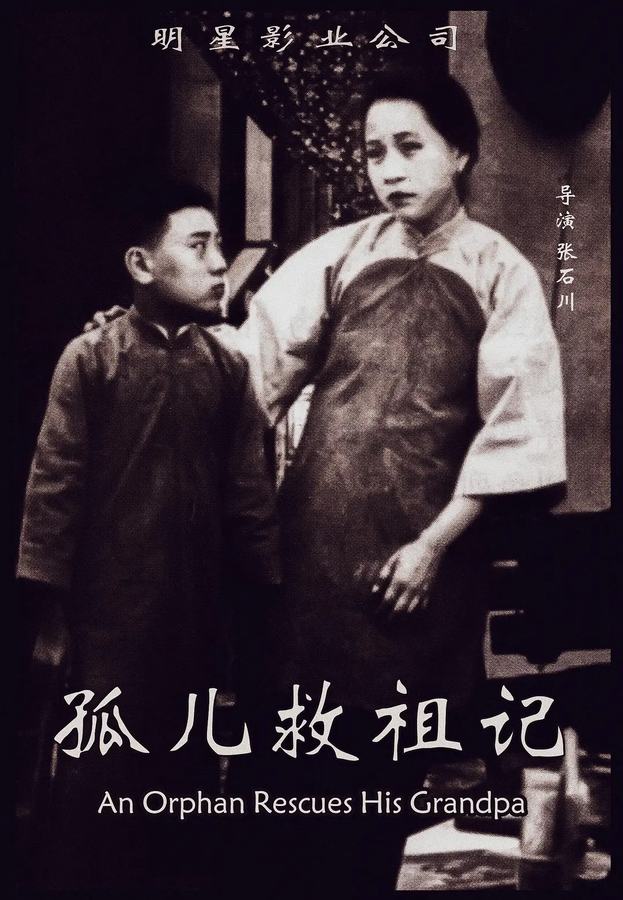
From the opening frame, Guer jiu zu ji immerses the viewer in a chiaroscuro world where neon flickers against soot‑stained brick, a visual metaphor for the film’s central tension between illumination and obscurity. The director’s choice to shoot predominantly in low‑key lighting not only pays homage to classic noir aesthetics but also reinforces the narrative’s preoccupation with hidden archives and suppressed histories. This atmospheric decision is reminiscent of the brooding palette employed in Society Dogs, yet Guer jiu zu ji pushes the envelope further by integrating kinetic set pieces that pulse in synchrony with the protagonist’s emotional crescendo.
Xianzhai Wang delivers a career‑defining turn as Liu Qiang. His subtle micro‑expressions—an almost imperceptible twitch of the left eyebrow when confronted with the ledger—convey a maelstrom of internal conflict without resorting to melodrama. Wang’s portrayal is a masterclass in restraint, echoing the nuanced intensity found in the lead of The Hidden Truth, yet his performance feels uniquely rooted in the cultural specificities of the film’s setting. Chaojun Ren, embodying Mei Lan, brings a lyrical cadence to his dialogue, each line dripping with metaphor that feels both ancient and urgently contemporary. Ren’s poetry, delivered in a hushed timbre, serves as an auditory leitmotif that reappears in pivotal moments, reminding the audience of the city’s forgotten oral traditions.
Zhengqiu Zheng’s script is an intricate latticework of interlocking stories, each strand meticulously woven into a broader tapestry of civic dissent. The ledger—central to the plot—functions as a MacGuffin, but its significance transcends mere plot propulsion; it becomes a symbol of collective memory, a repository of identities that the state seeks to rewrite. The film’s pacing mirrors the act of archival research: deliberate, methodical, punctuated by moments of revelation that feel akin to uncovering a long‑lost photograph. This structural choice invites comparison to the episodic unraveling in Weaving, yet Guer jiu zu ji distinguishes itself through its relentless focus on the political ramifications of personal histories.
The production design, helmed by Gongyuan Cheng, is a study in visual allegory. Tao’s kinetic sculptures—metallic constructs that twist and turn in response to ambient sound—operate as both protest art and surveillance apparatus, embodying the paradox of resistance within an oppressive regime. The sculptures’ muted steel hues contrast starkly with the film’s recurring splashes of sea blue (#0E7490) that appear whenever characters glimpse a fragment of truth, suggesting a fleeting glimpse of clarity amidst the darkness. The strategic use of dark orange (#C2410C) in the closing sequence—particularly in the fiery collapse of the municipal archives—underscores the cathartic release of suppressed narratives.
At its core, Guer jiu zu ji interrogates the mechanisms by which power curates history. By juxtaposing Liu’s meticulous archival work with Mei Lan’s spontaneous verses, the film posits that memory can be both a bureaucratic artifact and a living, breathing entity. This duality finds a counterpart in the thematic explorations of A Wife on Trial, where legal documentation serves as both oppression and salvation. However, Guer jiu zu ji’s emphasis on the tactile nature of records—paper, ink, the weight of a ledger—grounds its philosophical musings in a palpable reality that resonates deeply with contemporary debates on data privacy and historical revisionism.
Cinematographer Zhegu Zheng employs a palette dominated by deep blacks and stark whites, punctuated by the film’s signature colors. The use of long, static takes allows the audience to linger on the oppressive architecture of the city, while sudden handheld shots during protest scenes inject kinetic energy, mirroring the chaotic pulse of dissent. The camera’s occasional tilt—subtle yet disorienting—mirrors Liu’s spiraling descent into obsession, a technique reminiscent of the visual experimentation in Dreams of the Rarebit Fiend: The Flying House but employed with a gravitas befitting the film’s tone.
The auditory design is a masterful blend of diegetic and non‑diegetic elements. Ambient city noises—clanging metal, distant sirens, murmured conversations—form a constant undercurrent, while Mei Lan’s poetry is underscored by a low, resonant drone that swells during moments of revelation. The sound team’s decision to let silence dominate the climactic archive fire scene amplifies the emotional impact, allowing the visual blaze to speak for itself. This interplay of sound and silence draws a line to the auditory restraint seen in Life's Whirlpool, yet Guer jiu zu ji leverages it to underscore the erasure of voices.
While Guer jiu zu ji shares narrative DNA with political dramas like Not Guilty, its aesthetic sensibility aligns more closely with the poetic realism of The Blue Bird. The film’s focus on archival material as a narrative device is a relatively unexplored terrain in modern cinema, granting it a distinctive niche. Moreover, its thematic preoccupation with the reclamation of silenced histories resonates with the global surge in documentary‑fiction hybrids, positioning it as both a product of its time and a harbinger of future storytelling trends.
Guer jiu zu ji stands as a testament to the power of cinema to interrogate, illuminate, and ultimately transform collective consciousness. Its meticulous craftsmanship—from the layered screenplay to the evocative visual palette—creates an immersive experience that lingers long after the credits roll. The film’s ability to marry intellectual rigor with visceral emotion marks it as a rare achievement in contemporary filmmaking. For scholars, activists, and cinephiles alike, it offers a rich text for analysis, discussion, and, most importantly, reflection on the ever‑shifting terrain of memory and authority.
Keywords: Guer jiu zu ji review, film analysis, archival cinema, political drama, Xianzhai Wang, Chaojun Ren, Zhengqiu Zheng, cinematic themes, modern Chinese cinema
IMDb —
1918
Community
Log in to comment.