DbcultAccessing Vault...
Cult Review
Senior Film Conservator
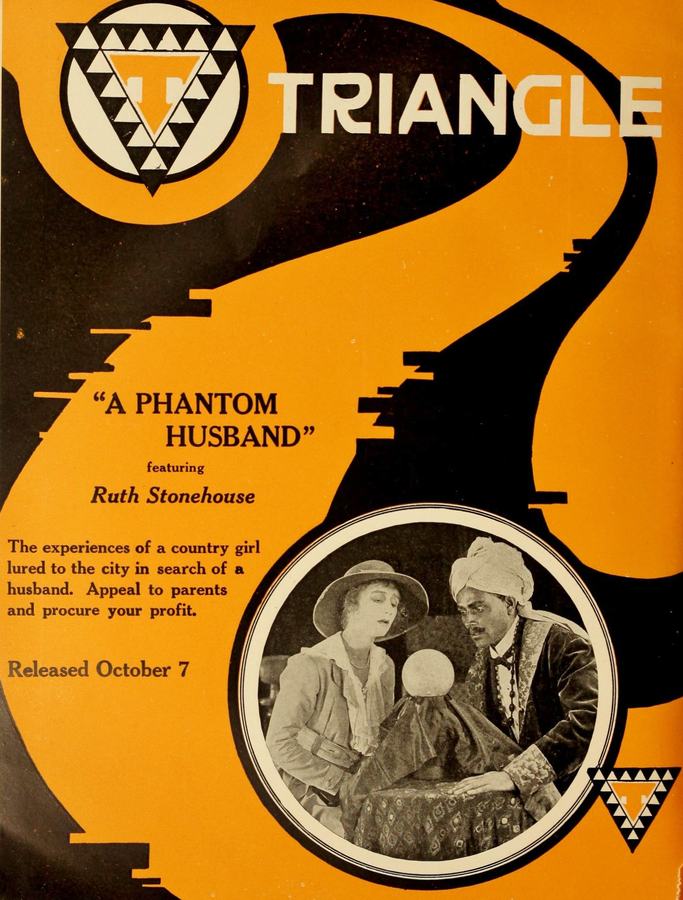
Imagine a Valentine’s massacre enacted not with arrows but with words—paper cuts dipped in small-town venom. That is the proscenium upon which A Phantom Husband unspools its brittle reels. The film, a 1916 one-reeler stretched to three, survives only in fragmentary form at the Library of Congress, yet its aura lingers like kerosene: one matchstrike and the whole decade ignites.
Director H.O. Davis—better known for maritime melodramas—trades brine for barn-board bedrooms, and the swap electrifies every frame. Davis’s camera, usually lashed to a ship’s mast, here rocks gently as if nursing a bruise. The opening tableau is a postal counter lacquered in winter light; behind it, Jessie Wilcox sorts envelopes the way Penelope once wove and unwove her tapestry. Except Jessie’s suitors are absent, their absence louder than any love song. Into this void slither the town’s youth, tongues sharpened on prohibition-era boredom. Their taunts land like birdshot: “Old maid at twenty-five!” The line is intertitle-simple, yet Mary McIvor’s eyes—huge, wounded—turn the words into shrapnel.
Jessie’s riposte is myth-making. She commissions daily billet-doux from a cousin in the city, scented paper that smells of violet and ambition. She purchases a ring from the dry-goods emporium, its garnet the color of clotting blood. The sequence is shot in chiaroscuro: Jessie’s hand sliding a coin across scarred pine; the shopkeeper’s leer swallowed by shadow. Davis withholds close-ups until Jessie slips the band onto her own finger—then the iris-in feels like a gasp. In that circle of light we witness not betrothal but self-ordination: she is both bride and officiant.
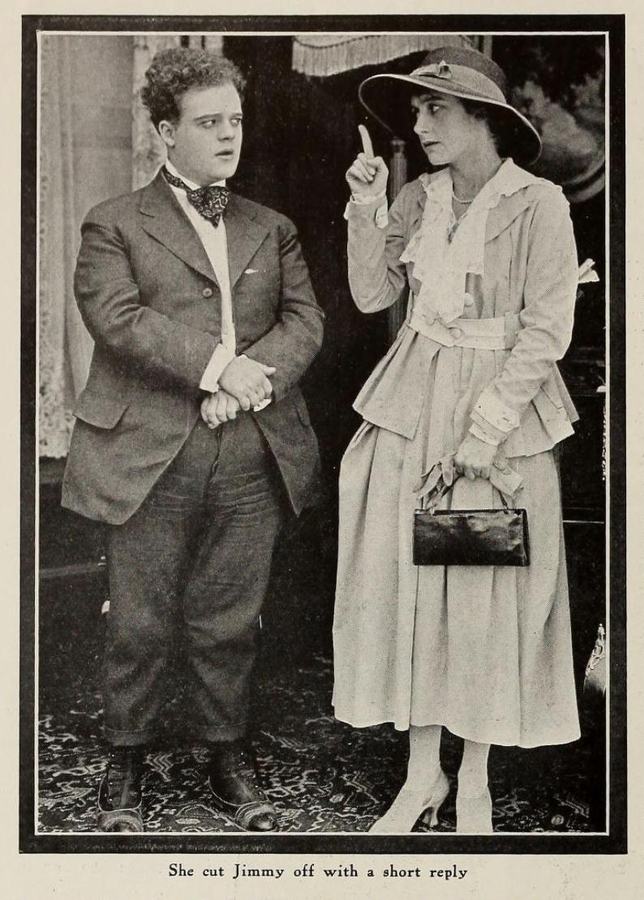
Off she flees to the metropolis, a place rendered through Germanic angles and jagged montage. The urban montage owes as much to Caligari (though that nightmare is still four years unborn) as to American melodrama. Elevators yaw like iron mouths; newsboys hawk disasters in ten-point type. Jessie’s first port of call is a parlor draped in zodiacal velvet where a clairvoyant—Estelle Lasheur in kabuki white—reads futures in cigarette smoke. The seance turns kidnapping: Jessie is locked inside a curtained alcove, her cries muffled by gramophone records of laughter. The sequence is lit with saffron gel filters; the tinting survives in the 16 mm print, each frame bruise-yellow. Davis lingers on a padlock the size of a fist—an image that will rhyme later with a wedding ring.
Enter the white-slaver, played with oleaginous charm by Charles Gunn. He assesses Jessie as one might a heifer, then dismisses her: “Too thin, too plain.” The line—again, intertitle-only—carries the chill of eugenics in its subtext. Jessie is freed not by heroism but by market forces: she fails the commodity test. One exits the scene wondering how many others passed that inspection.
Salvation arrives via cold print: an unidentified corpse at the municipal morgue. Jessie, ever the storyteller, claims the body as her vanished fiancé. She hires a black carriage, buys a mourning veil, and stages a widowhood more convincing than any marriage. The morgue sequence is the film’s psychic core. Davis shoots it in high-angle, the slabs arranged like a macabre chessboard. Jessie drifts among them, a pawn promoted to queen by death’s hand. She selects the cadaver the way one might choose a hat, tilting the head as if to gauge attractiveness. The moment is grotesque yet tender: a woman betrothed to stillness because stillness asks no questions.
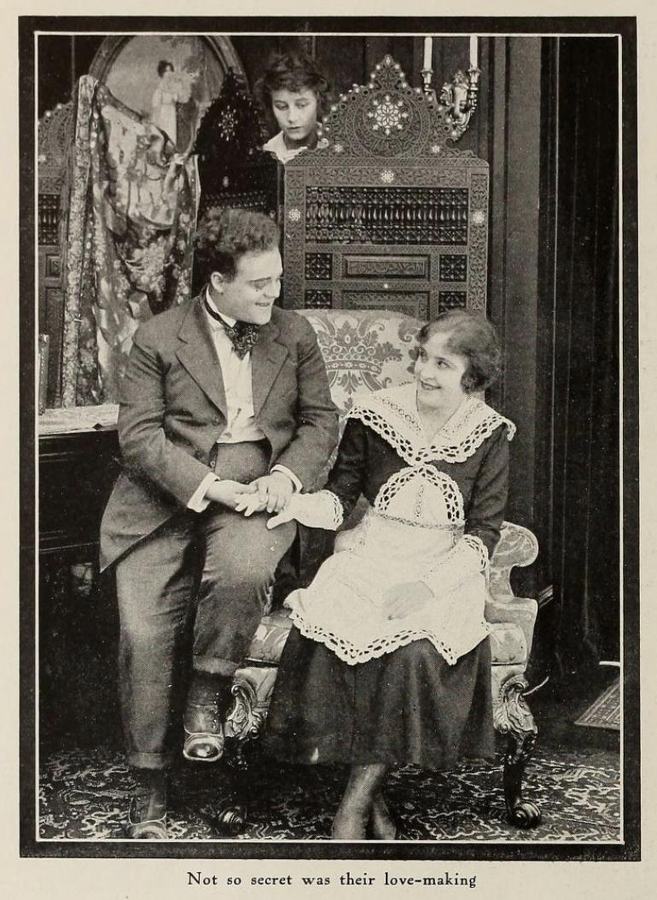
But cadavers have kin. Allan Avery (J.P. Wild) strides northward, a letter from the coroner in his breast pocket. Allan embodies the film’s tonal whiplash: part grieving brother, part frontier capitalist, part romantic lead. His first meeting with Jessie is staged in a train depot, steam rendering their silhouettes amphibian. Jessie wears widow’s weeds; Allan, a city coat lined with astrakhan. Their dialogue is all subtext: he seeks estate papers, she seeks absolution. The tracking shot—rare for 1916—follows them down the platform like a private eye.
Back in the village, Jessie stages the wake. The parlor is festooned with funereal plumes; neighbors who once flung ridicule now whisper reverence. Davis loves this hypocrisy. He cuts from face to face—each a cameo of appetite: envy, pity, voyeuristic thrill. The aunt (Ruth Stonehouse) stalks the margins, eyes narrowed like a gambler whose horse has bolted. She had earmarked Allan for her own daughter, a blonde cipher who never speaks but often poses near pianos.
Confession arrives not in church but in moonlit barn. Jessie blurts the lie, expecting condemnation. Instead Allan laughs—a deep, startled sound that seems to surprise even him. The laugh is the film’s hinge: melodrama pivots into romantic comedy. Allan admits his own exhaustion with performative grief; the corpse was a stranger, he says, “a name in a ledger.” Their embrace is shot through splintered boards, moonlight striping them like fugitives. The iris closes, not on a kiss but on clasped hands—promise rather than possession.
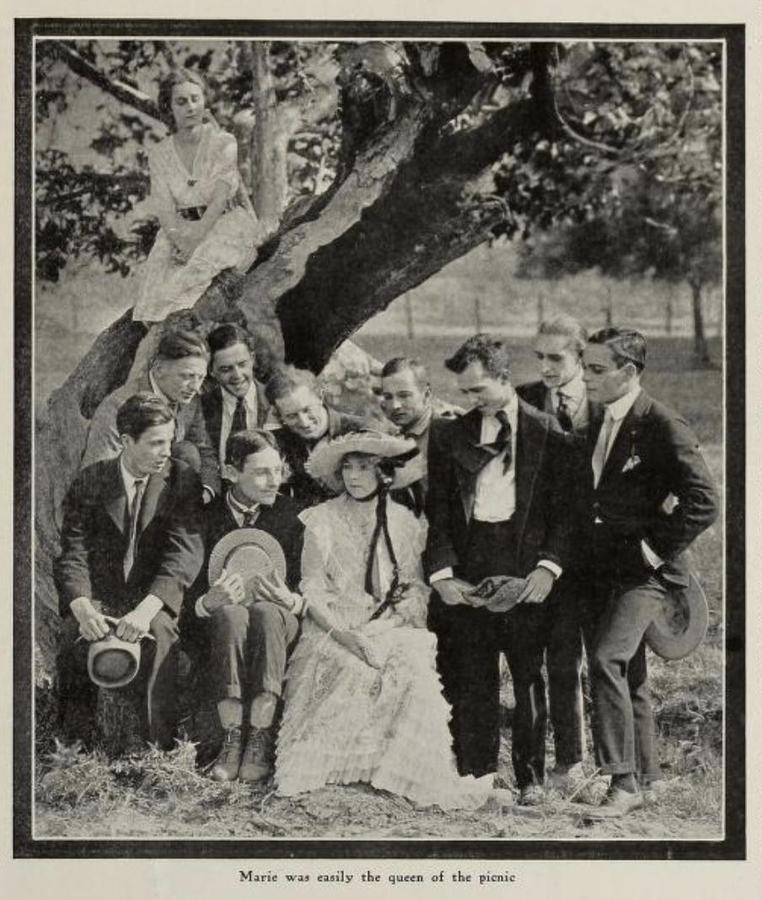
Marriage ensues, scandalizing the town. The final procession reverses Jessie’s earlier exile: now she returns triumphant, veil white instead of black. Children strew petals; the postmaster—once tormentor—doffs his visor. Davis ends with a freeze-frame of Jessie’s aunt, mouth agape, forever mid-protest. The image is tinted sea-blue, a subzero joke that lingers like frostbite.
Technically, the picture is a mongrel. Interior sets wobble; day-for-night footage swims in cerulean murk. Yet the flaws feed its vitality. When the camera tilts during Jessie’s imprisonment, the world itself seems complicit in her panic. The score—reconstructed by Philip Carli for the 2019 Pordenone Silent Festival—threads salon waltzes with Salvation Army brass, underscoring the film’s oscillation between drawing-room farce and skid-row terror.
Performances vary in altitude. McIvor over-gesticulates in the early reels, yet her stillness in the morgue scene is otherworldly—Garbo before Garbo. J.P. Wild has the square-jawed opacity of early American masculinity; he excelled in oaters but here reveals a light comic timing that prefigures The Flame of Youth. Stonehouse, veteran of seventeen shorts, steals every frame as the predatory aunt, her smile a guillotine wrapped in lace.
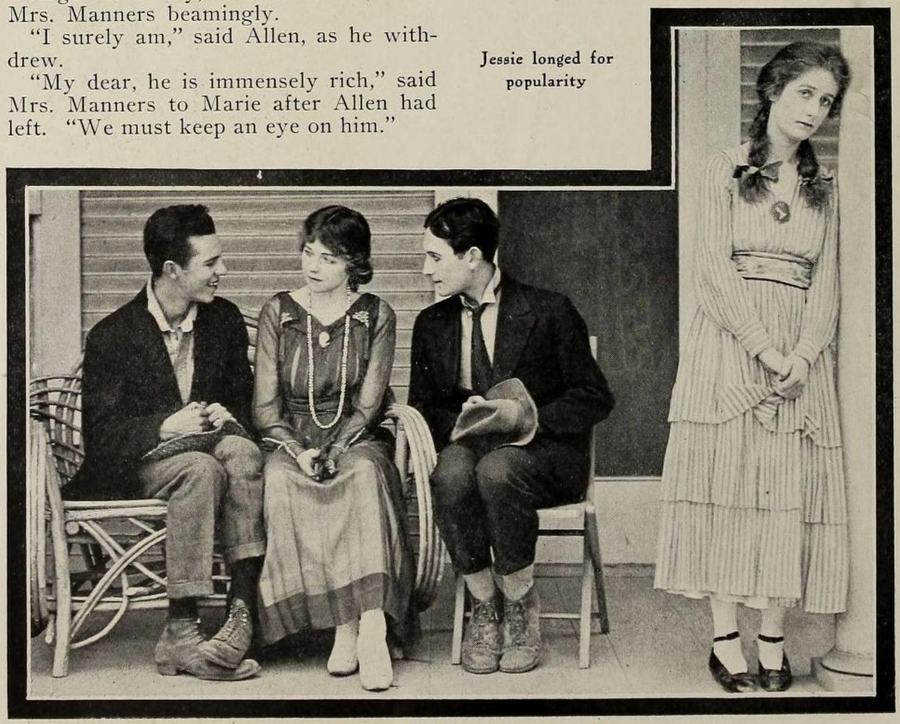
Comparative lenses help situate this oddity. The Pretenders (released the same winter) likewise exposes social masks, yet its tone is Jacobean tragedy where Phantom opts for frontier pragmatism. The Swedish Hans hustrus förflutna explores a wife inventing a past, but its Lutheran gloom is galaxies from Davis’s carnival flippancy. Meanwhile, The Devil (1916 German) wallows in metaphysical terror; Davis waves such metaphysics away like cigar smoke.
Gender politics, of course, are double-edged. The film lampoons the spinster stereotype yet validates Jessie’s self-authorship. Her lie is both survival and seduction, a pre-Freudian acknowledgment that identity is narrative. The white-slavery subplot feels exploitative yet historically truthful: in 1916 the Mann Act loomed large, and newspapers titillated readers with “white slave” exposés. Davis cannily weaponizes that hysteria only to discard it, proving Jessie’s peril is economic, not sexual.
Cinematically, the picture anticipates Hitchcock’s women-on-the-run thrillers, albeit without the master's slick sadism. One can trace a dotted line from Jessie’s locked alcove to the handcuffed fugitives of The 39 Steps. The morgue-as-matchmaker trope resurfaces in Lonelyhearts (1958) and Harold and Maude (1971), testament to Davis’s macabre Cupid.
Restoration-wise, the surviving print is a 16 mm reduction struck in 1932; the 35 mm negative perished in the 1933 Fox vault fire. Scratches dance like June bugs, and the sea-blue tint has oxidized toward teal. Yet the damage amplifies the film’s ghostliness—we are watching a phantom husband to cinema itself.
Commercially, the picture vanished from circulation by 1920, ousted by flashier features and star vehicles. Critics of the era dismissed it as “a woman’s whimsey,” code for unserious. Yet modern viewers—especially those mining early feminist parables—will find rich ore. Jessie’s triumph is not that she lands a husband but that she rewrites the terms: marriage becomes epilogue, not apotheosis.
Verdict? 8.5/10. The half-point deducted for tonal whiplash and Stonehouse’s underwritten daughter subplot. Still, A Phantom Husband endures as a scrappy valentine to self-invention, a reminder that love letters can be weapons, corpses can be alibis, and spinsterhood a beginning rather than a curse. Seek it out should the festival circuit resurrect it; bring gloves—the celluloid generates its own spectral chill.
For further excavation, pair with The Secret Orchard (1915) for more Davis pastoralism, or contrast with Bei unseren Helden an der Somme to witness how 1916 audiences juggled home-front romance and trench-war documentary. Either way, keep the lights low and the aspirin close—this phantom leaves footprints on your pulse.
IMDb —
1921
Community
Log in to comment.