DbcultAccessing Vault...
Cult Review
Senior Film Conservator
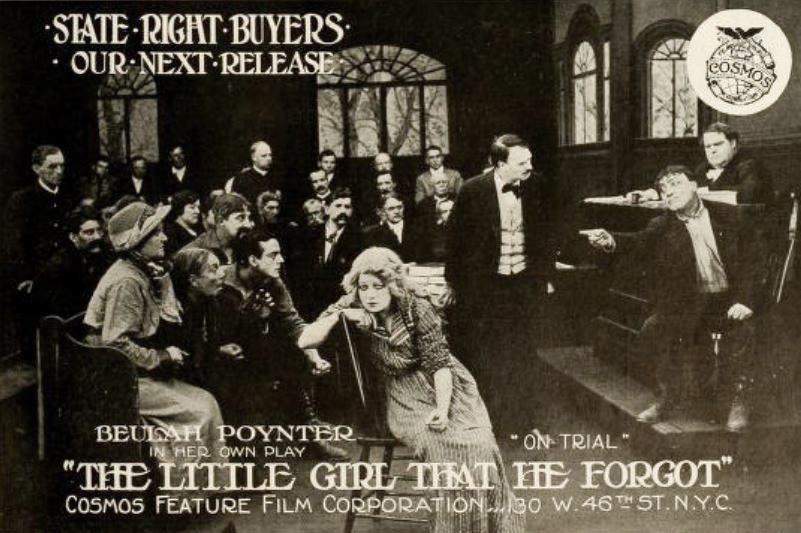
Stepping back into the nascent years of cinematic storytelling, one encounters a tapestry of human emotion, often painted with broad, melodramatic strokes, yet imbued with an undeniable power to move. Beulah Poynter's 1915 dramatic offering, 'The Little Girl That He Forgot', is a sterling example of this era's capacity to weave intricate narratives of love, betrayal, and the relentless pursuit of justice against a backdrop of societal rigidity. It's a film that, despite its century-old vintage, resonates with timeless themes of innocence lost, the crushing weight of circumstance, and the enduring strength of the human spirit when pushed to its absolute limits.
At its core, this narrative is a searing indictment of the precarious position of women in a world governed by male whims and societal judgments. June Holly, portrayed with a poignant vulnerability by Poynter herself, is our tragic heroine. An orphan nestled precariously in Missouri's unforgiving lumber country, her beauty and affectionate nature become both a blessing and a curse. She is a figure of pure, unblemished spirit, a 'little girl' whose journey into womanhood is fraught with more peril than any innocent soul should ever bear. Her initial idyllic existence, shared with her Uncle Jim and grandmother, quickly dissolves under the gaze of two vastly different men.
On one hand, there is David Stone, the quintessential silent film hero – manly, steadfast, and deeply, unswervingly in love with June. His devotion is a beacon, a constant in June's turbulent world, yet one she initially overlooks in favor of a more romantic, albeit ultimately flawed, ideal. This dynamic harks back to similar romantic triangles seen in films like The Folly of Desire, where pure-hearted devotion often contends with more superficial, yet alluring, advances. David represents a grounded, reliable love, a stark contrast to the volatile passions that threaten to consume June.
Then there is Uptergraft, a figure of pure malevolence, whose admiration for June quickly sours into bitter enmity after her spirited rejection of his rough advances. He embodies the predatory elements of society, a character type often deployed in early cinema to heighten dramatic tension and underscore the vulnerability of the innocent. His presence is a constant, simmering threat, a shadow lurking at the edges of June's fragile happiness, not unlike the insidious villains in mysteries such as Fantômas: The False Magistrate, albeit with a more personal vendetta.
The true catalyst for June's eventual tragedy arrives in the form of Alan Powell, the dashing son of a wealthy St. Louis lumber merchant. Young, privileged, and undeniably charming, Alan sweeps June off her feet, initiating a whirlwind romance born of passion and youthful indiscretion. Their love story, however, is a fragile blossom, easily bruised by external pressures. When David discovers the lovers in the woods, Alan's panicked, thoughtless denial of his love for June – a misguided attempt to preserve her reputation – becomes the first domino in a catastrophic chain of events. This moment of casual cruelty, driven by fear and a lack of moral fortitude, sets June on a path of unimaginable suffering. It’s a classic trope, the well-meaning but ultimately damaging lie, that resonates with the melodramatic twists found in romantic dramas of the period, such as Gretna Green.
Alan's subsequent letter, professing his true devotion and promising a future together, is a desperate lifeline tragically severed by David's jealousy. The destruction of this letter is a pivotal moment, plunging June into a spiral of despair, believing herself abandoned. Her decision to leave home, alone and vulnerable, to seek Alan in St. Louis, is a testament to her desperate love and profound naiveté. The ensuing journey is a harrowing descent into destitution, culminating in her collapse on a farmhouse doorstep. This arc of a young woman facing the harsh realities of a unforgiving world, often alone and without resources, is a common thread in silent era narratives, echoing the struggles depicted in films like The Unknown or Bondwomen, where female protagonists must navigate immense personal and societal challenges.
The birth of her baby, a silent symbol of her ill-fated love, brings a fleeting moment of solace before the relentless march of fate delivers another cruel blow. Her weary trek home, carrying her child, ends in the most devastating way imaginable: the infant's accidental death. The scene of June, utterly broken, leaving her dead baby in the bushes, is a moment of raw, unvarnished grief and horror. It’s a visceral portrayal of a mother pushed beyond the brink, a tragedy that transcends melodrama to touch upon profound human suffering. This level of emotional intensity, focusing on the dark consequences of societal neglect and personal misfortune, can be seen in the stark realism of films like The Avenging Conscience: or 'Thou Shalt Not Kill', which also delves into profound moral and psychological torment.
The subsequent arrest and accusation of child murder are the ultimate injustice. June, a victim of circumstance and the callousness of others, becomes a criminal in the eyes of the law. David Stone's heroic, though ultimately futile, attempt to save her underscores his unwavering loyalty, highlighting the stark contrast between his genuine affection and Alan's earlier thoughtlessness. The courtroom drama that unfolds is a powerful commentary on the often-blind nature of justice, where appearances and circumstantial evidence can overshadow truth and intent. This segment of the film resonates with the social commentary inherent in works like Mysteries of Paris, which often exposed the harsh realities of legal systems for the poor and marginalized.
It is Martha Green, a compassionate Salvation Army worker, who becomes June's unlikely savior, reaching out to Alan. His dramatic return to Lumberville, bursting into the courtroom to plead June's case, is a moment of intense emotional release. His confession, laying bare his role in June's misfortune, is a desperate attempt to rectify his past errors. Yet, the jury, unmoved by his impassioned plea, finds June guilty, condemning her to the gallows. This cruel twist of fate, despite the truth being laid bare, amplifies the film's critique of a justice system that can fail the most vulnerable. It's a gripping portrayal of legal drama and societal pressure, reminiscent of the heightened stakes in films like The Governor's Lady, where political and personal battles intertwine with the fate of individuals.
The final act of the film is a masterclass in suspense and emotional manipulation, typical of the era's grand melodramas. Alan's desperate appeal to the governor, initially met with refusal, sets the stage for a truly nail-biting climax. On the day of execution, as June faces the terrifying prospect of death, her raw agony and pleas for mercy are almost unbearable to witness. The arrival of the warden and sheriff, signaling the end, feels utterly hopeless. It is in this precise moment of ultimate despair that the telephone rings, a dramatic device perfectly suited to the medium, delivering the governor's stay of execution. Alan's impassioned second pleading, fueled by a love that has matured through guilt and desperation, ultimately secures June's pardon, snatching her from the precipice of an unjust death.
Beulah Poynter, not only starring but also credited as the writer, demonstrates a profound understanding of human nature and narrative construction. Her ability to craft such a compelling and emotionally charged story, filled with reversals of fortune and deep psychological resonance, speaks volumes about her talent. The film, in its silent grandeur, relies heavily on visual storytelling, facial expressions, and intertitles to convey the torrent of emotions that define June's journey. Poynter’s performance as June is particularly noteworthy, conveying the character's innocence, despair, and eventual glimmer of hope with remarkable depth. Her work, much like her contemporary efforts in A Woman's Triumph, showcases a powerful female voice in early cinema, both in front of and behind the camera.
'The Little Girl That He Forgot' is more than just a historical curiosity; it's a powerful artifact of early cinema that continues to speak to universal themes. It explores the fragility of reputation, the devastating consequences of thoughtless actions, the corrosive power of jealousy, and the redemptive force of true love and unwavering advocacy. The film’s dramatic climax, with its last-minute reprieve, is a classic trope that still holds sway, demonstrating how effective narrative tension can be when skillfully deployed. It's a reminder that even in the absence of spoken dialogue, the human story, with all its complexities and emotional highs and lows, can be communicated with profound impact.
Comparing its narrative intensity to other social dramas of the time, one might draw parallels to the stark portrayals of class and justice in films like The Cotton King or even the European sensibilities of Das Tal des Traumes, which often explored the intersection of fate and societal structures. The film also stands as a testament to the evolving art of cinema, showcasing how early filmmakers were already adept at crafting intricate plots and eliciting strong emotional responses from their audiences. It’s a film that deserves to be remembered, not merely as a relic, but as a vibrant piece of cinematic history that still holds the power to captivate and provoke thought.
Ultimately, 'The Little Girl That He Forgot' is a poignant reminder that while time may pass and cinematic techniques may evolve, the fundamental human experiences of love, loss, and the eternal quest for justice remain universally compelling. Beulah Poynter's contribution, both as a storyteller and a performer, ensures that June Holly's tragic yet ultimately redemptive journey leaves an indelible mark on the viewer, echoing long after the final frame fades to black.
IMDb 5.9
1934
Community
Log in to comment.