DbcultAccessing Vault...
Cult Review
Senior Film Conservator
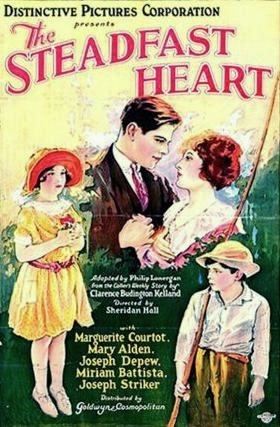
When the title The Steadfast Heart first appears on the marquee, one expects the familiar cadence of gun‑fueled justice. What unfolds, however, is a meditation on culpability and the quiet power of the press. The film opens with a sun‑bleached tableau: a posse, led by a sheriff whose badge gleams like a promise, rides toward a modest homestead where young Angus Burke, eyes wide with terror, clutches a rifle he barely understands. The accidental discharge that kills the sheriff is captured in a lingering close‑up, the muzzle flash reflecting in Angus’s bewildered stare—an image that lingers long after the echo of the shot fades.
The courtroom sequence is a masterclass in tension without melodrama. The camera remains static, allowing the actors’ faces to dominate the frame. Helen Strickland, as Angus’s grieving mother, delivers a restrained performance that conveys a world of sorrow with a single glance. William B. Mack, embodying the sheriff’s deputy, oscillates between stern authority and palpable doubt, underscoring the community’s conflicted loyalty. When the judge pronounces Angus not guilty, the silence that follows feels less like relief and more like a collective gasp—an acknowledgment that law, in this town, is as fickle as the wind that rattles the wooden shutters.
The newspaper office, a cramped room awash with the smell of ink and sawdust, becomes the crucible for Angus’s transformation. The editor, a grizzled veteran portrayed by Hugh Huntley, mentors the boy in the art of headline crafting, teaching him that a well‑placed story can outgun a bullet. This motif resonates with the broader cinematic tradition where the press serves as a moral compass—recall the investigative zeal of Mind Over Motor or the relentless truth‑seeking of Fallen Angel. In The Steadfast Heart, the printed word becomes a shield for the vulnerable, a rallying point for a community battered by lawlessness.
The ensemble cast delivers nuanced portrayals that elevate the script’s straightforward premise. Marguerite Courtot, as the resilient townsperson who aids Angus’s newspaper revival, exudes a quiet strength that rivals the stoic heroism of classic western heroines. Her scenes with Joseph Striker, the charismatic yet morally ambiguous gang leader, crackle with electric tension, each exchange a chess match of veiled threats and unspoken histories.
William Black’s cameo as the town’s blacksmith offers comic relief without undermining the film’s gravitas; his gruff laugh echoes the clang of his forge, reminding viewers that even in hardship, humanity finds moments of levity. Meanwhile, Mary Alden’s portrayal of the town’s matriarch provides a grounding presence, her steady gaze anchoring the narrative’s emotional core.
Director Philip Lonergan employs a restrained visual palette, favoring earth tones that contrast starkly with the film’s occasional bursts of color—most notably the crimson of a setting sun that bathes the final showdown in an almost biblical glow. The cinematography, while lacking the sweeping panoramas of The Tempest, compensates with intimate framing that captures the internal turmoil of its characters.
The score, a plaintive fiddle interwoven with low brass, underscores the duality of the frontier: the open, hopeful horizon and the lurking danger of outlaws. Composer Philip Lonergan (no relation to the director) weaves motifs that recur whenever the newspaper’s press clangs—a subtle reminder that truth is being forged alongside steel.
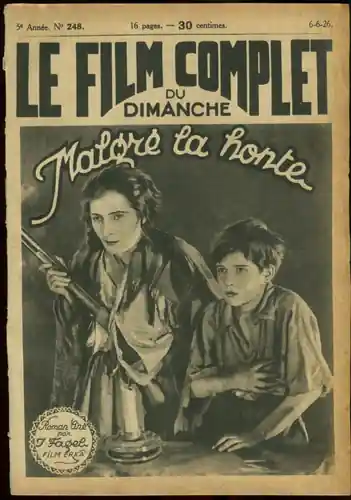
The film’s three‑act structure adheres to classic western beats yet subverts expectations by granting the protagonist agency through intellect rather than sheer firepower. Angus’s evolution from a frightened boy to a savvy editor mirrors the town’s own maturation; both discover that survival hinges not on gunfights but on the collective will to shape a narrative.
Themes of redemption, community judgment, and the transformative power of media intertwine seamlessly. The recurring visual motif of a lone candle flickering in the newspaper office serves as a metaphor for hope amidst darkness—a visual cue that resonates long after the credits roll.
When placed beside contemporaneous westerns, The Steadfast Heart stands out for its emphasis on journalism as a narrative device. While The Little Clown relies on slapstick to critique societal norms, this film employs a sober, almost documentary‑like approach to interrogate the mythos of frontier justice. Its focus on the press also prefigures later works such as Help Wanted, where the newsroom becomes a battlefield for truth.
Decades after its release, The Steadfast Heart retains a prescient relevance. In an era where misinformation spreads as swiftly as gunfire, the film’s advocacy for responsible journalism feels eerily contemporary. The moral calculus presented—choosing the pen over the pistol—offers a template for modern storytellers seeking to navigate the thin line between sensationalism and integrity.
Moreover, the film’s subtle critique of communal ostracism anticipates current dialogues about cancel culture. Angus’s exile, driven by collective suspicion, mirrors today’s digital mob mentality, while his eventual return underscores the possibility of redemption through constructive contribution.
The Steadfast Heart is a meticulously crafted western that transcends genre conventions through its reverence for the written word. Its performances are layered, its direction assured, and its thematic ambition unflinching. For aficionados of classic cinema, the film offers a rich tapestry of visual and narrative texture; for newcomers, it provides an accessible yet profound exploration of how a single individual can reshape a community’s destiny.
In sum, the movie is a testament to the enduring belief that courage can be measured not only by the speed of a draw but also by the steadfastness of one’s convictions—a heart that beats true, inked in the annals of a town that finally learns to read.
IMDb 4.2
1919
Community
Log in to comment.