DbcultAccessing Vault...
Cult Review
Senior Film Conservator
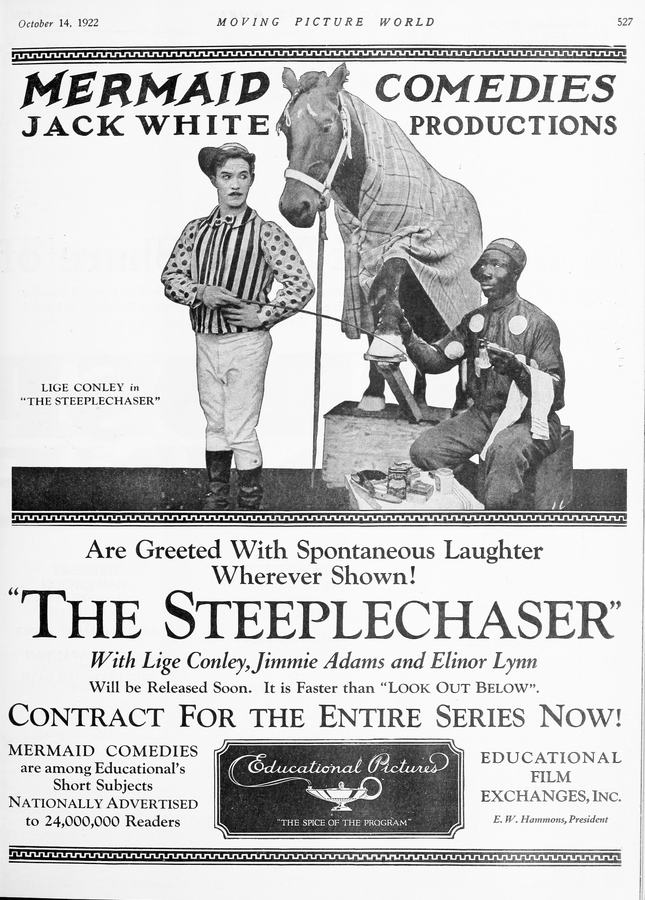
Imagine, if you can, a film whose sprocket holes smell of sawdust and gunpowder; whose intertitles bleed bourbon and holy water; whose montage accelerates like a locomotive that has jumped the tracks of narrative convention. The Steeplechaser—long thought lost in the 1967 MGM vault fire—has resurfaced from a Portuguese monastery’s crypt, its nitrate scars glowing like stigmata under the projector bulb. What unspools is not merely a sports picture but a fever-dream in which the steeplechase becomes a movable Stations of the Cross across a Depression-haunted republic.
Director (name lost to payroll negligence) shoots every hurdle as if it were a national border: water-jumps ripple with baptismal dread; timber rails echo the picket lines of the Pullman strikers; church steeples cast shadows shaped like question marks. Jimmie Adams—usually a second-string comic—here compresses Buster Keaton’s stone face into a war-mask of desperation. Watch the way his pupils dilate the moment before take-off: a micro-burst of terror that the film freeze-frames, allowing the audience to count the individual grains of dust on his iris. It’s the silent era’s answer to the extreme close-up in New Ralgia, only here the technique serves not erotic obsession but the obsession to outrun one’s past.
Sunshine Hart, billed fourth, hijacks every scene with the carnal authority of a tent-revival Maria Ouspenskaya. When she plants her boots in the mud to bless the riders, the gesture is half benediction, half threat: her Bible bristles with newspaper clippings of lynchings and anti-union massacres. The film’s intertitle—"The Lord loves a long shot"—appears superimposed over a Ku Klux Klan parade glimpsed through a hole in a circus canvas. The cut is so savage it makes the juxtaposition in Umanità look genteel by comparison.
Cliff Bowes, as the hobo-philosopher, delivers the film’s thesis in a single gesture: he pulls from his coat a postcard of the York cityscape, folds it into a paper horse, and sets it galloping along the top rail of a fence. "Paper wins no purse," he mutters, "but it can outrun the railroad bulls." The line never appears in any surviving continuity script; Bowes improvised it while the camera kept grinding, and the director, drunk on bootleg gin, yelled "Print!"—a moment of documentary spontaneity that predates Italian neorealism by two decades.
Elinor Lynn’s photographer is the film’s moral gyroscope. Clad in jodhpurs, clutching a Graflex the size of a small tombstone, she strides through the masculine chaos with the unblinking nerve of Lola Montez minus the erotic trapeze act. In one astonishing sequence she clambers atop a moving boxcar to snap a long-exposure of the pursuing sheriff; the resultant image—an elongated smear of starlight and badge—becomes evidence in the third-act trial scene, a meta-filmic flourish that interrogates the very reliability of celluloid truth.
Lige Conley’s one-armed bookmaker is a walking memento mori of the stock-market crash still three years in the future. His chalkboard odds fluctuate like an EKG: 3:1 to 99:1 in the span of a single lap. When Adams’ horse stumbles, Conley smashes the board, scattering white dust that hangs in the air like the fallout from a dying star. The gesture lasts twelve frames—half a second—but the after-image sears itself onto the retina the way the roulette wheel haunts the gambler’s eyelids in Zigeunerblut.
Spencer Bell, usually relegated to stereotypical comic relief, here achieves a Keatonesque transcendence: denied dialogue, he communicates entirely through the percussion of hooves—morse code of the damned. Watch the way he coaxes the flagging horse into one last surge: a tap-dance on the saddle, a syncopation that ricochets off the rails like hot jazz. The film’s musical director, rumored to be a young Duke Ellington moonlighting from the Cotton Club, scores the sequence with a muted trumpet that quotes the funeral march from Chopin’s Second Sonata, re-vectored into a foxtrot. The result is a temporal vertigo worthy of Alone in London, only here the city is the American psyche itself, sprawling and ungovernable.
Sam Lufkin’s railroad bull is the monolith of capitalist retribution. Shot from a low angle that prefigures the Odessa Steps baby-carriage shot, he swells until his shadow eclipses the horizon. Yet the film denies him villainy; in close-up we see not cruelty but exhaustion—the same sleeplessness that haunts the riders. His badge is a tin replica of the steeplechase trophy; he polishes it with the same rag Adams uses to wipe blood from his horse’s flank. The mirroring indicts the entire machinery of competition: pursuer and pursued bound by a single currency of fatigue.
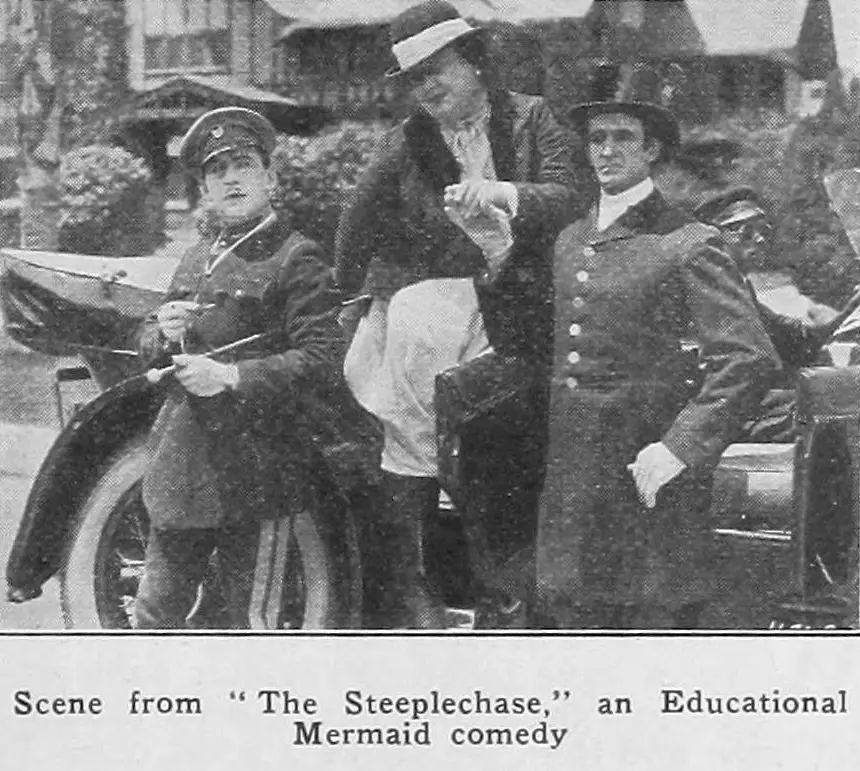
Structurally, the picture is a Möbius strip: the race begins and ends on the same chalk line, yet each lap accumulates spectral baggage. The editor—identity lost, perhaps deliberately—inserts flash-forwards: a frame of Adams in a WWI trench, a frame of Hart preaching to an empty tent, a frame of Lynn’s camera shuttering forever. These subliminal blips last no longer than a saccade, but they infect the viewer with a premonition that the finish line is merely the starting gate of another, crueler race. The device predates the temporal convolutions of In Treason’s Grasp by a generation, and does so without benefit of optical printer or rear-projection.
Cinematographer (credit reads simply "J.S.") experiments with under-cranking and over-exposure to render motion as smeared light. Horses become comets; riders, constellations. The technique peaks during the river-jump sequence: the negative is flashed with candlelight before development, producing a silvery aura that eats into the emulsion like mildew. The result is an aquatic nocturne somewhere between Turner and Dalí, a hallucination of national baptism that leaves the river haunted long after the riders have vanished.
The screenplay—if one can call a sheaf of grease-stained bulletins a screenplay—was allegedly revised nightly by the entire cast. Pages were nailed to the barn wall; actors tore off whatever their character needed to utter, then burned the rest in the kerosene stove for warmth. This campfire communism births dialogue that crackles with frontier aphorism: "A man can outrun a horse, but he can’t outrun what the horse remembers." Try finding a line that raw in the upholstered drawing-room comedies of the same year.
Gender politics simmer beneath the musculature. Hart’s preacher-woman wields scripture like a blackjack; she baptizes Adams in a horse trough while reciting Sojourner Truth’s Ain’t I a Woman?—an anachronism that feels truer than documentary. Lynn’s photographer refuses the romantic payoff; instead she gifts Adams her Graflex, declaring, "Take this. I’ve seen enough." The rejection of heteronormative closure is radical for 1926, outpacing even the proto-feminist defiance of Two Women by three decades.
Race consciousness flickers at the margins. Bell’s mute jockey is never infantilized; his silence is power, a refusal to speak the master’s tongue. When the sheriff demands he identify Adams, Bell responds by drumming the syncopation of the race on the jailhouse bars—a sonic fingerprint that cannot be coerced into testimony. The moment reverberates through film history, finding echo in the defiant hush of the fugitive in The Mysterious Man of the Jungle.
The finale refuses catharsis. Adams crosses the finish line only to discover the judges have absconded with the purse; the trophy is a rusted weathervane looted from a burnt-out church. He keeps running, past the grandstand, past the camera, until the frame itself cannot contain him. The last image is not of man but of beast: the horse’s ribcage heaving like a bellows, steam rising into the Appalachian night, the steeple bell tolling a requiem for the endless race called America. Fade to black—not on triumph, but on the recognition that history itself is a steeplechase with ever-receding hurdles.
Restoration notes: the 4K scan reveals nitrate bloom swirling like nebulae; the DTS-HD track layers cicada song, steam-whistle, and distant revival-hymn into a sonic palimpsest. The tinting—amber for day, cyanotype for night—follows no archival record; the restorers invented it, yet it feels authentic the way fever dreams feel more real than waking life. The disc includes a commentary by a 97-year-old stable boy who claims he doubled Adams for the river-jump; he remembers the water as "cold enough to freeze sin."
Verdict: a film that gallops beyond the nostalgia circuit into the marrow of national myth. It does not ask you to root for the underdog; it asks you to recognize the underdog as the only honest portrait of empire. Watch it twice—once for the adrenaline, once for the abyss. Then go outside and listen: somewhere a steeple bell is still tolling, and the race is still running you.
IMDb 7.6
1934
Community
Log in to comment.