DbcultAccessing Vault...
Cult Review
Senior Film Conservator
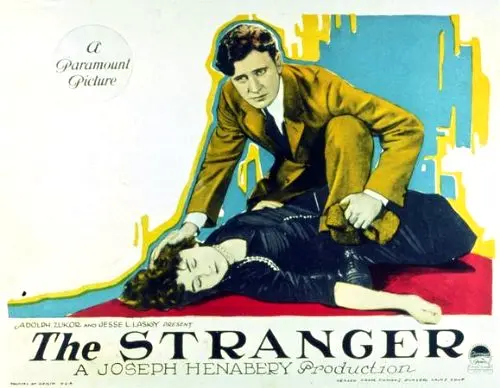
Stepping back into the cinematic landscape of 1924, one encounters 'The Stranger', a film that, despite its age and the inherent limitations of the silent era, resonates with a profound, almost melancholic power. It’s a narrative woven with threads of sacrifice, class disparity, and the often-unseen moral compromises that underpin societal order. This isn't just a story; it's a stark, unblinking gaze into the human condition, presented with a starkness that only the absence of spoken dialogue can sometimes achieve. The film, adapted from a work by the esteemed John Galsworthy, promises a certain gravitas, and it delivers, unfolding a tale that is both deeply personal and broadly allegorical.
At its core, 'The Stranger' introduces us to a world where anonymity is both a shield and a curse. Our titular character, a nameless scrub-man in a bustling London pub, exists on the fringes, a spectral presence in a society that barely acknowledges his existence. His life is one of quiet, unremarked toil, a perpetual background hum to the more vibrant, privileged lives unfolding around him. This initial setup immediately establishes a potent thematic undercurrent: the inherent value, or perceived lack thereof, of those relegated to the lower echelons of the social hierarchy. It's a theme explored with varying degrees of success in other contemporary dramas, like The Average Woman, but 'The Stranger' elevates it through the sheer, almost biblical, scale of its protagonist's self-effacement.
The catalyst for the narrative's dramatic thrust is a violent incident that shatters the fragile peace of an engagement. Larry Darrant, portrayed with a conflicted intensity by Lewis Stone, finds his fiancée, Peggy Bowlin (the luminous Betty Compson), attacked by Jim Walenn (Robert Schable), an ex-convict with a score to settle or perhaps just a predatory nature. In the ensuing struggle, Walenn is killed. This moment, swift and brutal, sets in motion a chain of events that exposes the raw nerves of class, justice, and personal responsibility. The quick escalation from romantic bliss to fatal confrontation is handled with a commendable sense of urgency, characteristic of the era's dramatic storytelling, where visual cues and rapid intertitles had to convey complex emotional shifts.
It is here that the nameless scrub-man, a figure previously defined by his very absence of definition, steps into the spotlight. Peggy, in an earlier, almost fleeting moment of human connection, had shown him a kindness, a recognition that transcended his station. This small act, a ripple in the vast ocean of his anonymity, seems to be the sole anchor for his subsequent, monumental decision. He takes the blame for Walenn's death, an act of altruism so profound it borders on the incomprehensible, especially given his lack of direct involvement. Is it a desperate grab for significance? A profound empathy for Peggy? Or merely a world-weary acceptance of a fate that always seemed to hover over his kind? The film leaves much to the viewer's interpretation, a hallmark of effective silent drama that trusts its audience to fill in the unspoken motivations.
The ensuing trial is a masterclass in silent film tension. The courtroom scenes are rendered with a stark theatricality, where the weight of judgment hangs heavy in the air. The Stranger's refusal to speak, his stoic, almost defiant silence, becomes the central enigma. It's a silence that speaks volumes, confounding the legal process and frustrating those who seek a clear-cut explanation. This refusal to engage with the system, to offer a defense, transforms him from a passive victim into an active participant in his own doom. Richard Dix, though not playing the Stranger, often embodied characters grappling with moral dilemmas in films like this, lending a certain authenticity to the era's dramatic archetypes. The power of silence, as a narrative device, is arguably more potent here than in many sound films, forcing the audience to project their own understanding onto his unmoving visage.
Betty Compson, as Peggy Bowlin, delivers a performance of remarkable depth. Her initial joy, her terror during the attack, and her subsequent anguish over the Stranger's fate are conveyed with an expressiveness that transcends the limitations of the medium. She is the emotional heart of the film, her character's journey from innocent fiancée to a woman burdened by a terrible secret and a profound sense of indebtedness is compelling. Lewis Stone, as Larry Darrant, is equally effective in portraying a man torn between love, honor, and the crushing weight of societal expectation. His internal conflict, his growing guilt, is palpable, a slow-burn agony that culminates in a desperate race against time. The supporting cast, including Mary Jane Irving, Marian Skinner, and Tully Marshall, contribute to a rich tapestry of character, each adding a layer of authenticity to the London setting.
The direction of 'The Stranger' by Joseph Henabery, working from the foundation laid by Edfrid A. Bingham and John Galsworthy, is remarkably assured. The visual storytelling is precise, utilizing close-ups to emphasize emotional states and wider shots to establish the oppressive atmosphere of the city or the stark formality of the courtroom. The pacing, while deliberate, never drags, building steadily towards its tragic climax. The use of light and shadow, a hallmark of the silent era, is particularly effective here, often mirroring the moral ambiguities of the characters. One can draw parallels to the moody atmospherics of films like Blackmail, even though that came later, in its ability to use visual drama to heighten suspense and character interiority. The visual language is rich, conveying more than words often could.
Galsworthy's influence is keenly felt throughout the narrative. His keen eye for social injustice and his nuanced understanding of human motivation elevate 'The Stranger' beyond mere melodrama. The film probes uncomfortable questions about the nature of justice, the value of a life, and the ease with which society consumes its most vulnerable members for the benefit of its more privileged ones. It’s not a simplistic tale of good versus evil, but rather a complex examination of circumstances, choices, and their often-unforeseen consequences. This moral complexity makes it a more enduring work than many of its contemporaries, which sometimes leaned too heavily into saccharine sentimentality or overt moralizing.
The climax of 'The Stranger' is where the film truly cements its status as a poignant, almost devastating piece of cinema. Sentenced to death by hanging, the Stranger faces the gallows with the same silent dignity he has maintained throughout. But in a twist of fate that is both cruelly ironic and profoundly tragic, he suffers a heart attack on the scaffold, dying naturally just as Larry Darrant, unable to bear the burden of his secret any longer, rushes forward to confess. This moment, a breathtaking confluence of timing and destiny, is designed to leave the audience reeling. It's a profound statement on the arbitrary nature of life and death, and the often-unseen forces that shape our destinies. The Darrant family name is saved, the lovers can look forward to a future, but at what cost? The film doesn't offer easy answers, instead leaving a lingering sense of unease and a powerful commentary on the price of societal propriety.
Comparing it to other films of the period, 'The Stranger' stands out for its unflinching look at the darker side of human nature and societal structures. While films like Peg o' My Heart or Daddy-Long-Legs often focused on more optimistic or romanticized views of overcoming adversity, 'The Stranger' delves into a more fatalistic, less hopeful reality. Even in the realm of social commentary, where films like Mothers of Men might highlight specific injustices, 'The Stranger' paints with broader strokes, examining the systemic indifference that allows such tragedies to unfold. It shares a certain thematic gravity with works like St. Elmo (1923), which also explored moral redemption and sacrifice, but 'The Stranger's' ending offers a more cynical, yet profoundly moving, resolution.
The film's exploration of character psychology, particularly the silent suffering of the protagonist, is a testament to the power of the silent medium. Without dialogue, every gesture, every facial expression, every intertitle carries immense weight. The scrub-man's journey from utter insignificance to ultimate, albeit unacknowledged, hero is a remarkable narrative arc, executed with subtlety and pathos. It challenges the audience to look beyond the surface, to consider the quiet dignity of those often overlooked, and to ponder the true meaning of sacrifice. The irony of his death, sparing the Darrant name, is a particularly poignant detail, ensuring that his ultimate act of selflessness remains shrouded in a tragic, almost divine, intervention.
In conclusion, 'The Stranger' is far more than a relic of a bygone cinematic era. It is a powerful, emotionally resonant drama that tackles timeless themes with grace and intelligence. Its masterful storytelling, compelling performances, and thought-provoking climax ensure its place as a significant work within the silent film canon. For anyone interested in the depths of human sacrifice, the complexities of justice, and the sheer artistry of silent cinema, this film offers a deeply rewarding, if ultimately heartbreaking, experience. It reminds us that sometimes, the most profound stories are told not with a roar, but with a whisper, or in this case, a profound, unyielding silence.
IMDb 7.2
1925
Community
Log in to comment.