DbcultAccessing Vault...
Cult Review
Senior Film Conservator
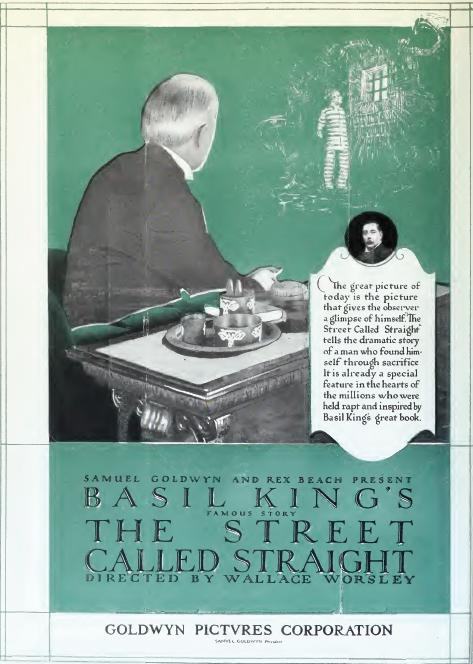
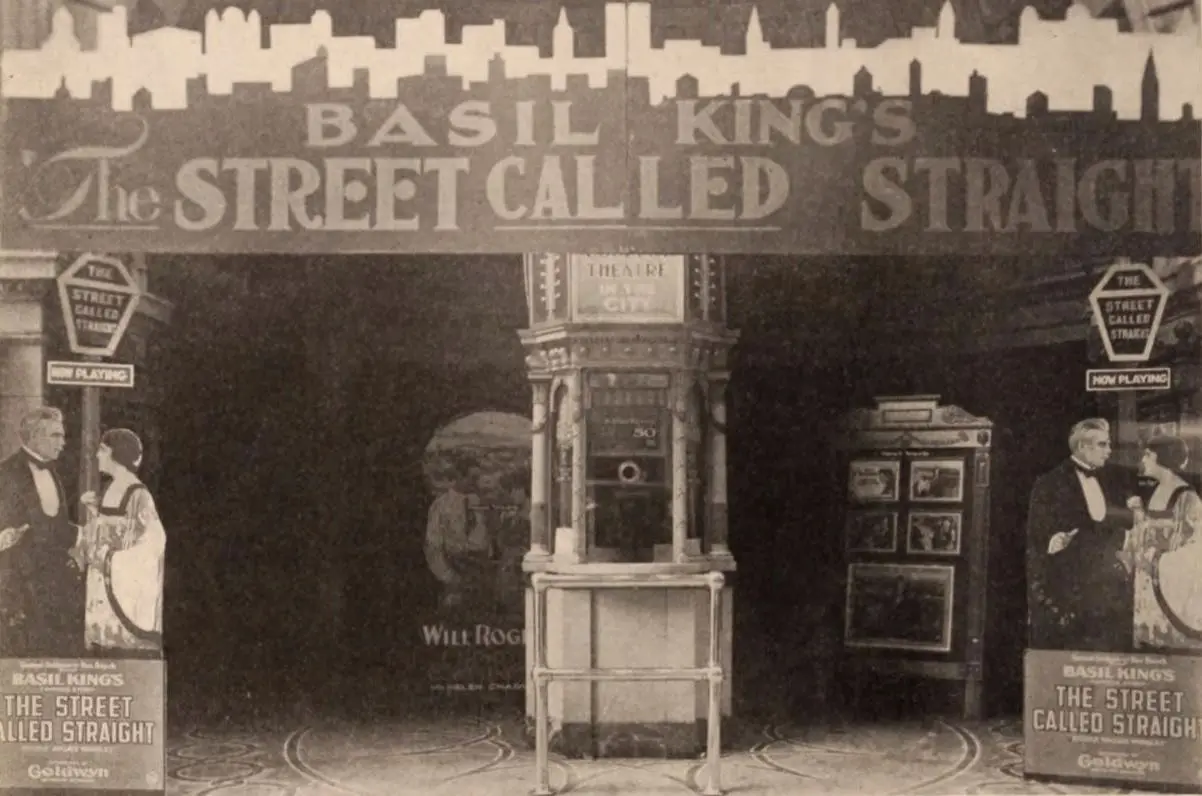
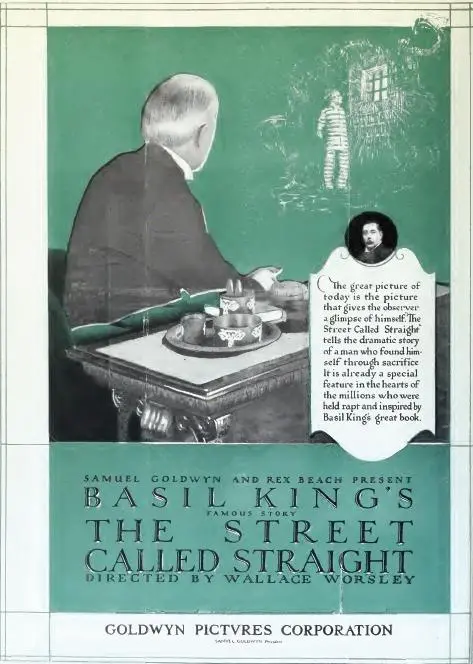
Photographed in chiaroscuro so luxuriant you could butter bread with it, The Street Called Straight arrives like a velvet‐wrapped razor: sumptuous to the touch, lethal once opened. Director James Kirkwood—working from Basil King’s serialized conscience‐thriller—doesn’t merely stage a moral collapse; he lets the camera inhale it, every exhalation a swirl of cigarette haze and unspoken sums.
Henry Guion—Lawson Butt in a performance that trembles between Regency dignity and cardiac panic—embodies the ancien régime at its bankruptcy apex. Watch the way his pupils dilate when the safe door clangs: it’s the sound of his lineage slamming shut. Across from him, Naomi Childers’ Olivia carries herself like a woman who has read too many novels about governesses and misread her own role; her cheekbones seem sharpened by every whispered rumor.
Peter Devenant—Milton Sills, equal parts forge‐smoke and prairie sunrise—should be the film’s white knight. Instead he registers as a walking moral Rorschach: do we cheer his rescue or bristle at the transactional scent of every benevolent dollar? Kirkwood keeps him in middle distance, framed through doorways or reflected in lacquered panels, so that even his charity feels like surveillance.
Colonel Ashley—Charles Clary—is the film’s most surgical caricature of titled tatters. His moustache alone deserves separate billing: waxed to such sabre‐sharpness it could slice a marriage contract in twain. When he severs the engagement, the gesture is filmed in a single unbroken take that dollies backward, as though society itself is recoiling from the stench of obligation.
Notice the color symbolism (yes, even in a monochrome world): Ashley’s regimental sash bleeds into the camera’s grain, becoming a jagged crimson wound across the grayscale. It’s the film’s way of saying that pride, when deprived of love’s pigment, is only another bruise.
Enter Irene Rich as Mme. De Melcourt—a widow whose diamonds weigh like ballast against the storm of male ego. Rich plays her with the languid precision of a cardsharp who already knows the deck is stacked. When she signs the check that repays Peter, the scratch of her fountain pen is amplified on the intertitle card: it’s the sound of narrative tension deflating, replaced by the subtler ache of romantic hindsight.
In that moment Olivia’s face—caught in a triple‐layered dissolve—becomes a palimpsest: dutiful daughter, jilted fiancée, awakened woman. Childers lets her eyelids do the talking; they flutter like semaphore flags spelling “I was wrong” in a language only the heart can read.
Cinematographer Hal Young treats light like liquid: it pools, drips, and occasionally floods. Interior scenes shimmer with the honeyed glow of oil lamps, while exteriors—shot on location in a Manhattan still scarred by wartime coal shortages—carry a bruised, metallic sheen. One match‐cut jumps from the polished brass of a ballroom chandelier to the sooty rivets of Peter’s construction site, implying that every fortune is mortgaged to someone else’s sweat.
The titular “street” itself appears only twice: once in a dawn tableau where Olivia’s carriage rattles toward ruin, and again in the final shot, now paved with resolve rather than cobblestones. It’s a visual echo of the film’s insistence that redemption is less a destination than a repaving of the route already traveled.
Edward T. Lowe Jr.’s intertitles refuse the utilitarian. One card reads: “Between love and pride lies a chasm paved with IOUs signed in the dark.” The words materialize over a blackout that lasts exactly four heartbeats—long enough for the audience to feel the abyss.
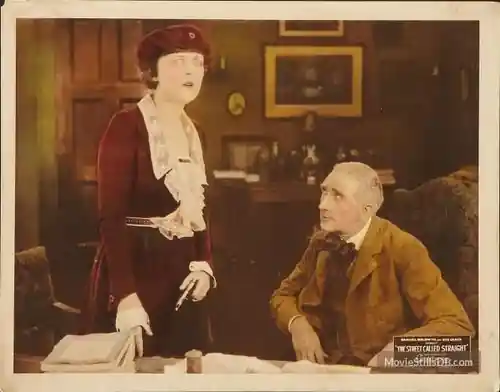
Another intertitle—“Honor, like silk, frays fastest when pulled from both ends.”—appears superimposed over a shot of Olivia’s gloved hands twisting a handkerchief into a hangman’s knot. The metaphor is tactile, almost cruel.
Seen today with a contemporary score, the film vibrates differently. I recommend Philip Glass’s string quartets—those cyclic arpeggios mirror the movie’s moral Möbius strip. When Glass’s violins ascend, Olivia’s dilemma feels like a theorem being proved in real time; when they descend, you sense the cost of every equation.
Yet even in 1920 exhibition houses, musicians reportedly played La Folia variations during Peter’s money‐counting scene, turning a ledger sheet into a danse macabre. Silence, it seems, was never silent—only waiting for the right echo.
Place The Street Called Straight beside Maid o’ the Storm and you see two temperaments: one tempestuous, the other ledger‐lined. Pair it with The Exploits of Elaine and watch how both films weaponize the damsel-in-distress trope, though Kirkwood lets his damsel audit her own prison.
Meanwhile The Third Kiss flirts with similar triangular arithmetic but lacks the socioeconomic bite; its currency is perfume, not promissory notes. Only His Debt shares this film’s obsession with restitution, yet it moralizes where Kirkwood merely observes.
Olivia’s body is the film’s contested site: her hand in marriage traded for paternal solvency, her affection bartered for colonial gold. Yet the final refund—Mme. De Melcourt’s check—reclaims her as both subject and shareholder. It’s a proto-feminist gesture wrapped in Edwardian tissue; she doesn’t earn freedom so much as reinvest it.
Notice how Kirkwood frames Olivia against windows whenever fiscal stakes rise: she is literally the transparent medium through which men negotiate her worth. By the final reel, she steps through the casement, onto the balcony, into a medium close-up that owns the frame. The camera no longer peers at her; it beholds with her.
Watch Lawson Butt’s left eyebrow—it twitches at the word audit as if Pavlov had wired it to shame. Naomi Childers swallows twice in rapid succession when Peter proposes, a detail so microscopic it feels like eavesdropping. Milton Sills, usually a swaggering presence, lets his voiceless baritone reside in the clench of his jaw; when he exhales after Olivia’s rejection, the breath fogs the lens for a single frame—an accident that Kirkwood kept because it smells of winter and regret.
Modern prestige television—Succession, Industry, even The Queen’s Gambit—owes its moral quicksand to films like this. The Street Called Straight predates the anti-hero by a century yet offers no catharsis, only a checkbook balanced at the cost of a woman’s illusions. It’s Breaking Bad in white gloves, Billions with bustles.
Archivists at MoMA screened a 35 mm print in 2019; the nitrate was so volatile it had to be shown in a refrigerated vault. Viewers emerged shivering, uncertain whether the chill came from the temperature or the recognition that our own Venmo ethics are just speedier versions of Guion’s ink-stained crime.
Does the film sag? Occasionally—act two’s gambling‐den set piece feels grafted from a Lon Chaney potboiler. The comic relief butler (Alec B. Francis) arrives with a timing so precise it borders on vaudeville intrusion. Yet these are quibbles on a canvas so alive with moral static it practically crackles.
I grade on a curve calibrated to eternity: 9/10. Not for perfection but for prescience—because every era will need a reminder that the most corrosive debt is the one we owe our own compromised reflections, and the only bankruptcy worse than destitution is the refusal to forgive the face that stares back from the ledger.
—reviewed by a cynic who still believes in redemption, provided the interest rates stay human.
IMDb —
1920
Community
Log in to comment.