DbcultAccessing Vault...
6.1/10
Senior Film Conservator
A definitive 6.1/10 rating for a film that redefined the boundaries of cult cinema. Peer Gynt remains a cornerstone of transgressive art.
In the annals of dramatic literature, few characters resonate with the same complex, frustrating, and ultimately profound humanity as Henrik Ibsen's Peer Gynt. His journey, a sprawling epic of self-discovery and self-delusion, has captivated audiences for generations, and its cinematic adaptation offers a fascinating glimpse into the early 20th century's ambitious attempts to translate such a monumental work to the silver screen. This film, a silent era marvel, endeavors to capture the essence of Ibsen's verse drama, a task as Herculean as Peer's own fantastical wanderings. It's a testament to the pioneering spirit of filmmaking that such a narrative was even attempted, let alone with a degree of success that allows us to ponder its philosophical depths even today.
At its core, Peer Gynt is the odyssey of a dreamer, a braggart, and a trickster who perpetually evades responsibility and true selfhood. The film introduces us to Peer, portrayed with a certain roguish charm by Herbert Standing, as a young man whose fantastical tales and audacious spirit alienate him from his community, yet simultaneously draw others into his orbit. He is a character of immense vitality but little moral compass, a trait that sets the stage for a life of both grand adventure and profound spiritual emptiness. The early scenes establish his volatile nature, his impulsive decisions, and his inherent selfishness – traits that will define his convoluted path. His initial transgression, the abduction of Ingrid on her wedding day, immediately casts him as an outsider, a renegade whose actions ripple with consequences he is too self-absorbed to fully grasp.
The narrative then plunges Peer into a series of increasingly bizarre and morally ambiguous escapades. His encounter with the Green-Clad Woman and the Troll King in the realm of the Dovre-King is a pivotal moment, a descent into a world where superficiality reigns supreme and compromise is the ultimate virtue. This segment, while perhaps challenging to render convincingly in the silent film era, attempts to convey the allegorical weight of Ibsen's original, where Peer grapples with the 'troll-maxim': 'to thyself be enough.' This philosophy, a perverse echo of the humanistic ideal, becomes Peer's guiding principle, leading him further astray from genuine connection and ethical living. The cinematic interpretation, through visual metaphors and perhaps intertitles, strives to communicate this profound philosophical conflict, even if the special effects of the time might seem rudimentary to a contemporary audience.
As Peer flees Norway, his adventures escalate in scope and ambition. He becomes a man of the world, traversing continents, accumulating wealth, and shedding moral scruples with astonishing ease. From a slave trader in America to a prophet in the desert, Peer adopts various guises, always seeking fortune and self-aggrandizement. This episodic structure, inherent in Ibsen's play, translates well to the cinematic format, allowing for a rapid succession of dramatic shifts and exotic locales. The film attempts to convey the vastness of Peer's travels, showcasing different cultures and environments, each serving as a backdrop for his continued moral erosion. His interactions with Anitra, the Bedouin chief's daughter, further highlight his manipulative charm and his inability to commit to anything beyond his own fleeting desires. The portrayal of these diverse settings, even through the lens of early cinema, must have been quite ambitious, requiring significant production design and location shooting, or at least impressive set construction.
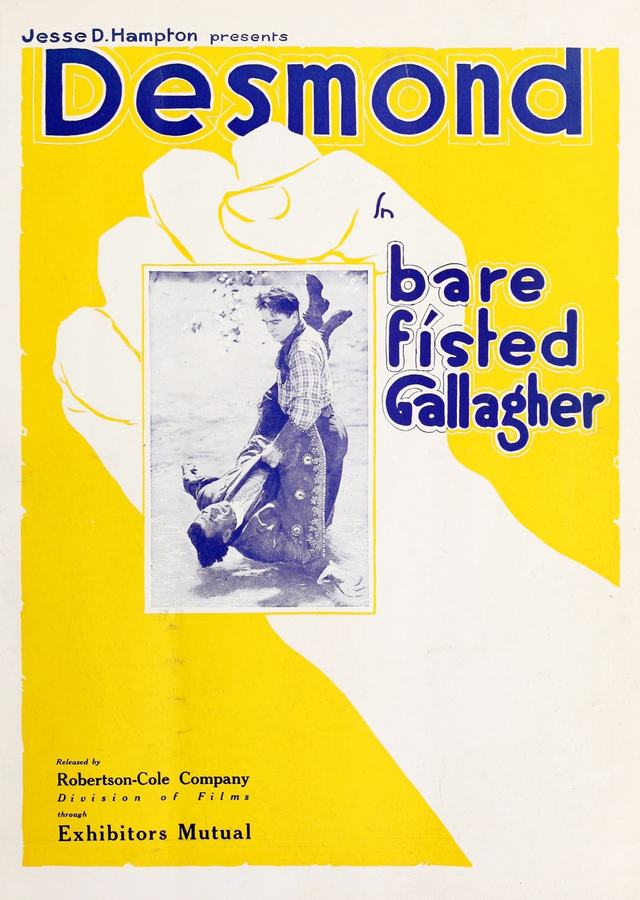
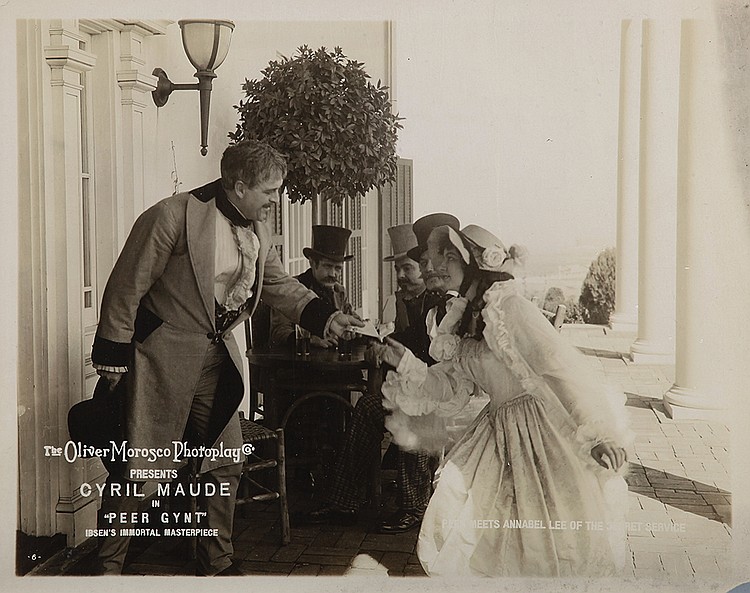
The cast, a collection of seasoned performers from the era, contributes to the film's ambitious scope. Myrtle Stedman, Alma Rubens, Winifred Bryson, and Mary Ruby, alongside Herbert Standing's Peer, bring to life the array of women who orbit Peer's chaotic existence, each representing a different facet of his journey or a consequence of his choices. Cyril Maude and William Desmond round out a robust ensemble, tasked with conveying complex emotions and motivations without the aid of spoken dialogue. Their performances, relying heavily on exaggerated gestures and facial expressions typical of silent film acting, are crucial in communicating the nuanced characterizations that Ibsen's text demands. The challenge for these actors was immense: to embody the poetic and philosophical weight of the source material through purely visual means, a task that often required a heightened, almost operatic, style of performance.
Beneath the surface of adventure and melodrama lies Ibsen's profound philosophical inquiry into the nature of identity. Peer Gynt is a man who constantly questions who he is, yet consistently avoids the difficult work of truly becoming himself. He is a master of disguise, not just physically, but existentially. The film, through its visual storytelling, must wrestle with this abstract concept. How does one visually represent the peeling away of layers of self-delusion? The Button Molder, a character who appears towards the end of Peer's life, symbolizes the ultimate judgment: Peer is neither good enough for heaven nor bad enough for hell, destined instead to be melted down and remade, having failed to forge a distinct 'self.' This existential crisis, a hallmark of Ibsen's genius, requires careful handling in a visual medium. The silent film likely relied on symbolic imagery and perhaps allegorical sequences to convey this profound intellectual struggle.
The film's exploration of Peer's moral bankruptcy, his relentless pursuit of material gain at the expense of others, resonates with themes found in other cinematic examinations of human avarice and moral decay. While Prestuplenie i nakazanie (Crime and Punishment) delves into the psychological torment of guilt and redemption through a singular act, Peer Gynt depicts a lifetime of incremental moral compromises that ultimately lead to a spiritual void. The film attempts to show, rather than tell, the consequences of a life lived without genuine principles, a perpetual motion of self-preservation that ultimately leaves the protagonist utterly alone and unfulfilled. The visual language of silent cinema, with its reliance on stark contrasts and expressive performances, would have been particularly effective in conveying this sense of isolation and regret.
Amidst Peer's chaotic journey, there remains one constant, one unwavering beacon of purity and unconditional love: Solveig. Portrayed with quiet dignity and profound emotional depth, likely by Alma Rubens or one of the other leading ladies, Solveig represents the path Peer continually rejects but to which he ultimately returns. Her steadfast devotion, her decades-long wait, is the emotional anchor of the entire saga. It is in her arms, old and weary, that Peer finally finds a semblance of peace, a recognition that his true self was not found in his global exploits or his amassed fortunes, but in the love he scorned. The film's ability to convey this profound emotional arc, particularly the enduring power of Solveig's love through long stretches of Peer's absence, is central to its success. Silent film often excelled at conveying pure emotion, and the reunion of Peer and Solveig must have been a deeply moving cinematic moment, relying on close-ups and the actors' ability to convey years of longing and regret through their expressions.
The thematic resonance of Solveig's love can be loosely compared to the unwavering familial loyalty seen in films like The Only Son, where the sacrifices of a parent are central to the narrative, though the contexts are vastly different. In Peer Gynt, Solveig's love is not just familial, but a transcendent, redemptive force, representing an almost divine grace that Peer, despite his failings, is ultimately offered. This aspect of the narrative elevates it beyond a mere adventure story into a spiritual parable. The film, in its silent grandeur, would have had to rely on powerful visual cues and the expressive capabilities of its actors to convey this profound spiritual dimension, making Solveig's presence a visual and emotional touchstone throughout Peer's turbulent life.
Oscar Apfel, credited alongside Ibsen for the screenplay, faced an unenviable challenge in adapting such a complex and lengthy verse drama. Ibsen's original work is not merely a plot; it's a poetic, philosophical, and satirical commentary on Norwegian identity, human nature, and existential angst. Translating this into a silent film, a medium still in its nascent stages, required significant creative liberties and a keen understanding of visual storytelling. The director had to decide which elements of the sprawling narrative to emphasize, how to visually represent allegorical figures and internal monologues, and how to maintain thematic coherence across Peer's diverse adventures. The success of such an adaptation hinges on its ability to distill the essence of the source material without losing its poetic soul.
The choice of cast, including names like Winifred Bryson, Mary Ruby, Mary Reubens, William Desmond, Kitty Stevens, Juan de la Cruz, Charles Ruggles, Evelyn Duncan, and Fannie Yantis, speaks to the ambition of the production. Each actor, even in smaller roles, contributes to the rich tapestry of characters that Peer encounters. Their performances, though constrained by the conventions of silent film acting, collectively paint a vivid picture of the world Peer inhabits and the people he affects. The sheer number of characters and locations in Ibsen's play means that the film had to manage a vast ensemble, ensuring that each brief appearance contributed meaningfully to Peer's evolving narrative and moral degradation. The directorial challenge was not just in staging grand scenes but in ensuring that the subtle shifts in Peer's character were palpable through the actors' silent expressions and body language.
While perhaps not as widely known as other silent epics like Napoleon, this cinematic rendition of Peer Gynt holds significant historical and artistic value. It represents an early, ambitious attempt to bring complex literary works to the nascent medium of film, pushing the boundaries of what was thought possible for visual narrative. The film serves as a fascinating document of early 20th-century acting styles, production design, and directorial choices in adapting non-cinematic material. Its enduring relevance lies not only in its historical significance but also in the timelessness of Ibsen's themes. The struggle for identity, the consequences of self-delusion, and the redemptive power of selfless love are universal human experiences that continue to resonate with audiences regardless of the era or the medium.
In conclusion, this film version of Peer Gynt is more than just a historical curiosity; it is a cinematic artifact that bravely tackles one of literature's most multifaceted characters. It invites us to ponder the choices we make, the paths we take, and the true meaning of selfhood. While the constraints of silent film may prevent a full realization of Ibsen's poetic language, the visual narrative endeavors to capture the spirit of Peer's grand, flawed, and ultimately human journey. It reminds us that even in our most elaborate self-deceptions, there often remains a quiet, enduring love waiting to offer a final, profound salvation. It stands as a testament to the power of storytelling, whether through verse or moving images, to explore the perennial questions of existence and the human condition.
IMDb 6.2
1914
Community
Log in to comment.