DbcultAccessing Vault...
Cult Review
Senior Film Conservator
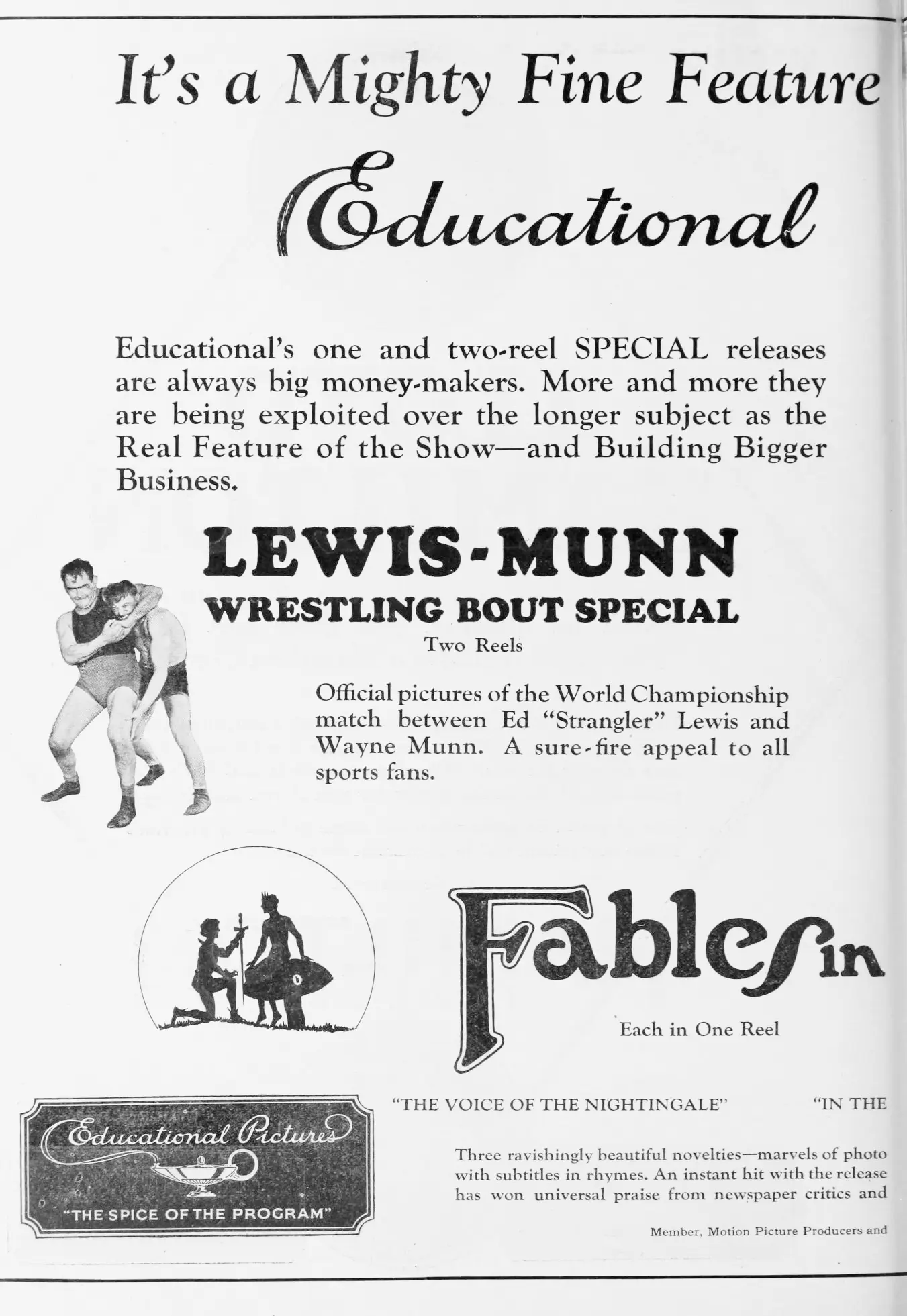
Is the Lewis-Munn Wrestling Bout worth your time in the 21st century? Short answer: yes, but only if you view it as a historical artifact rather than a piece of entertainment. This is not a film for the casual viewer seeking narrative arcs or character development; it is a primal document for the historian and the wrestling purist who wants to see the DNA of modern spectacle in its most skeletal form.
This film is for the archivist, the combat sports nerd, and the student of early silent-era documentation. It is emphatically not for anyone expecting the polished storytelling of The Midnight Girl or the choreographed tension of a modern WWE broadcast. This is a flickering ghost of a match, a piece of industrial history that happens to feature two men trying to fold each other in half.
1) This film works because it captures a genuine cultural moment of transition with a fly-on-the-wall perspective that feels hauntingly intimate despite the grain.
2) This film fails because the technical limitations of 1925 sports photography often obscure the very techniques that made Ed Lewis a legend.
3) You should watch it if you want to understand how professional wrestling began its slow mutation from legitimate contest to theatrical performance.
The Lewis-Munn Wrestling Bout is a difficult piece of media to judge by contemporary cinematic standards. There is no script. There are no retakes. When you watch The Golem, you are seeing a carefully constructed vision; here, you are seeing the limitations of the hand-cranked camera. The frame rate fluctuates, giving the wrestlers a jittery, supernatural speed that belies the heavy, grinding nature of their movements.
The cinematography is functional at best. The camera remains largely static, positioned at a distance that captures the entirety of the ring. This lack of close-ups means we lose the facial expressions—the agony of the Strangler's headlock or the desperation in Munn's eyes—but we gain a sense of the environment. You can see the smoke-filled air and the indistinct blur of the crowd, a sea of fedoras and flat caps that feels worlds away from the neon-lit arenas of today.
Specific moment: Watch the sequence where Munn attempts to leverage his weight against Lewis near the ropes. The way the light catches the sweat on their backs creates a high-contrast, almost sculptural effect. It’s a moment of accidental beauty in an otherwise utilitarian recording. It reminds me of the gritty realism found in The Alaskan, where the environment is as much a character as the actors.
For the general public, the answer is a firm no. If you are looking for the escapism found in Wisp o' the Woods, you will be bored within three minutes. However, for those who find beauty in the 'found footage' of history, it is essential. It provides a baseline for how we perceive physical conflict on screen. It is the raw material that would eventually be refined into the sports-drama genre.
The match itself is a masterclass in psychological pressure. Ed 'Strangler' Lewis was not a flashy performer. He was a 'hooker'—a man who knew how to end a fight legitimately. Seeing him lose to Wayne Munn, a man whose primary claim to fame was his collegiate football career, is a fascinating look at the early days of 'the work.' Was it a legitimate loss or a planned transition? The grainy footage offers no easy answers, only more questions.
There is a peculiar rhythm to this bout that sets it apart from other 1925 releases like The Power God. In a serial like that, the action is paced for maximum thrill. In the Lewis-Munn match, the pacing is dictated by exhaustion. There are long stretches where very little happens as the two men jockey for position. To a modern eye, this might seem like 'dead air.' To a critic, it is the purest form of tension.
The lack of sound is actually an advantage here. Without the roar of the crowd or the bark of an announcer, the viewer is forced to focus entirely on the biomechanics of the struggle. You notice the way Munn uses his shoulder as a lever. You see the subtle shifts in Lewis's center of gravity. It is a silent ballet of violence. It’s a far cry from the comedic timing of His Wooden Wedding, but it shares a similar reliance on physical presence over dialogue.
When placed alongside The Mysterious Stranger or Time Locks and Diamonds, the Lewis-Munn Wrestling Bout feels like an interloper. Those films were striving for art; this was striving for record. Yet, there is more 'truth' in these few minutes of wrestling than in a dozen staged melodramas. The stakes were real—or at least, the physical impact was.
Compare this to Cut It Out: A Day in the Life of a Censor. While that film satirized the industry, the wrestling bout was exactly the kind of 'raw' content that early censors were often wary of—not because of immorality, but because of the sheer, unadorned reality of men in physical conflict. It is a document of sweat and failure.
The Lewis-Munn Wrestling Bout is a fascinating, if grueling, watch for a very specific type of person. It is a graveyard of a match. It is grainy. It is slow. But it is also a window into a world that no longer exists. If you can handle the visual noise and the lack of a traditional 'plot,' you will find a hauntingly effective piece of history. It isn't a masterpiece of art, but it is a masterpiece of evidence. It works as a time capsule, even if it fails as a Saturday night movie. I give it a recommendation for the curious, but a warning for the impatient.
IMDb —
1926
Community
Log in to comment.