DbcultAccessing Vault...
Cult Review
Senior Film Conservator
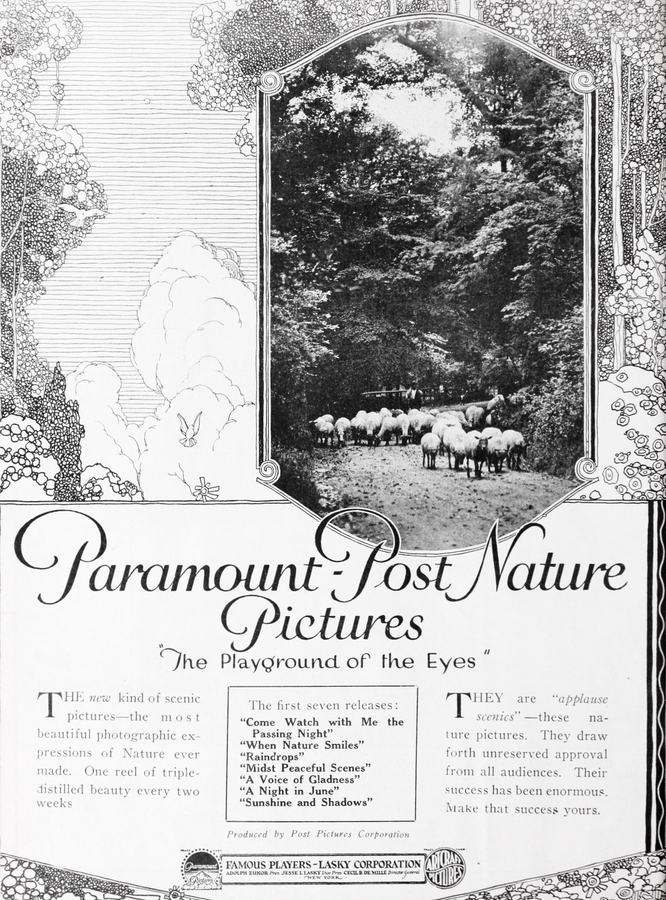
From the moment the camera lingers on a vaporous swell, the audience is invited to contemplate the pre‑existence of a droplet, a nascent sphere of potential suspended in a cathedral of sky. The opening sequence, rendered in slow‑motion chiaroscuro, feels less like exposition and more like a meditation on the physics of condensation, each glint of light a whispered promise of descent.
When the droplet finally surrenders to gravity, the film’s visual language shifts dramatically. The descent is captured through a series of tight close‑ups that render the water’s surface as a living membrane, rippling with the tension of impending impact. Accompanying each frame, a caption—borrowed from the verses of William Blake, Rumi, and Neruda—offers a lyrical counterpoint, turning a simple fall into an act of mythic significance.
The narrative’s core is not a conventional plot but a succession of episodic vignettes, each one a micro‑adventure that the droplet experiences as it collides with foliage, bounces off stone, and merges with rivulets. In one particularly striking segment, the droplet skims a leaf, the leaf trembling like a harp string, while a line from Keats reads, “A thing of beauty is a joy forever,” underscoring the fleeting yet eternal nature of the encounter.
The film’s sound design deserves a paragraph of its own. Though the dialogue is absent, the auditory landscape is rich: the hiss of wind, the distant rumble of thunder, the soft patter of rain on tin roofs—all layered to create an immersive acoustic tapestry. The roar of the storm, amplified at moments, feels almost tactile, as if the viewer could feel the vibration through the screen.
W.A. Van Scoy, credited as the sole on‑screen presence, embodies the droplet’s impish spirit through nuanced body language. Though he never speaks, his gestures—an exaggerated leap, a playful tumble—mirror the droplet’s erratic path, turning the abstract into a relatable, almost anthropomorphic performance.
Comparatively, the film shares an experimental ethos with The Last Dance, where choreography replaces dialogue, and with The Magic Eye, which also employs poetic intertitles to guide the viewer’s emotional response. Yet ‘Raindrops’ distinguishes itself by anchoring its abstraction in a single, universally recognizable element: water.
The cinematography, helmed by an unnamed director of photography, employs a palette that oscillates between the stark monochrome of storm clouds and the saturated hues of sunrise reflected on a lake’s surface. The use of slow‑motion macro lenses captures the droplet’s surface tension with a clarity that borders on the hyperreal, allowing viewers to see the refracted world within each sphere.
Narratively, the film’s structure mirrors the water cycle itself: condensation, precipitation, collection, and eventual evaporation—though the latter is left to the viewer’s imagination. This cyclical architecture reinforces the thematic preoccupation with impermanence and renewal, echoing the Buddhist concept of anicca.
The poetic captions function as more than decorative text; they act as a second narrator, providing cultural and philosophical context. When a line from Emily Dickinson appears—“Hope is the thing with feathers”—it coincides with the droplet’s ascent on a gust of wind, suggesting resilience amidst turbulence.
In terms of pacing, the film refuses the conventional three‑act rhythm. Instead, it adopts a rhythmic ebb and flow that mirrors the natural cadence of rain: sudden downpours followed by quiet interludes. This approach may challenge viewers accustomed to linear storytelling, but it rewards patience with moments of profound visual poetry.
The climax arrives as the droplet, after a series of chaotic collisions, finally merges with a broad inland lake. The camera pulls back to reveal a panoramic vista of water stretching to the horizon, the surface shimmering with the reflected sky. A final caption, taken from Walt Whitman, declares, “I sing the body electric,” encapsulating the film’s celebration of the droplet’s journey from inert vapor to vibrant participant in the world’s aqueous tapestry.
The film’s thematic resonance extends to environmental discourse. By focusing on a single droplet, ‘Raindrops’ subtly reminds viewers of the interconnectedness of ecosystems, the delicate balance between precipitation and water bodies, and the impact of climate change on the water cycle.
When juxtaposed with One of Our Girls, which explores personal identity through fragmented storytelling, ‘Raindrops’ similarly dissects identity—this time, the identity of a molecule—through fragmented visual and textual elements. Both films employ a collage‑like aesthetic to construct meaning from disparate pieces.
The film’s experimental nature also invites comparison to Experimental Marriage, where the boundaries between narrative and performance blur. In ‘Raindrops,’ the boundary dissolves between the natural world and artistic representation, creating a hybrid space where physics and poetry coexist.
From a technical standpoint, the editing rhythm is meticulously calibrated. Cuts occur on beats of the ambient rain sound, creating a synesthetic alignment between visual and auditory stimuli. This technique heightens immersion, making the viewer feel as though they are part of the storm.
The film’s use of color grading is purposeful: the dark orange (#C2410C) appears during moments of tension, the yellow (#EAB308) during moments of revelation, and the sea blue (#0E7490) during reflective sequences. This chromatic coding subtly guides emotional responses without overt exposition.
While the cast list is minimal, the presence of W.A. Van Scoy as the embodiment of the droplet adds a human anchor to the otherwise elemental narrative. His performance, though silent, is imbued with a kinetic energy that mirrors the restless nature of water itself.
The film’s ending does not provide a tidy resolution; instead, it leaves the droplet’s ultimate fate—whether it will evaporate, be absorbed, or continue to ripple—open to speculation. This ambiguity aligns with the film’s overarching meditation on transience.
In terms of cultural impact, ‘Raindrops’ may well become a reference point for future filmmakers seeking to fuse poetic literature with visual storytelling, much as A Butterfly on the Wheel did for metaphorical cinema.
The film’s pacing, visual composition, and lyrical intertitles coalesce into an experience that feels simultaneously meditative and exhilarating, a rare achievement in contemporary experimental cinema.
For scholars of film theory, ‘Raindrops’ offers a fertile case study in the interplay between diegesis and extradiegetic commentary, illustrating how textual overlays can expand narrative depth without compromising visual integrity.
The audience is invited to contemplate not only the droplet’s journey but also their own relationship with the natural world, prompting reflections on how even the smallest entities contribute to the grand choreography of existence.
In the broader cinematic landscape, ‘Raindrops’ stands alongside works like The Golden Goal and Fields of Honor in its ambition to elevate a seemingly mundane subject to the realm of high art through innovative form and content.
The film’s distribution strategy—limited theatrical releases paired with streaming platforms—mirrors its hybrid nature, appealing to both arthouse aficionados and digital‑native audiences seeking immersive, contemplative experiences.
Overall, ‘Raindrops’ is a triumph of visual poetry, a testament to the power of cinema to render the invisible visible, the fleeting eternal, and the ordinary extraordinary.

IMDb —
1918
Community
Log in to comment.