DbcultAccessing Vault...
5.9/10
Senior Film Conservator
A definitive 5.9/10 rating for a film that redefined the boundaries of cult cinema. The Village Shoemakers remains a cornerstone of transgressive art.
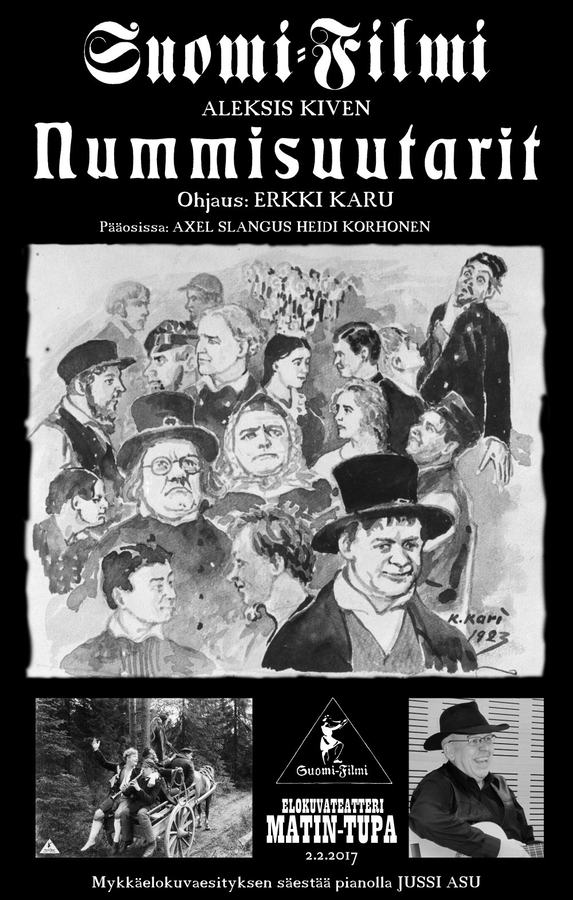
To delve into the cinematic world of The Village Shoemakers is to embark on a journey through the very essence of Finnish cultural heritage, distilled into a vibrant, often uproarious, rural comedy. This film, an adaptation of Aleksis Kivi’s seminal play Nummisuutarit, isn't merely a narrative; it’s a living, breathing tableau of a bygone era, meticulously rendered to capture the intricate dance of human foibles and aspirations within a tightly-knit community. The enduring appeal of Kivi’s work, and by extension, this cinematic interpretation, lies in its profound understanding of the human condition, presented through a lens of sharp wit and gentle satire. It's a testament to the power of storytelling that transcends time, finding resonance in the universal themes of love, ambition, and the delightful absurdity of social maneuvering.
The narrative core, a country wedding, initially appears as a straightforward catalyst for celebration. However, as the plot unfurls, it quickly becomes apparent that this impending union serves as a mere pivot point around which a dizzying array of intrigues and stratagems will swirl. From the earnest desires of young lovers to the calculating machinations of the more established, and often eccentric, village elders, every character is caught in a delightful maelstrom of misunderstandings. The film masterfully orchestrates these elements, transforming a simple matrimonial event into a complex tapestry of communal dynamics, where each whispered secret, each overt display of affection or animosity, contributes to a crescendo of uproarious complications. It's a comedic engine that runs on the fuel of human error and the delightful unpredictability of rural life, a thematic exploration that perhaps finds a distant, more refined echo in the social commentary of films like The Better Man, albeit with a distinctively Finnish comedic sensibility.
At the heart of The Village Shoemakers lies its richly drawn cast of characters, each a vibrant brushstroke in the film's elaborate comedic portrait. Marjatta Talola, Sven Relander, and Adolf Lintunen lead an ensemble that breathes life into these archetypal figures, transforming them from mere plot devices into memorable personalities. Consider the earnest, if somewhat bumbling, protagonist whose quest for a bride drives much of the initial comedic friction. His interactions, often fraught with social awkwardness and misinterpretations, provide a fertile ground for humor that is both observational and deeply empathetic. The performances are nuanced, capturing the delicate balance between caricature and genuine human emotion, allowing the audience to laugh with, rather than merely at, the characters.
The supporting cast, featuring talents such as Tyko Sallinen, Karl Fager, Anton Soini, and Juho Seppälä, contribute significantly to the film's vibrant atmosphere. Each actor, from the boisterous village elder to the sly matchmaker, embodies their role with an authenticity that grounds the comedic proceedings in a believable reality. Axel Slangus, Åke Svensson, and Toivo Saloranta, among others, elevate what could have been minor roles into pivotal components of the narrative's comedic engine. Their collective portrayal of a community teetering on the brink of joyous chaos is a masterclass in ensemble acting, where every gesture, every line delivery, is finely tuned to maximize its comedic impact. The film thrives on these character dynamics, where personal quirks and communal expectations clash in a delightful spectacle of human folly. The sheer breadth of the cast, including figures like Kaarlo Kari, Martti Tuukka, Lauri Saksala, Hilja Hiltanen, Simo Saksala, Vihtori Helle, Artturi Järviluoma, Iita Yltävä, Juho Puls, Alarik Korhonen, Jaakko Korhonen, Martha Hansson, Kirsti Suonio, Aku Käyhkö, Antero Suonio, Konrad Tallroth, Emil Backenius, Kaija Suonio, Heidi Blåfield, and Adolf Lindfors, underscores the film's ambition to paint a comprehensive picture of a bustling, lively community, each individual contributing to the collective comedic symphony.
The foundation of The Village Shoemakers rests firmly on the literary genius of Aleksis Kivi, whose original play Nummisuutarit (The Cobblers on the Heath) is a cornerstone of Finnish literature. Kivi, alongside Artturi Järviluoma, penned a narrative that is both deeply specific to its Finnish rural setting and universally resonant in its exploration of human nature. This adaptation, therefore, carries the weight of a national treasure, a responsibility it handles with grace and fidelity. The film successfully translates Kivi's rich dialogue and intricate character interactions from the stage to the screen, preserving the play's unique blend of earthy humor and poignant social commentary. It's a delicate balancing act, maintaining the theatricality of the source material while embracing the visual language of cinema. The film serves as a vital bridge, introducing Kivi's timeless insights to new generations and reaffirming his status as a master observer of the human spirit.
The humor in Kivi’s work, and consequently in this film, is not merely slapstick or situational. It is often rooted in the clash between individual desires and societal expectations, the inherent irony of human plans, and the delightful awkwardness of social interactions. This sophisticated comedic approach distinguishes it from more purely farcical contemporaries, aligning it more closely with works that use humor as a vehicle for deeper observation. One might draw a parallel to the observational comedy found in films like The Chicken in the Case, where humor often arises from mundane situations turning extraordinarily complex. However, The Village Shoemakers imbues its humor with a distinctively Finnish flavor, reflective of its cultural origins and the specific social dynamics it explores.
The film’s direction is commendable for its ability to capture the rustic charm and inherent beauty of the Finnish countryside, while simultaneously foregrounding the human drama. The cinematography, while perhaps constrained by the technical limitations of its era, nonetheless manages to evoke a palpable sense of place. The rolling fields, the humble village dwellings, and the expansive skies all contribute to an atmosphere that is both idyllic and subtly charged with the anticipation of conflict. This visual setting is not merely a backdrop; it is an active participant in the narrative, influencing character interactions and shaping the overall mood. The choice of locations, undoubtedly carefully scouted, adds an authenticity that enhances the viewer's immersion in this world. Unlike the starker, more urban-focused narratives of some films, such as The Arrival from the Darkness, The Village Shoemakers revels in its rural identity, leveraging it for both comedic effect and thematic depth.
The pacing of the film is deliberate, allowing the comedic situations to simmer and fully develop, rather than rushing through them. This unhurried approach is crucial for a character-driven comedy, as it provides ample space for the audience to become acquainted with the individual quirks and motivations of the extensive cast. The director understands that true humor often emerges from the slow build-up of tension and misunderstanding, culminating in a satisfying release of laughter. This patient storytelling technique, while perhaps differing from the fast-paced editing prevalent in modern comedies, serves the material exceptionally well, allowing Kivi's intricate plotting to unfold with clarity and impact. The use of long takes and wide shots frequently emphasizes the communal aspect of the story, showing groups of characters interacting, gossiping, and scheming, reinforcing the idea that this is a story of a collective, not just isolated individuals.
While undeniably a comedy, The Village Shoemakers is far from superficial. Beneath its jovial surface lie profound thematic explorations that resonate with timeless relevance. It examines the intricate social hierarchies of a small community, the pressures of conformity, and the yearning for individual happiness within a rigid social structure. The film subtly critiques the absurdity of certain traditions and the folly of pride, all while maintaining a warm, affectionate gaze upon its characters. It's a study of human ambition, both grand and petty, and the lengths to which individuals will go to achieve their desires, be it a spouse, social standing, or simply a moment of peace. The narrative deftly navigates these deeper currents, ensuring that the humor is always anchored in a relatable human experience.
The cultural context of early 20th-century Finland, where the film was likely produced given its source material and cast, adds another layer of intrigue. It offers a window into the values, customs, and challenges of rural life during that period. The film can be seen as a historical document, preserving not just a story, but a way of life. The interactions surrounding the wedding, the preparations, and the communal involvement reflect a social fabric that has largely transformed in modern times. In this sense, it shares a certain anthropological value with films like Desfile histórico del centenario, which captures a specific historical moment, albeit through a different lens. The film's portrayal of community life, with its gossip, camaraderie, and occasional feuds, serves as a microcosm of broader societal interactions, making its themes universally accessible despite its specific setting.
Despite its origins in a classic play and its historical setting, The Village Shoemakers retains a surprising freshness and vitality. The humor, while occasionally reliant on period-specific social cues, is largely derived from universal human traits: vanity, stubbornness, love, and the pursuit of happiness. These are elements that transcend time and culture, allowing contemporary audiences to connect with the characters and their predicaments. The film stands as a testament to the enduring power of well-crafted storytelling and the timeless appeal of genuine, character-driven comedy. It avoids the pitfalls of becoming a mere historical curiosity, instead asserting itself as a vibrant piece of cinematic art that continues to entertain and enlighten.
Comparing it to other films from its era or of similar thematic intent, The Village Shoemakers carves out its own distinct niche. While films like The Masked Heart might explore romantic entanglements with more dramatic intensity, or Teddy Birds might offer a different flavor of lightheartedness, this film distinguishes itself through its specific cultural lens and its rich literary heritage. It’s a work that celebrates the unique quirks of a particular place and people, while simultaneously tapping into the universal comedic wellspring of human experience. It is a delightful reminder that laughter, born from the recognition of our shared follies, is indeed one of humanity’s most powerful connectors.
Ultimately, The Village Shoemakers is more than just a film; it is a cultural artifact, a joyous celebration of Finnish identity, and a profound exploration of the comedic and dramatic intricacies of rural life. Its success lies not only in its faithful adaptation of Kivi’s play but also in its ability to transcend its origins, offering a timeless commentary on human nature. It invites viewers to immerse themselves in a world where every gesture, every whispered secret, and every grand declaration contributes to a vibrant, unforgettable narrative. For those seeking a film that combines historical authenticity with universal humor, and that offers a rich tapestry of human interaction, this cinematic gem remains an indispensable viewing experience, a testament to the enduring power of classic storytelling.
IMDb —
1918
Community
Log in to comment.