DbcultAccessing Vault...
7.3/10
Senior Film Conservator
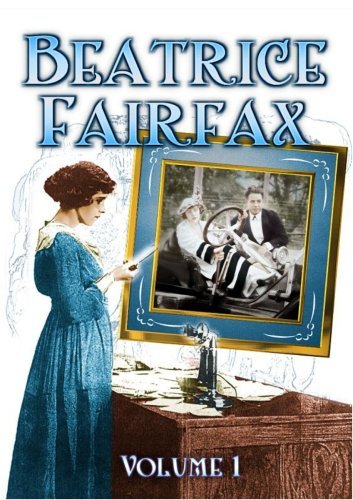
A definitive 7.3/10 rating for a film that redefined the boundaries of cult cinema. Beatrice Fairfax remains a cornerstone of transgressive art.
Stepping back into the hallowed, flickering halls of early cinema, one encounters a peculiar delight: the film serial. These episodic narratives, designed to lure audiences back week after week, were the television shows of their day, brimming with cliffhangers and audacious derring-do. Among them, Beatrice Fairfax, a 1916 production starring the luminous Olive Thomas, stands as a particularly fascinating artifact. It's not merely a historical curiosity; it's a vibrant testament to the burgeoning power of female agency on screen, a narrative tapestry woven with threads of mystery, adventure, and a surprising depth for its time.
At its core, Beatrice Fairfax is a chronicle of a young, intrepid reporter who doesn't just report the news; she makes it. Or rather, she uncovers the hidden truths behind it, often placing herself directly in harm's way. Olive Thomas, a vision of youthful exuberance and determination, imbues Beatrice with an infectious spirit that elevates the character beyond a simple archetype. She's not a damsel in distress; she's the one doing the distressing, to criminals and conventional expectations alike. The serial format, with its fifteen distinct chapters, allowed for an unfolding narrative that could explore various facets of crime and justice, from high-stakes blackmail to intricate espionage, all filtered through Beatrice's keen investigative lens.
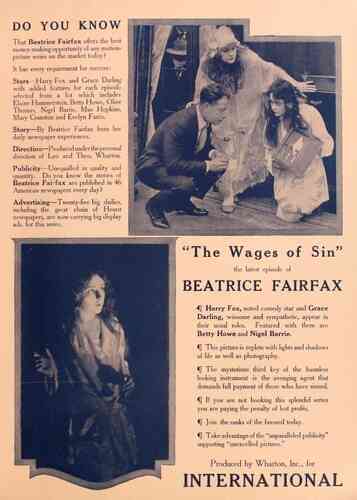
The brilliance of the serial lies in its relentless pacing and the ingenious predicaments Beatrice finds herself in. Each episode, or 'chapter,' presents a fresh challenge, a new puzzle to solve, often culminating in a thrilling cliffhanger that left audiences breathless for the next installment. This structural approach, common to silent serials, here feels particularly well-suited to Beatrice's character. Her mind is always working, always connecting disparate clues, and the episodic nature mirrors the fragmented, often chaotic reality of crime itself. The writers, Beatrice Fairfax herself (a pseudonym for the collective authorship, perhaps, or a clever meta-narrative choice) and Basil Dickey, crafted scenarios that were both fantastical and surprisingly grounded in the social anxieties of the era.
What truly sets Beatrice Fairfax apart is its protagonist. In an age where female characters were often relegated to romantic interests or domestic roles, Beatrice burst onto the scene as a professional woman, independent and formidable. She uses her intellect, her charm, and her sheer audacity to outwit villains who often underestimate her. This isn't just a story about a woman solving crimes; it's a story about a woman defining her own destiny, carving out a space for herself in a male-dominated world. Her resourcefulness is a constant source of admiration, whether she's employing a clever disguise, engaging in a thrilling chase, or simply using her sharp wit to extract crucial information.
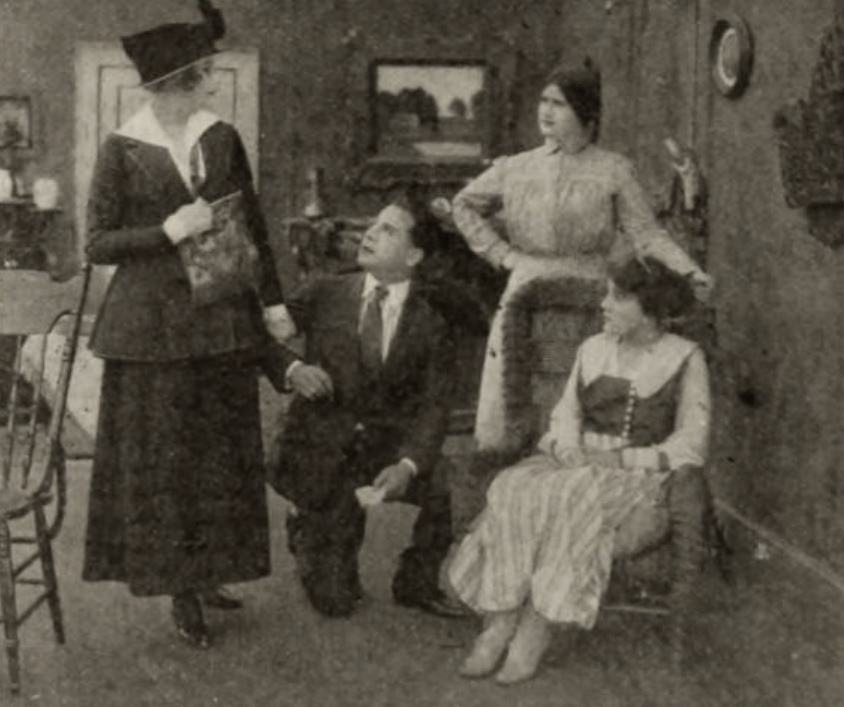
The supporting cast, a veritable who's who of early cinema, adds considerable texture to Beatrice's world. James Gordon, Elsie Baker, Anna Wharton, Bessie Wharton, and the imposing Warner Oland (who would later gain fame as Charlie Chan) all contribute to the vibrant ensemble. Their performances, often broad by modern standards, are perfectly attuned to the demands of silent film acting, conveying emotion and intent through exaggerated gestures and expressive facial contortions. Harry Carr and Nigel Barrie bring their own unique flavors to the mix, creating a rich tapestry of allies, adversaries, and incidental characters that populate Beatrice's thrilling universe. The sheer size of the cast – including names like Mary Cranston, Yumiko Nagahara, M.W. Rale, Evelyn Farris, Edgar L. Davenport, Frances White, Grace Darling, Harry Fox, Allan Murnane, Jeannie Parker, F.W. Stewart, Bruce McRae, Dick Bennard, May Hopkins, Robin H. Townley, Chief Buck, Betty Howe, Elaine Hammerstein, Wellington A. Playter, Leroy Baker, Buck Connors, and Frank Honda – speaks to the ambitious scale of this serial production, a logistical marvel for its time.
Comparing Beatrice Fairfax to other films of the era illuminates its unique position. While films like The Prince and the Pauper or The Royal Imposter might explore themes of mistaken identity and social hierarchy, Beatrice Fairfax delves into the more immediate, tangible dangers of crime and the active pursuit of justice. It shares a certain adventurous spirit with films like The Outlaw's Revenge, but grounds it in a modern, urban setting, with a female protagonist who relies on wits rather than brute force. The social commentary, though subtle, is present, much like in The Devil's Needle, but here it's about the systemic nature of crime and the individual's power to combat it, rather than specific vices.
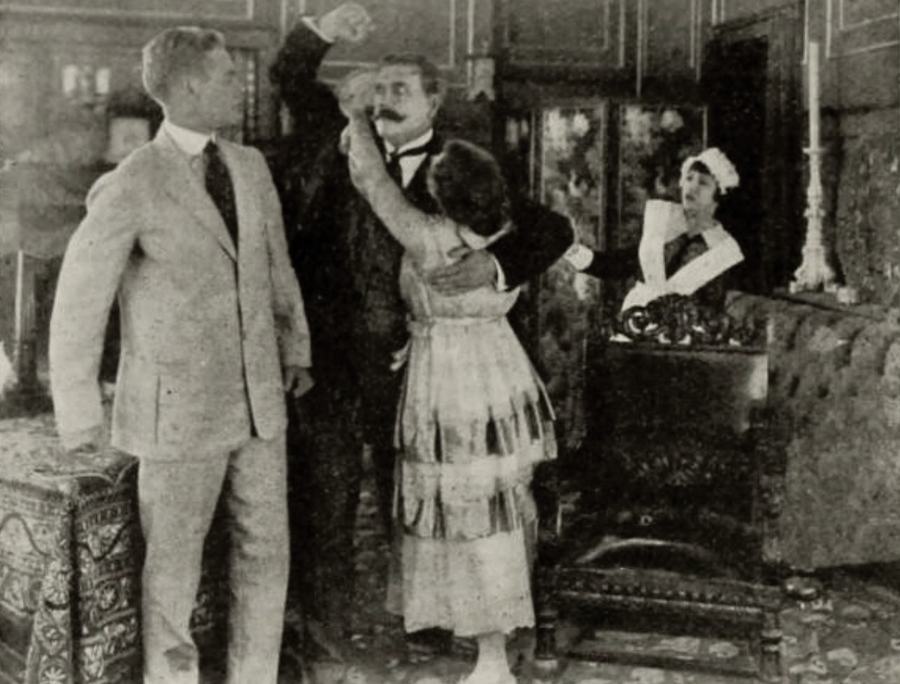
The visual language of Beatrice Fairfax is also worth noting. The cinematography, while constrained by the technology of the time, effectively creates atmosphere and suspense. Close-ups are used judiciously to emphasize emotion, and the action sequences, though sometimes stagey by today's standards, are executed with a clear sense of dynamism. The use of intertitles, the textual inserts that convey dialogue and narrative information, is skillful, never feeling overly expository but rather enhancing the dramatic flow. The art direction, particularly in depicting the various locales Beatrice investigates – from opulent mansions to gritty back alleys – provides a vivid backdrop to her adventures.
One cannot discuss Beatrice Fairfax without acknowledging the indelible mark left by Olive Thomas. Her portrayal is captivating, a blend of youthful charm and steely resolve. She carries the weight of the serial on her slender shoulders with remarkable grace and energy. Thomas’s performance is a masterclass in silent film acting, utilizing her expressive eyes and animated physicality to convey a wide range of emotions – fear, determination, triumph, and even moments of vulnerability. It’s a performance that transcends the limitations of its medium, making Beatrice feel like a fully realized, three-dimensional character. Her star quality is undeniable, and one can easily see why she became such a beloved figure of the era.
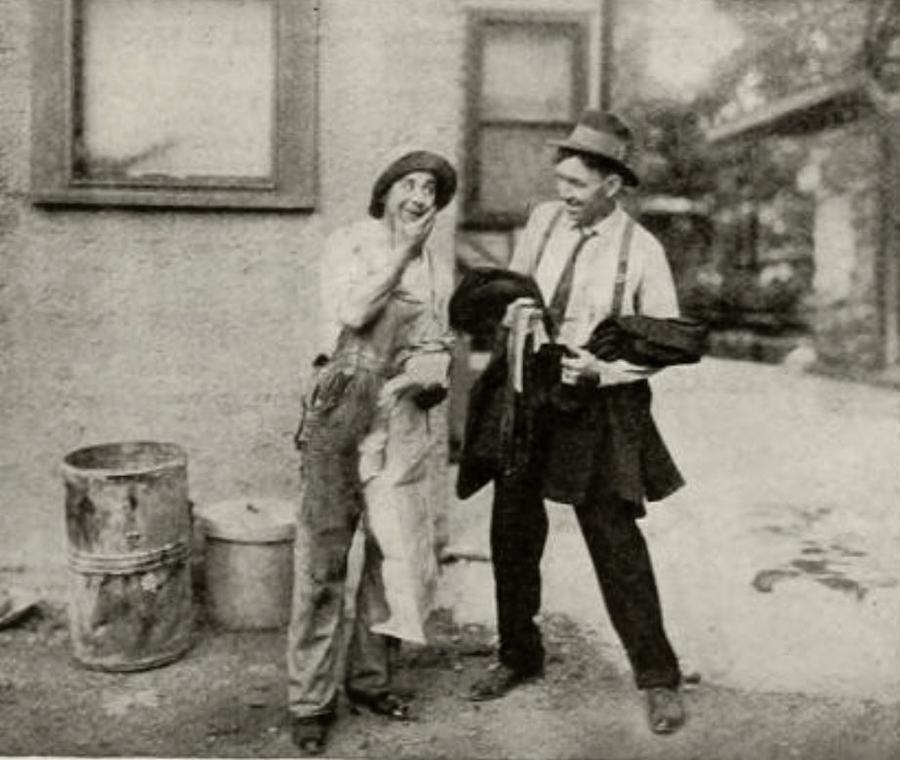
The legacy of Beatrice Fairfax extends beyond its immediate entertainment value. It contributed significantly to the evolving depiction of women in cinema, presenting a protagonist who was intelligent, capable, and not defined by her relationships with men. This was a radical notion for 1916, paving the way for future strong female characters across various genres. While not as overtly political as some later works, the very existence of Beatrice as a professional, crime-fighting reporter was a statement in itself, reflecting the changing roles of women in society during the early 20th century. One can draw parallels to the spirit of independence seen in other cultural movements of the time, even if not directly cinematic.
Revisiting Beatrice Fairfax today is an exercise in both historical appreciation and pure enjoyment. It offers a window into the narrative techniques and audience expectations of a bygone era, while simultaneously delivering a compelling story that remains engaging. The serial's ability to maintain suspense over fifteen chapters, each with its own mini-arc and overarching contribution to the larger mystery, is a testament to its skillful construction. It’s a reminder that compelling storytelling is timeless, regardless of the technological advancements in filmmaking. The sheer inventiveness of the plotlines, the clever twists, and the constant escalation of stakes keep the viewer invested, much like a modern prestige television series.
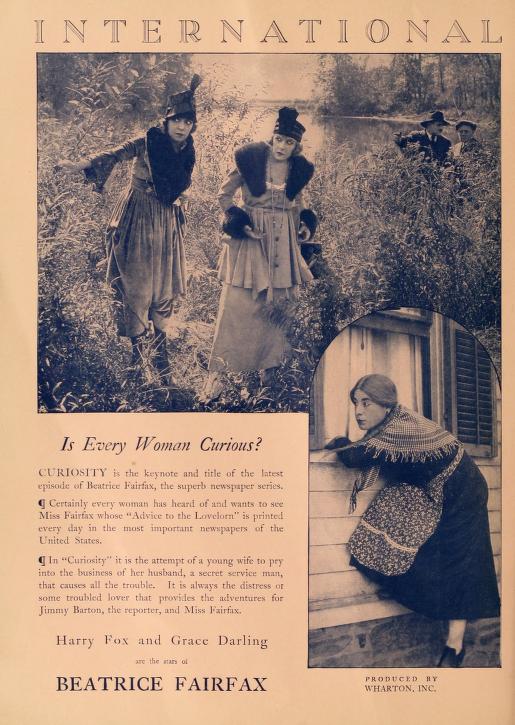
The fact that a film serial from over a century ago can still elicit genuine excitement speaks volumes about its enduring quality. It’s a foundational text for anyone interested in the history of female protagonists in media, the evolution of the detective genre, or simply the sheer ingenuity of early filmmakers working within the constraints of their time. Beatrice Fairfax isn't just a film; it's an experience, a journey through a fascinating period of cinematic innovation, led by a character who remains as inspiring and captivating today as she was over a hundred years ago. It reminds us that courage, wit, and a relentless pursuit of truth are qualities that transcend generations and cinematic styles. The adventures of this intrepid reporter are a delightful delve into a past that still feels remarkably vibrant and relevant, proving that some stories, and some heroes, never truly fade from memory.
In conclusion, Beatrice Fairfax stands as a towering achievement in silent serial filmmaking. Its daring protagonist, intricate plots, and the magnetic performance of Olive Thomas combine to create a work that is both historically significant and immensely entertaining. It's a foundational text for understanding the evolution of the action-adventure genre, particularly with its strong female lead. While some may find the conventions of silent film require a degree of adjustment, the rewards are immeasurable. For those seeking a glimpse into the pioneering spirit of early cinema and the captivating power of a truly independent heroine, Beatrice Fairfax is an absolute must-see. Its influence, though perhaps not always explicitly acknowledged, can be felt in countless subsequent portrayals of resourceful, intelligent women who dare to challenge the status quo and fight for justice, proving that even in the silent era, a woman's voice could resonate with tremendous power.
IMDb 6.1
1935
Community
Log in to comment.