DbcultAccessing Vault...
6.4/10
Senior Film Conservator
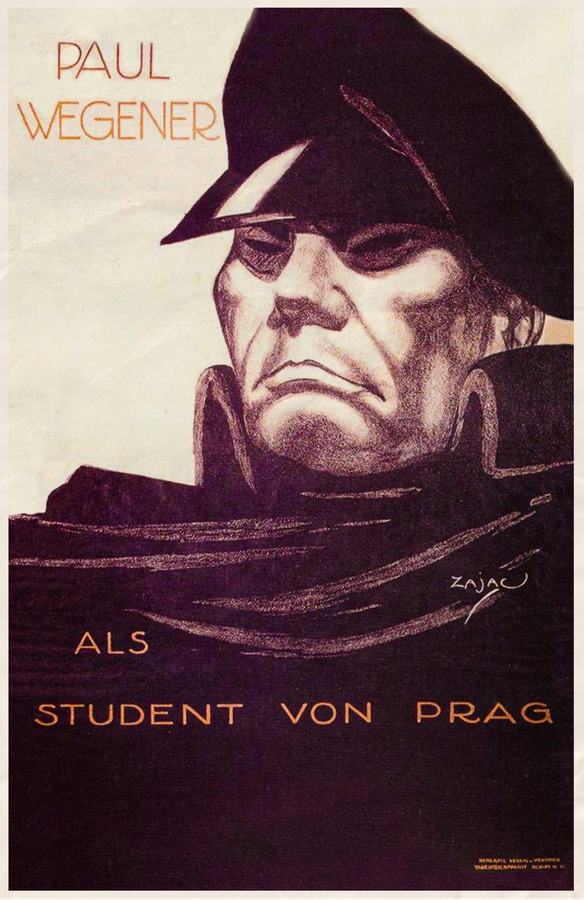
A definitive 6.4/10 rating for a film that redefined the boundaries of cult cinema. The Student of Prague remains a cornerstone of transgressive art.
Paul Wegener’s The Student of Prague arrives like a tarnished daguerreotype slipped between the pages of your diary—its silver nitrate ghosts still breathing. One hundred and ten years after its Berlin premiere, this inaugural German horror film feels less like antique curio than like a shard of obsidian lodged in the century’s spine: sharp, black, and weirdly reflective.
Forget travel brochures; cinematographer Guido Seeber conjures a city dissolving into fogbanks and cobblestone sighs. Every tilted gable seems to lean inward, eavesdropping on Balduin’s private pact. The film’s on-location shots—rare for 1913—intercut with studio sets whose painted backdrops flake like old varnishes, producing an instability that anticipates German Expressionism by a full decade. Compare this tactile unease to the static tableaux of From the Manger to the Cross or the newsreel literalism of The Corbett-Fitzsimmons Fight; here mise-en-scène itself becomes a character—warped, breathing, complicit.
Hanns Heinz Ewers’s screenplay strips Faust to its neurotic core: no cosmic wager, just a broke student craving beer money and sexual access. The transaction—signed inside a candle-lit crypt—reads like a credit-card receipt for the 20th century. Wegener, who moonlighted as an anthropology buff, allegedly based Scapinelli’s look on a Sephardic antique dealer he met in Marrakesh, giving the devil the face of global capital: cosmopolitan, seductive, rootless. When the mirror-double first steps out, frame-lines stutter; the camera literally irises in on itself, a proto-selfie whose negative space births a predator.
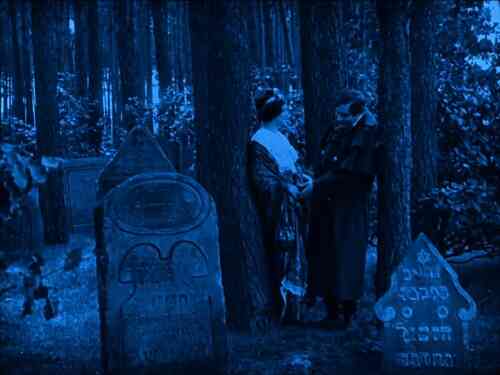
Arms flash, foils sing. Fencing master Friedrich Sieburg choreographed the clashes like Petipa on amphetamines: each parry ricochets across diagonal shadows, while intertitles—hand-lettered on parchment—drop silent bombs: "He thrust not at flesh, but at the soul behind it." The duels escalate from academic sport to Thanatos tango, culminating in a moonlit cemetery where Balduin and his double fence atop tilting gravestones. Compare this kinetic fatalism to the static prize-fight footage of Jeffries-Sharkey Contest; here the camera itself seems to lunge, hungry.
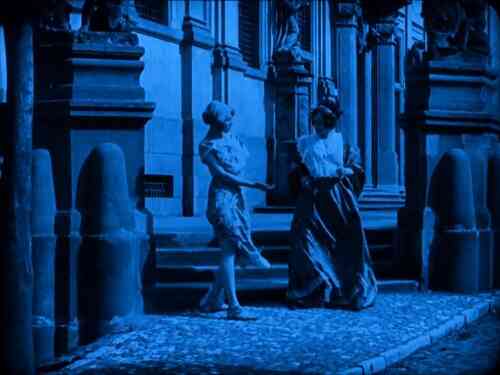
Lyda Salmonova’s Countess Margit glides through ballrooms like a porcelain mask hunting a face. Ewers refuses to grant her interiority; her function is to refract male anxiety. Yet in that vacuum Salmonova crafts something uncanny: her smiles arrive a half-second late, as though relayed from another continent. When the double seduces her, the film cuts to a close-up—unprecedented in 1913—of gloved fingers tightening on a lace handkerchief until stitches pop. The moment lingers longer than any kiss, suggesting repression itself is the era’s real pornography.
No optical printer existed yet. Wegener and double-exposure pioneer Seeber locked the camera in granite, shot Balduin’s side, rewound the negative, masked half the frame with a black velvet curtain, and exposed the doppelgänger. The seam line—often betrayed by a trembling halo—becomes a scar across the celluloid body, more unnerving than flawless CGI. Note how the reflection rarely occupies the same physical space as its origin; instead it slides along walls, a two-dimensional predator yearning for depth. The imperfection is the poetry.
Archival records show Berlin screenings accompanied a live trio performing Gottfried Huppertz’s proto-minimalist score—dissonant chords struck on prepared piano, with cellos bowed by rosined glass rods. Restored 4K prints at Filmarchiv Austria pair the imagery with a hauntological remix: needle-drop crackle, distant waltzes reversed, the faint hiss of uranium-disk radio. The effect is synesthetic: you hear the mirror cracking, a sound like ice giving way beneath your identity.
Trace the double motif forward: Murnau’s Nosferatu (1922) borrows the city-as-stranger device; Hitchcock’s Psycho lifts the split-self reveal; even Jordan Peele’s Us owes its scissor-wielding shadows to Balduin’s mirror walk. Yet where modern films psychologize, Wegener mythologizes. The Prague pact feels less like pathology than folklore—an ur-text for every subsequent tale of Jekyll contracts, Tyler Durdens, and social-media avatars run amok.
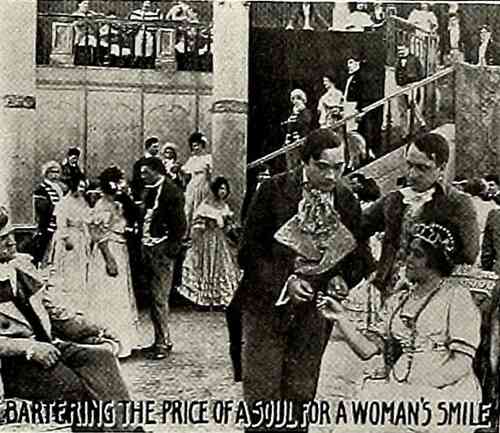
Dig beneath the gothic veneer and you’ll spot Ewers’s own ideological luggage: the script drapes Scapinelli in Orientalist signets—turban-like headwrap, curved dagger—implying the devil arrives from elsewhere, smuggling foreignness into tidy European quadrangles. The film’s anxious nationalism foreshadows the trenches soon to scar the continent. Viewed today, the subtext chafes; yet it also exposes how horror historically others its monsters to soothe the spectator’s conscience.
Playing both hero and haunt, Wegener modulates micro-gestures: original Balduin blinks in Morse-code panic; the double’s eyelids droop like a predator digesting. Because 1913 orthochromatic film rendered blue eyes as blank white, the doppelgänger’s gaze becomes a pair of ice-coin voids. Legend claims Wegener rehearsed opposite a mannequin daubed with his own face, cultivating an emptiness that seeps through the fourth wall and pools in your lap.
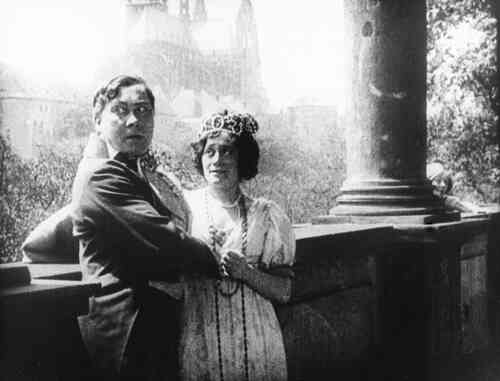
Early cinema often staged women as spectacle; here the male body becomes the site of rupture. The camera lingers on Wegener’s athletic torso during fencing drills, fetishizing strength that will soon be undermined. In essence, Balduin sells the image of himself, not his soul—an indictment of masculine self-fashioning rampant in Wilhelmine Germany. The film anticipates selfie culture: identity as negotiable capital, reputation as currency, and the dread of a reflection that refuses to stay curated.
The 2022 restoration from a Czechoslovakian nitrate positive reveals textures scrubbed from dupes: the velvet nap on Scapinelli’s frock coat, the liver-spot constellations on the antique dealer’s hand. Grain hovers like incense; each cigarette burn becomes a votive candle. Streaming via Filmarchiv Austria’s portal, the file offers optional German and English intertitles plus a scholarly commentary track that dissects every splice.
Purists queue the 4K stream; lo-fi aficionados can hunt the 1K public-domain rip on archive.org. Pair with a Czech black lager whose foam mirrors the film’s fog, or a shot of absinthe louched until it clouds like a conscience. Dim the lights; mirrors optional—though you may find yourself avoiding them afterward.
Whether you arrive for horror history, German Expressionist forensics, or simply the illicit thrill of watching a man outrun his own silhouette, The Student of Prague rewards with a poisoned bouquet of cinematic firsts. It is both fossil and virus: a relic of proto-horror whose DNA keeps mutating inside every modern tale of bifurcated identity. Grade: A+ for historical heft, A- for narrative pacing, and a lifelong chill every time you catch your reflection lagging a fraction of a second behind.
Cross-references for further spelunking: compare the folkloric devils of Trilby, the moral comeuppance of The Bells, or the imperial pageantry in With Our King and Queen Through India to gauge how early cinema negotiated modernity’s anxieties through spectacle and allegory.
IMDb 7.6
1935
Community
Log in to comment.