DbcultAccessing Vault...
7.1/10
Senior Film Conservator
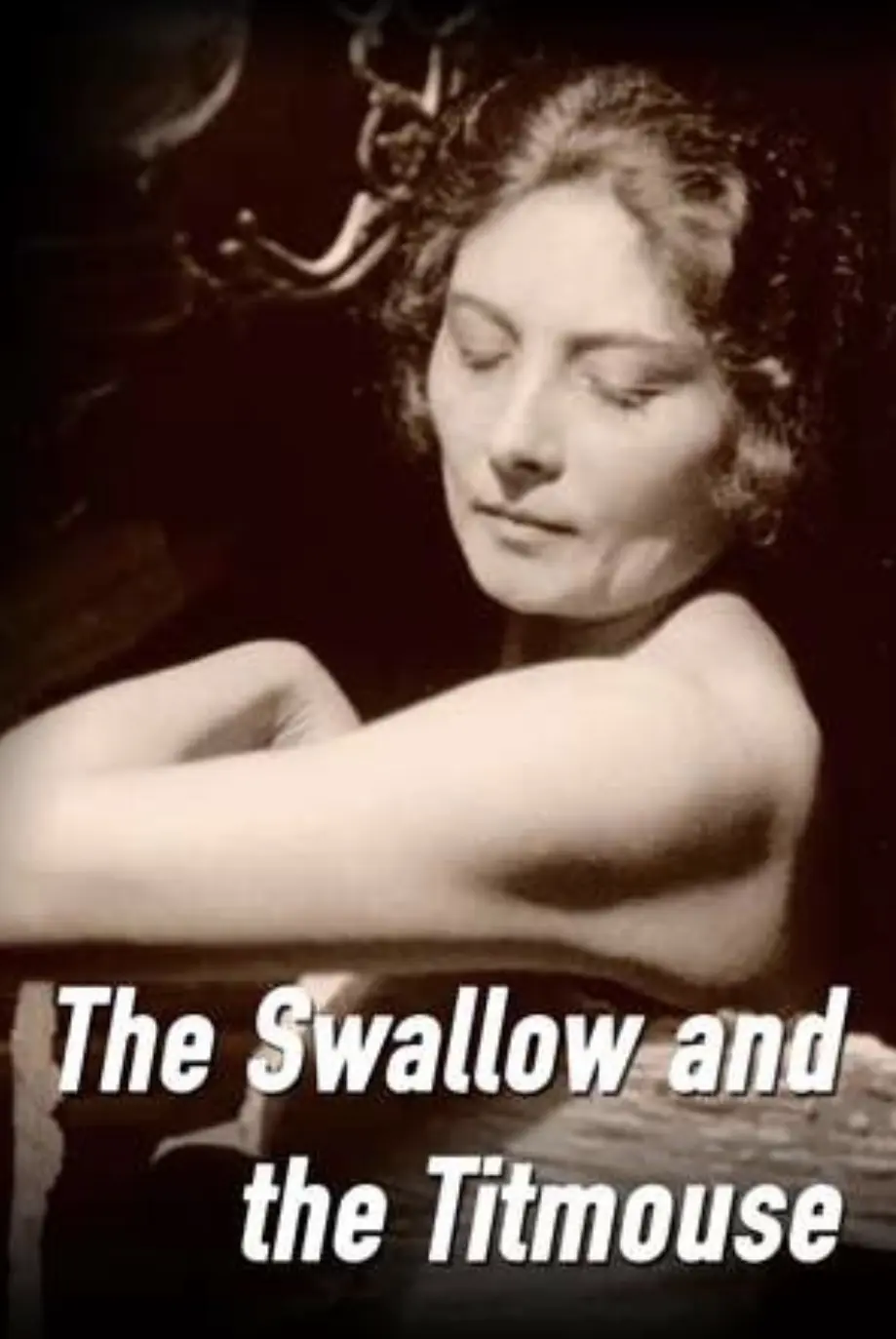
A definitive 7.1/10 rating for a film that redefined the boundaries of cult cinema. The Swallow and the Titmouse remains a cornerstone of transgressive art.
The history of cinema is often a graveyard of forgotten reels, but few resurrections carry the ethereal weight of The Swallow and the Titmouse (L'Hirondelle et la Mésange). Filmed in 1920 by the visionary André Antoine but left as a mountain of unedited rushes for over sixty years until Henri Colpi meticulously assembled it in 1983, this film is less a traditional narrative and more a sensory immersion into a vanished world. It is a work that breathes with the damp air of the Belgian canals, a piece of pure visual poetry that defies the rigid theatricality common to its era.
To watch this film is to surrender to the pace of water. Unlike the rugged, survivalist isolation found in Robinson Crusoe Hours, where the environment is a foe to be conquered, Antoine treats the canal system as a nurturing, albeit indifferent, mother. The camera, often placed directly on the deck of the barges, captures the shifting textures of the landscape with a documentary-like precision that was decades ahead of its time. We see the heavy, rusted chains, the straining muscles of the horses on the towpaths, and the intricate dance of the lock-keepers. This isn't the romanticized Europe of postcards; it is the tactile, grimy, and beautiful reality of the industrial waterways.
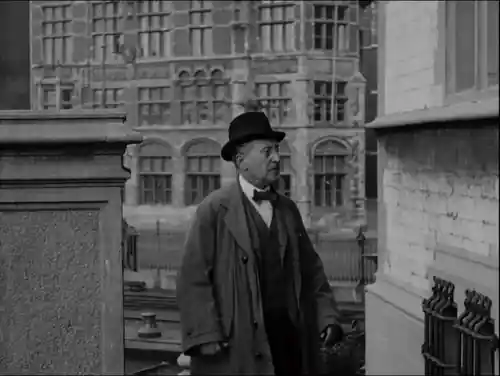
The narrative structure is deceptively simple. Pierre Alcover portrays the bargeman with a burly, unforced gravitas. His life is a cycle of movement and stasis, punctuated by the quiet companionship of his wife and sister-in-law. There is a profound sense of familial intimacy here that feels remarkably modern. They eat, sleep, and work within the cramped confines of the cabin, their movements choreographed by years of shared space. This domesticity is the film's heartbeat, providing a soft counterpoint to the cold, grey expanses of the northern sky.
The serenity is not absolute. The bargeman’s involvement in smuggling contraband introduces a subtle tension that simmers beneath the surface. While many films of the 1920s, such as The Bargain, relied on overt moral conflicts and high-stakes drama, The Swallow and the Titmouse treats its transgressions with a nonchalant realism. The smuggling is a necessity, a mundane extension of the mariner’s trade. However, the introduction of a new pilot—a man with his own hidden agendas and a disruptive, kinetic energy—acts as the catalyst for the film’s eventual descent into tragedy.
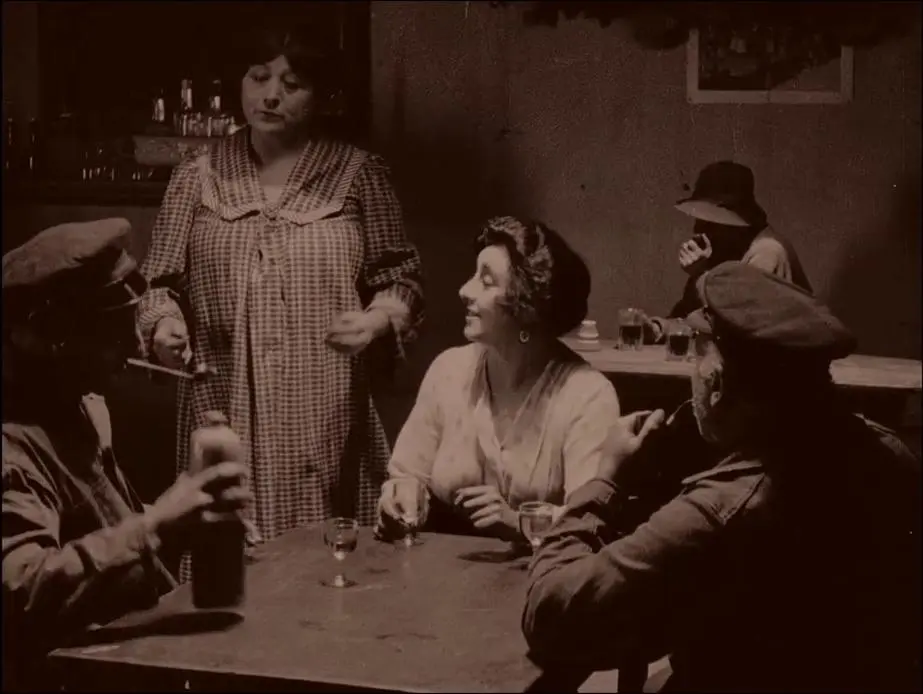
This newcomer represents a shift in the film's internal pressure. His presence turns the barge from a sanctuary into a cage. The way Antoine uses the narrow walkways of the boat to frame these characters creates a sense of inevitable collision. We are reminded of the psychological claustrophobia explored in The Halfbreed, though here the conflict is whispered rather than shouted. The pilot is the grit in the oyster, the element that forces the characters to reveal their hidden dimensions.
What strikes the contemporary viewer most is the film’s rejection of the studio. While contemporaries like The Little Fool or Her First Kiss often felt tethered to painted backdrops and controlled lighting, Antoine took his cast and crew into the wild. The result is a film that feels alive. The sunlight reflecting off the water isn't a lighting effect; it is a natural phenomenon captured on silver nitrate. The wind ruffles the hair of the actresses, Jane Maylianes and Maguy Deliac, with a spontaneity that no director could have staged.
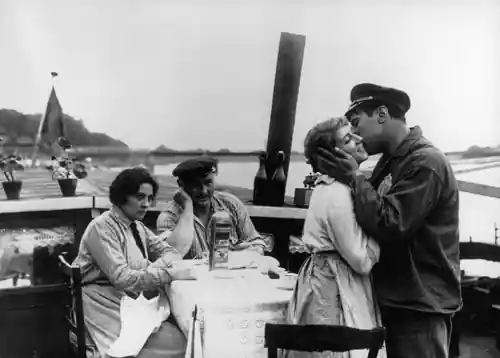
The editing by Henri Colpi deserves immense credit. Taking six hours of footage and distilling it into a coherent, lyrical feature required a deep understanding of Antoine’s original intent. Colpi maintains the liminal quality of the journey. We feel the passage of time not through title cards, but through the changing light and the gradual accumulation of wear on the characters' faces. It is a masterclass in temporal storytelling that rivals the atmospheric depth of The Alaskan.
There is a specific silence in this film that is haunting. Even with a musical score, the visual information conveys a world where words are secondary to action. The way the bargeman handles the tiller, or the way the women hang laundry across the deck, tells us more about their internal states than any dialogue could. This reliance on the physicality of labor grounds the film in a way that few silent dramas achieved. It shares a certain DNA with the rugged realism of Nan of Music Mountain, yet it trades the mountain's grandeur for the canal's intimacy.
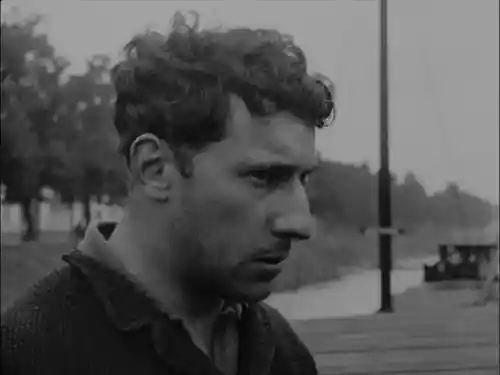
As the vessels move toward their destination, the tension between the pilot and the bargeman reaches a boiling point. It is a slow burn, fueled by jealousy and the encroaching reality of their illegal cargo. The climax, when it arrives, is sudden and visceral, a sharp break in the film's otherwise fluid motion. It leaves the viewer with a profound sense of loss—not just for the characters, but for the ephemeral beauty of the journey itself. The final shots of the water, indifferent and eternal, remind us that the human dramas are merely ripples on a much larger surface.
The Swallow and the Titmouse is a testament to the power of the cinematic image. It stands as a bridge between the early pioneers and the later realists, a missing link that shows what cinema could have been if it had abandoned the stage earlier. It lacks the saccharine sentimentality of Golden Dreams or the frantic pacing of In Bad. Instead, it offers something far more durable: a slice of life preserved in amber.
For the cinephile, this is essential viewing. It challenges our perceptions of what "old" movies look like. The handheld shots, the location filming, and the nuanced performances create an experience that feels strangely contemporary. It is a film that demands patience, but rewards that patience with a visceral connection to the past. Like the characters on L'Hirondelle and La Mésange, we are merely passengers on this journey, caught in the current of a master director's vision. It is a haunting, beautiful, and ultimately heartbreaking voyage that lingers in the mind long after the final frame has flickered out.
In the pantheon of maritime cinema, this film occupies a unique space—halfway between a dream and a documentary, between the stillness of the canal and the turbulence of the human heart.
IMDb 6.1
1920
Community
Log in to comment.