DbcultAccessing Vault...
Cult Review
Senior Film Conservator
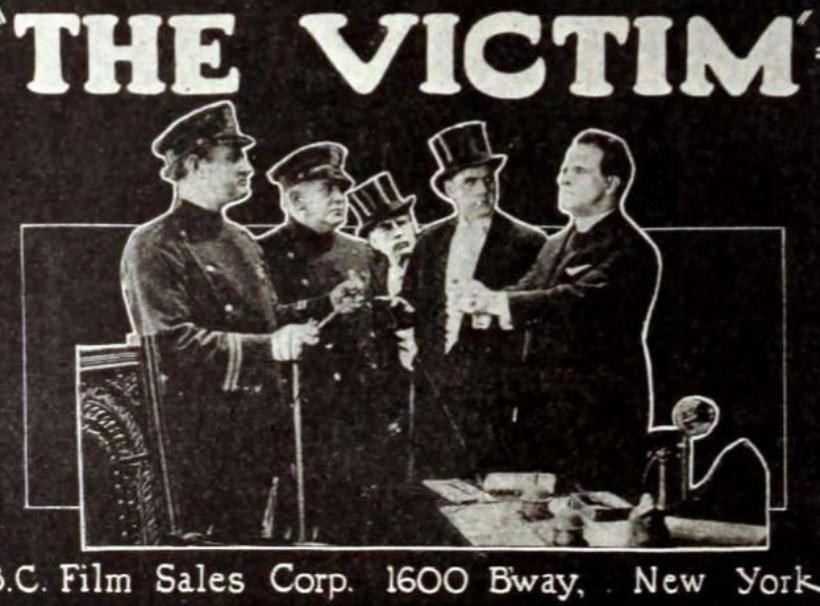
The Victim (1920) is a cinematic masterpiece that delves into the very fabric of human existence, laying bare the complexities and nuances of the human condition. With its rich tapestry of themes and motifs, this silent film is a testament to the enduring power of storytelling and the ability of cinema to capture the essence of the human experience. As we embark on this journey, we are met with a sense of foreboding, a feeling that is expertly crafted by the filmmakers to draw us into the world of the narrative.
At the heart of the film is the story of a poor family, struggling to make ends meet in a world that seems determined to crush them. The patriarch, a hardworking and devoted father, is the rock that holds the family together, and his brutal murder at the hands of a ruthless criminal sets off a chain of events that will change their lives forever. The use of lighting and shadows in this scene is particularly noteworthy, as it creates a sense of tension and drama that propels the narrative forward. The priest, played by Harry Benham, is a pillar of strength and compassion, and his commitment to the family is a testament to the transformative power of faith and redemption.
As the priest navigates the complexities of human nature, he must confront the darkness that lurks within and the harsh realities of a world torn apart by violence and desperation. The Victim (1920) is a film that explores the human condition in all its complexity, laying bare the flaws and vulnerabilities that make us human. Through its nuanced and thought-provoking portrayal of the human experience, the film raises important questions about morality, justice, and the nature of evil. In this sense, it is a film that is both haunting and beautiful, a testament to the enduring power of cinema to capture the essence of the human experience.
The film's use of cinematography and mise-en-scène is particularly noteworthy, as it creates a sense of atmosphere and mood that draws the viewer into the world of the narrative. The high contrast lighting and careful composition of each shot create a sense of drama and tension, propelling the narrative forward and underscoring the emotional intensity of the story. The Der Verächter des Todes (1919) and Kapten Grogg bland vilda djur (1918) are other notable examples of films that use cinematography and lighting to create a sense of atmosphere and mood.
The performances in the film are also worthy of note, particularly the nuanced and understated portrayal of the priest by Harry Benham. His performance brings a sense of depth and complexity to the character, and his commitment to the role is evident in every scene. The supporting cast, including Inez Ranous and Joyce Fair, also deliver strong performances that add to the overall impact of the film. The Frivolité (1918) and The Snowbird (1916) are other notable examples of films that feature strong performances from their cast.

The thematic resonance of the film is also worth exploring, as it raises important questions about the nature of justice, morality, and the human condition. The film's portrayal of a world torn apart by violence and desperation is a powerful commentary on the human experience, and the ways in which we respond to trauma and adversity. The The Net (1920) and The Man-Getter (1918) are other notable examples of films that explore themes of justice and morality.
In conclusion, The Victim (1920) is a film that will stay with you long after the credits roll. Its powerful story, combined with its haunting cinematography and nuanced performances, make it a must-see for fans of silent cinema. The Arms and the Girl (1917) and Akit ketten szeretnek (1915) are other notable examples of films that explore themes of love and relationships. If you're looking for a film that will challenge your assumptions and leave you thinking, then The Victim (1920) is an excellent choice. With its rich themes and motifs, it is a film that will continue to resonate with audiences for years to come, a testament to the enduring power of cinema to capture the essence of the human experience.
The film's exploration of the human condition is also noteworthy, as it raises important questions about the nature of morality and justice. The Mysteries of Paris (1922) and The Pied Piper of Hamelin (1918) are other notable examples of films that explore themes of morality and justice. Through its portrayal of a world torn apart by violence and desperation, the film challenges us to confront the darkness that lurks within and the harsh realities of a world that is often cruel and unforgiving.
The cinematic style of the film is also worth exploring, as it creates a sense of atmosphere and mood that draws the viewer into the world of the narrative. The The Conquest of Canaan (1921) and The Bondage of Barbara (1917) are other notable examples of films that use cinematic style to create a sense of atmosphere and mood. The film's use of high contrast lighting and careful composition of each shot creates a sense of drama and tension, propelling the narrative forward and underscoring the emotional intensity of the story.
In addition to its technical achievements, the film is also notable for its thematic resonance. The Ein seltsames Gemälde (1917) and The Golden Fetter (1917) are other notable examples of films that explore themes of morality and justice. Through its portrayal of a world torn apart by violence and desperation, the film challenges us to confront the darkness that lurks within and the harsh realities of a world that is often cruel and unforgiving.
The film's exploration of the human condition is also noteworthy, as it raises important questions about the nature of morality and justice. The Nancy Comes Home (1916) is another notable example of a film that explores themes of morality and justice. Through its portrayal of a world torn apart by violence and desperation, the film challenges us to confront the darkness that lurks within and the harsh realities of a world that is often cruel and unforgiving. The thematic resonance of the film is a testament to the enduring power of cinema to capture the essence of the human experience, and to challenge our assumptions about the world and our place within it.
IMDb 6.8
1932
Community
Log in to comment.