DbcultAccessing Vault...
Cult Review
Senior Film Conservator
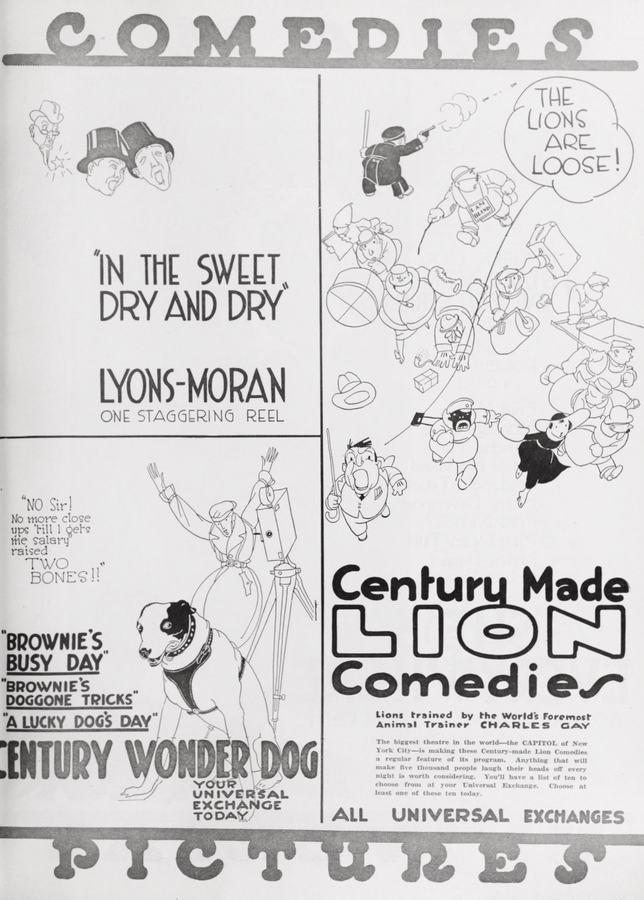
A 1920 nickel bought you subway fare, a cup of joe, and—if you ducked into the right nickelodeon—The Sweet Dry and Dry, a two-reel sermon on the sacrament of sneaky sips. Viewed today, the film feels like celluloid contraband smuggled through a century of moralizing hangovers. Its plot, a slapdash fugue of copper tubing and cat-and-cop capers, distills the entire decade’s ideological cocktail into 22 giddy minutes.
The opening tableau is already a manifesto: a clapboard apartment crammed with drying laundry, shadows like spilled ink, and our anti-heroes fussing over a contraption that looks equal parts pipe organ and torture device. Director Lee Moran lets the camera linger on the apparatus longer than narrative necessity demands; he wants us to worship the machinery of transgression. Every hiss of steam becomes a tiny heresy rising to the rafters where the Dry Committee—thin-lipped, ledger-wielding zealots—hold their inquisition. The verticality is deliberate: heaven upstairs, hell below, and between them the liminal burp of bootlegged bliss.
Grace Marvin, the lone woman in the principal quartet, glides through this masculine fever dream like a skeptical angel. She’s introduced powdering her nose with the detached elegance of a flapper Mona Lisa, but watch her eyes—they’re taking inventory. Marvin weaponizes the era’s assumptions about feminine frivolity, pirouetting past censors while smuggling subversion in her beaded purse. When she swipes the first thimbleful of the boys’ elixir, the cut is so swift it feels like a clandestine communion.
Eddie Lyons, co-writer and resident imp, performs his comedy of errors with the elastic physicality of a man whose bones are made of question marks. His best gag: trying to cork a bottle while the cork keeps rocketing skyward like a champagne-fueled Icarus, each pop synchronized to a jump-cut that halves the frame rate. The gag mutates—cork, cat, copper pipe—until the mise-en-scène resembles a dadaist explosion in a hardware store. Slapstick? Yes, but also a physics lesson in entropy and Prohibition: the tighter the law, the wilder the cork.
Enter the copper-starred crusader. The cop is shot in low-angle heroics, badge gleaming like a secular monstrance, then immediately undercut by a puddle of mash that sends him skating across the floor in a spasmodic waltz. Moran cranks the camera speed, turning the officer’s pratfall into a stroboscopic fugue—authority liquefied, dignity atomized. The sequence lasts maybe eight seconds yet encapsulates the era’s shifting power dynamics: the badge slips, the still steams on.
Comparative intertext: if The Ship of Doom traffics in gothic fatalism and Sons of the Soil mythologizes agrarian stoicism, then The Sweet Dry and Dry is the trickster cousin who shows up at the family reunion with a hip-flask and a grin that says your rules are my punchline. It shares DNA with What’s Bred… Comes Out in the Flesh in its delight at exposing moral hypocrisy, but it lacks the latter’s Victorian guilt; this film is too busy tap-dancing on the table.
Take the moment when Lee Moran’s character frantically feeds evidence to the stove, each bottle tossed becoming a tiny meteor that fizzles into blue flame. The firefighters who barge in next—stock Irish caricatures—douse everything except the narrative heat. The scene feels improvised, as though the actors sniffed the fumes of their own prop mash and decided logic was optional. Cine-anthropologists might read this as the birth of the stoner comedy, decades before the genre had a name.
Yet beneath the hiccups and hotfoots lurks a political sting. The Dry Committee’s boardroom is rendered in chiaroscuro: inkwells glisten like black Communion wafers, portraits of long-dead temperance matrons glower from the walls. When the beleaguered officer slams down his report, the camera dollies back to reveal a stained-glass window depicting a grapevine withering into a skull. The symbolism is less subtle than a temperance axe through a saloon mirror, but in 1920 it played as radical collage: religion, politics, and moral panic braided into one gothic fever.
Sound historians sometimes forget how expressive silent cinema could be without the crutch of synchronized dialogue. Listen—metaphorically—to the film’s soundtrack of implications: the glug of mash, the squeak of the officer’s boots, the susurrus of skirts as Marvin sashays past. These noises exist only in the spectator’s sensorium, yet they resonate louder than any Vitaphone clatter. The absence of spoken exposition forces the viewer to become a co-conspirator, filling the gaps with our own bootlegged breath.
Color palette note: Kino’s 4K restoration tints night scenes in sea-blue (#0E7490) moonlight, while daytime interiors glow a jaundiced yellow (#EAB308) that suggests both nostalgia and nicotine. The copper still—hand-tinted—burns a dark orange (#C2410C) against the monochrome, a molten heart in a grayscale world. The triadic scheme is no accident; it’s the film’s covert manifesto: azure liberty, amber decadence, vermilion rebellion.
As for gender dynamics, Mildred Moore’s supporting turn as the upstairs neighbor provides a counter-melody. She appears only twice: once to complain about the noise, once to accept a Mason jar of contraband as hush-money. Her complicity, wordless, complicates the moral algebra. Is she exploited or entrepreneur? The film refuses to adjudicate, preferring to keep the question fizzing like bubbles in a bathtub gin.
The final tableau—officer ascending staircase, committee looming like a tribunal—freezes on a iris-out that pinches the screen into a shrinking halo. It’s the visual equivalent of a hiccup caught in the throat: justice deferred, laughter unresolved. Contemporary reviewers in Motion Picture Herald dismissed it as “a diverting trifle,” but trifles age into time-capsules. Today the image feels prophetic: authority forever chasing its own tail, the real crime not the liquor but the levity.
So, is The Sweet Dry and Dry a masterpiece? Master-jest, perhaps. Its genius lies in its refusal to genuflect. It mocks temperance without sanctifying drunkenness; it lampoons cops without romanticizing crime. The film’s true intoxicant is anarchy—a heady distillate that still burns the throat a hundred years on. Sip accordingly.
“Prohibition ended in 1933; the joke never did.”
— celluloid bootlegger, signing off
IMDb 6.3
1915
Community
Log in to comment.