DbcultAccessing Vault...
Cult Review
Senior Film Conservator
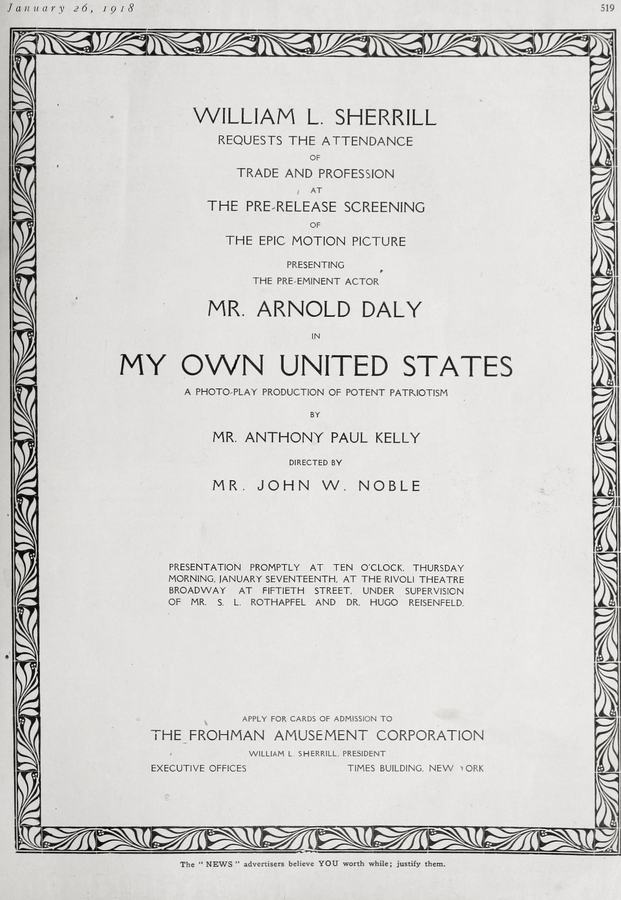
In the annals of early American cinema, few films tackle the very essence of national identity and the profound weight of legacy with the gravitas and narrative ambition of Anthony Paul Kelly's 1918 production, My Own United States. More than a mere historical drama, this film serves as a compelling, multi-generational interrogation of what it means to be an American, particularly when faced with the call of duty. It's a cinematic journey that doesn't just recount history but uses it as a crucible for moral and civic transformation, all presented through the evocative language of silent film.
At its heart, the film presents a striking generational conflict. We are introduced to Philip Nolan III, portrayed with a nuanced blend of youthful skepticism and underlying potential by Fred Herzog. Nolan III stands at a crossroads, his disinclination to join the national cause for democracy a source of deep consternation for his father, Philip Nolan II, brought to life with a commanding presence by Arnold Daly. The elder Nolan, a figure steeped in the quiet dignity of a man carrying a heavy truth, understands that mere rational arguments will not sway his son. Instead, he embarks on a dramatic recounting, a narrative within a narrative, that delves into the most shameful chapter of their family's past: the story of the first Philip Nolan, 'The Man Without a Country.' This framing device is not just a clever plot mechanism; it’s a profound statement on the power of history, of storytelling, and of the ancestral burdens that shape individual destinies. It posits that true understanding, true conviction, often emerges not from abstract ideals but from the vivid, often painful, lessons of the past.
The core of Philip Nolan II's exposition is a meticulously detailed historical flashback, transporting the audience to the tumultuous early years of the American republic. Here, Sidney Bracey delivers a memorable performance as the original Philip Nolan, a character whose initial charm and ambition gradually give way to a tragic hubris. Nolan I's fatal flaw is his susceptibility to the manipulative charisma of Aaron Burr, a figure of immense historical complexity and a recurring antagonist in the foundational myths of the United States. The film masterfully reconstructs the intricate political machinations of the era, particularly the intensely fraught presidential election where Thomas Jefferson ultimately prevailed over Burr. This segment is not just a historical reenactment; it's a dramatic exploration of the fragile nascent democracy, where personal ambition could threaten the very fabric of the young nation.
The narrative then pivots to Alexander Hamilton, a figure of unyielding principle, whose steadfast opposition prevented the conscienceless Burr from ascending to the governorship of New York. This political rivalry, often depicted as a clash of ideologies and personal animosities, culminates in the infamous duel between Hamilton and Burr – a moment of profound consequence that forever altered the course of American history. The film presents this pivotal event with a suitable dramatic weight, capturing the high stakes and tragic inevitability of the encounter. It serves as a stark reminder of the personal costs inherent in the forging of a nation and the often-irreconcilable differences that can arise among its architects. The portrayal of these historical figures, even through the lens of early cinema, manages to convey their outsized personalities and the monumental impact of their decisions. The silent film medium, relying heavily on intertitles and expressive acting, proves surprisingly adept at conveying the intricate political intrigue and the moral gravity of these historical events.
The tragic arc of Philip Nolan I reaches its nadir on his wedding night, a moment meant for celebration, but instead marked by his arrest for aiding Burr’s audacious conspiracy to establish a rival government in the South and wage war against the United States. This act of treason, an unforgivable betrayal of national trust, leads to his infamous banishment. His defiant cry, "Damn the United States! I wish I might never hear its name again!" seals his fate, condemning him to a life at sea, forever exiled from the very land he once spurned. This segment of the film is particularly potent, exploring the psychological torment of exile and the profound loss of identity that accompanies national severance. It's a stark portrayal of justice, perhaps draconian by modern standards, but intensely reflective of the nascent nation's fierce protectiveness of its fledgling sovereignty.
The latter part of Nolan I's story chronicles his long, agonizing journey towards repentance. Stripped of his country, his name, and his sense of belonging, he is forced to confront the true meaning of his earlier defiance. His eventual death, depicted with heart-wrenching pathos as he kisses the flag of the country he once execrated, is a powerful symbol of atonement. It's a cinematic moment designed to evoke deep emotional resonance, highlighting the enduring power of national symbols and the possibility of redemption, even for the most egregious of transgressions. Sidney Bracey's portrayal of Nolan I's slow, painful transformation from arrogant defiance to profound regret is a masterclass in silent film acting, conveying a complex emotional landscape without uttering a single word. This narrative of a man losing and then rediscovering his patriotism resonates deeply, serving as a powerful moral lesson for both the characters within the film and its audience.
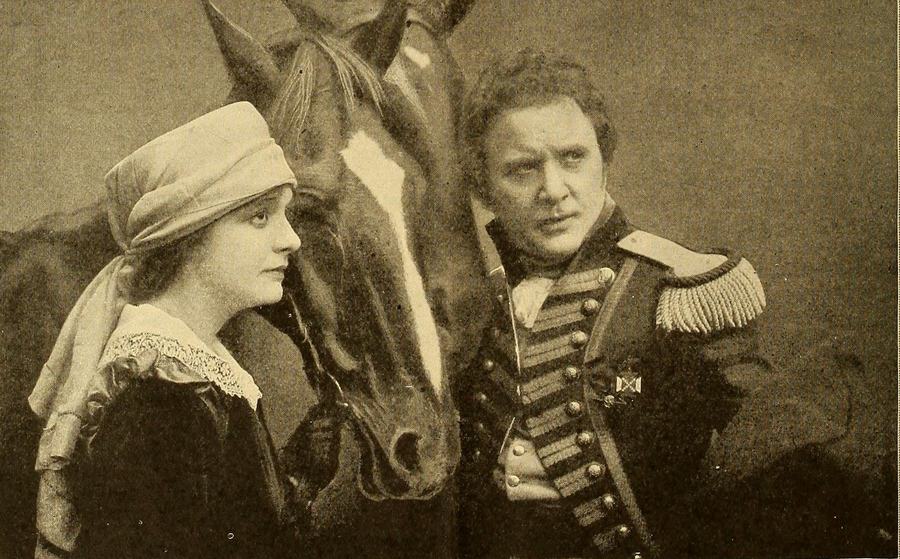
The impact of Philip Nolan II's epic recounting on his son, Philip Nolan III, is immediate and profound. The abstract arguments against military service crumble in the face of such a vivid, personal history of sacrifice, betrayal, and redemption. Deeply moved by the weight of his family's past and the stark lessons of national identity, Nolan III sheds his earlier reluctance, losing no time in joining 'the boys in khaki.' This resolution, while perhaps appearing overtly patriotic or didactic to a contemporary audience, was undoubtedly a powerful and timely message during the film's initial release in 1918, a period when America was deeply embroiled in World War I. The film functions not just as entertainment but as a call to arms, a cinematic exhortation for unity and national service. In this regard, it shares thematic kinship with other films of its era designed to bolster national morale, such as Kaiser's Finish, which similarly aimed to galvanize public sentiment through narratives of national purpose and triumph.
The direction by Anthony Paul Kelly, who also co-wrote the screenplay with Edward Everett Hale, navigates the complexities of this multi-layered narrative with remarkable clarity. The transitions between the contemporary framing story and the historical flashbacks are handled smoothly, maintaining narrative coherence despite the temporal shifts. The film's visual storytelling, characteristic of the silent era, relies on strong compositions, expressive intertitles, and the often-theatrical acting styles of the period. While some might find the acting exaggerated by today's standards, it was the accepted mode of conveying emotion and intent without dialogue, and in My Own United States, it largely serves the dramatic purpose effectively. The cast, including notable performances from Charles E. Graham, Jack Burns, and Helen Milholland, contributes to the rich tapestry of characters, bringing the historical figures and the contemporary family drama to life.
The film's production values, for its time, are commendable. The sets and costumes for the early American scenes evoke a credible sense of the period, transporting the audience back to the nascent republic. The use of location shooting, where evident, adds a layer of authenticity to the historical narrative. The pacing, while deliberate, allows the audience to absorb the weight of the historical events and the emotional journeys of the characters. Unlike some contemporary melodramas that might prioritize sensationalism, My Own United States maintains a certain decorum and seriousness, befitting its weighty subject matter. This approach lends it a timeless quality, allowing its core themes to resonate even a century later.
The narrative structure, moving from a contemporary moral dilemma to a historical exposition and back again, is particularly effective. It highlights how the past is not merely a collection of inert facts but a living, breathing force that continually shapes the present. Philip Nolan III's transformation is not a forced plot device but the logical culmination of confronting a profound truth about his lineage and his nation. This dramatic arc shares a certain intensity and moral gravity with films like Should a Wife Forgive?, which similarly explore the deep-seated consequences of past actions and the arduous path to personal and familial redemption. Both films, despite their different contexts, delve into the psychological weight of decisions made and the possibility of overcoming them through understanding and acceptance.
Moreover, the film's exploration of treason and loyalty remains strikingly relevant. In an era where national identities are constantly debated and challenged, the story of Philip Nolan I offers a potent cautionary tale about the perils of allowing personal grievances or ambitions to supersede civic duty. His ultimate repentance, symbolized by the flag, is a powerful articulation of a nation's capacity for forgiveness and an individual's journey towards reconciliation with their origins. The film posits that true patriotism is not a blind allegiance but a hard-won understanding of one's place within a larger historical narrative, embracing both its triumphs and its shames.
My Own United States is more than a historical costume drama; it is a profound meditation on the intergenerational transmission of values and the dynamic interplay between individual conscience and national identity. It reminds us that the stories we tell ourselves about our past, especially the difficult ones, are crucial for shaping our future. The film's concluding image of Philip Nolan III embracing his duty is not just a happy ending but a powerful affirmation of the enduring American spirit, one forged through trials, introspection, and the ultimate recognition of collective responsibility. It stands as a testament to the power of cinema to educate, inspire, and provoke thought, even a century after its creation. The raw emotion conveyed through the silent performances, particularly Daly's recounting and Bracey's tragic arc, ensures that the film's message transcends its temporal setting, offering a timeless reflection on what it truly means to belong to a nation and to honor its legacy.
IMDb 5.6
1929
Community
Log in to comment.