DbcultAccessing Vault...
Cult Review
Senior Film Conservator
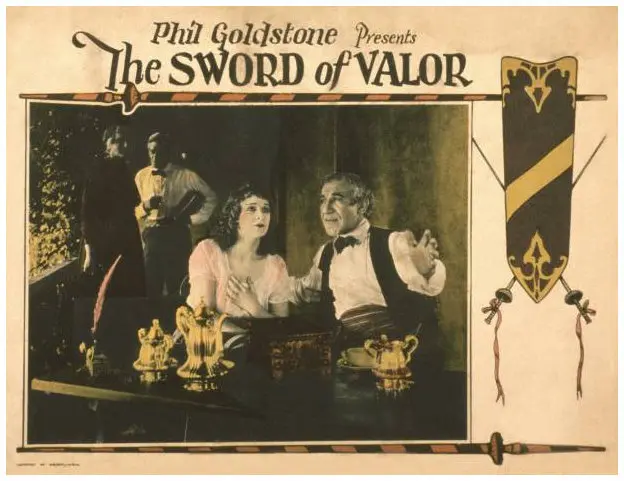
Stepping back into the cinematic annals, we encounter The Sword of Valor, a relic from an era when storytelling relied on grand gestures, expressive pantomime, and the evocative power of the moving image unfettered by spoken dialogue. This film, a vibrant tapestry of romance, adventure, and class conflict, offers more than just a glimpse into silent cinema; it presents a fascinating artifact of early 20th-century entertainment, replete with its particular conventions and charms. As a blogger and critic, I find myself drawn to the inherent drama of such productions, often discovering unexpected depths beneath their seemingly straightforward surfaces. Released in a period brimming with swashbucklers and romantic melodramas, this picture aimed squarely at the heart, delivering a narrative that, while familiar in its beats, was designed to captivate and thrill a burgeoning global audience.
At the heart of this narrative tempest is Ynez, portrayed with a captivating vivacity by Dorothy Revier. Her father, Don Guzman de Ruis y Montejo, a character etched with the rigidities of old-world Spanish aristocracy and brought to life by the commanding presence of Percy Challenger, harbors a singular, unyielding ambition: to secure a financially advantageous marriage for his only daughter. This paternal decree, a familiar trope in countless narratives across time and culture, immediately establishes the central tension. Don Guzman, convinced that Ynez's affections for Rodrigo, the charismatic Gypsy chieftain played by Rex 'Snowy' Baker, are an unsuitable dalliance—a romantic entanglement beneath her station—swiftly whisks her away from their tranquil Madrid hacienda. This relocation, from the quiet dignity of their ancestral home to the glittering, cosmopolitan allure of the Riviera, is not merely a change of scenery; it's a strategic maneuver designed to sever nascent romantic ties and introduce Ynez to a more 'appropriate' echelon of suitors. The film subtly critiques the hypocrisy of such class distinctions, where perceived social standing often trumps genuine affection or character. Don Guzman's obsession with lineage and wealth, however, is a classic dramatic engine, setting the stage for the inevitable clash between duty and desire.
The Riviera sequences are a visual feast, even in the black and white of the silent era, conveying an atmosphere of sun-drenched opulence and veiled intrigue. Here, Ynez is introduced to Ismid Matrouli, a wealthy Levantine of ambiguous 'mongrel origin'—a detail the film uses to underscore his outsider status while simultaneously highlighting Don Guzman's willingness to overlook racial prejudice for financial gain. Matrouli, portrayed by Armando Pasquali, is the archetypal villain of the piece: smooth, calculating, and possessing a veneer of charm that barely conceals his sinister intentions. His proposal for Ynez's hand is a transaction, devoid of genuine emotion, perfectly aligning with Don Guzman's materialistic aspirations. However, destiny, in its most cinematic form, intervenes during a lavish garden party. Ynez's encounter with Captain Grant Lee Brooke, an American military attaché played by an actor whose name is not explicitly provided in the cast list, but whose portrayal embodies the upright, heroic American ideal, is immediate and electrifying. Their love-at-first-sight connection is beautifully rendered through stolen glances, shared smiles, and an undeniable chemistry that transcends the silent screen. This nascent romance is cemented during a dramatic swim in the Mediterranean, where Captain Brooke's heroic rescue of Ynez from peril—a timeless cinematic device—solidifies their bond and sets the stage for the conflicts to come. This moment, a classic setup for romantic adventure, recalls the straightforward heroism celebrated in other films of the era, where valor was often demonstrated through physical prowess and timely intervention, much like the clear-cut good versus evil found in a film such as The Happy Warrior.
The narrative quickly escalates into a series of confrontations that define the film's adventurous spirit. Matrouli, seething with jealousy and wounded pride, sics a professional swordsman on Captain Brooke. This scene is a fascinating blend of old-world European dueling culture and American frontier pragmatism. Brooke, rather than engaging in a protracted swordfight, dispatches his assailant with a swift, decisive punch to the jaw—a display of brute force that contrasts sharply with the more ornate European traditions of honor. This moment effectively establishes Brooke as a man of action, unafraid to break convention to defend himself and his beloved. The inevitable duel between Brooke and Matrouli is a tense affair, steeped in dramatic anticipation. However, the film throws a curveball, injecting an element of unpredictable chaos: Rodrigo, the spurned Gypsy chieftain, makes a dramatic reappearance. His pot shot, intended for Captain Brooke, instead strikes Matrouli, adding a layer of tragic irony to the villain's demise. This twist complicates the simple hero-villain dynamic, reminding us that passions, especially unrequited ones, can lead to desperate and unintended consequences. It's a sudden, jarring moment that shifts the focus from a straightforward confrontation to a more convoluted web of desires and revenge, reminiscent of the intricate human entanglements sometimes found in more dramatic fare like A Naked Soul, albeit with a different narrative thrust.
With Matrouli out of the picture, the narrative pivots to its most dramatic set-piece: Rodrigo's desperate abduction of Ynez. Fueled by a potent mix of love, resentment, and a desire to reclaim what he believes is rightfully his, the Gypsy chieftain carries Ynez away to a rugged mountain stronghold. This sequence is classic silent film melodrama, a direct appeal to the audience's sense of peril and the hero's inevitable pursuit. The mountain setting provides a stark, visually arresting backdrop for this climactic struggle, contrasting sharply with the earlier opulence of the Riviera. Captain Brooke, embodying the unwavering resolve of a true hero, embarks on a daring pursuit, his determination a testament to his love for Ynez. The rescue sequence is a triumph of physical action and suspense, showcasing the athleticism of the actors and the directorial flair for staging thrilling set-pieces. It is in these moments of high adventure that The Sword of Valor truly earns its title, not just through literal swordplay, but through the metaphorical 'sword' of courage wielded by its protagonist. The imagery of a lone hero battling against odds to reclaim his beloved from a remote, perilous lair is a powerful, enduring archetype, echoing the epic journeys and rescues found in historical epics like Richard the Lion-Hearted, where noble heroes embark on quests of similar magnitude.
With Ynez safely rescued, the final hurdle remains: Don Guzman's consent. Having witnessed Captain Brooke's unwavering valor and Ynez's profound love, the rigid Don Guzman finally relents. This moment of paternal blessing, often a critical point of resolution in romantic dramas, signifies the triumph of genuine affection and heroic deeds over societal dictates and materialistic ambitions. It's a satisfying conclusion, reinforcing the film's central message that true love, when coupled with courage and determination, can overcome even the most entrenched social barriers. The ending is unambiguous, providing the audience with the catharsis of seeing the young lovers united, their future bright with the promise of happiness. This narrative arc, from forbidden love to parental acceptance, is a foundational element of many romantic tales, and The Sword of Valor executes it with a clarity and emotional resonance typical of its era.
The acting in The Sword of Valor is a masterclass in silent film performance, where nuance is conveyed through facial expressions, body language, and carefully choreographed gestures. Dorothy Revier as Ynez is particularly compelling, imbuing her character with a spirited defiance that makes her more than just a damsel in distress. Her eyes convey a range of emotions, from girlish infatuation to terrified resolve, anchoring the film's emotional core. Percy Challenger, as Don Guzman, expertly portrays the conflict between aristocratic pride and paternal love, his stern demeanor slowly softening as the narrative progresses. Rex 'Snowy' Baker's Rodrigo is a force of nature, his physicality and passionate intensity making him a memorable, if misguided, antagonist. The American Captain Brooke, though perhaps less flamboyant than his European counterparts, embodies a steadfast, honorable heroism that would have resonated strongly with American audiences of the time. The performances collectively create a vivid tableau, demonstrating the power of silent actors to communicate complex human experiences without uttering a single word. Their ability to project emotion across the footlights, relying solely on visual cues, is a testament to their craft and the unique demands of this bygone cinematic form. This expressive style is a stark contrast to the more naturalistic acting that would emerge with sound, yet it possesses a theatrical grandeur that is undeniably captivating, much like the exaggerated, yet effective, characterizations found in a film such as Peer Gynt.
The direction, under the guidance of its filmmakers, effectively utilizes the visual language of silent cinema to tell its story. The use of varied locations—from the stately Madrid hacienda to the glamorous Riviera and the rugged mountain stronghold—provides a rich visual tapestry, enhancing the narrative's scope and dramatic impact. The cinematography, while perhaps not groundbreaking for its era, is competent, effectively using light and shadow to create mood and emphasize character emotions. Intertitles, the silent film's narrative backbone, are used judiciously, providing essential dialogue and plot exposition without overwhelming the visual storytelling. The pacing, typical of early cinema, oscillates between slower, character-driven moments and bursts of frenetic action, particularly during the duel and rescue sequences. The filmmakers understood the power of visual spectacle, crafting scenes that were dynamic and engaging, designed to hold the audience's attention in an age before dialogue could carry much of the exposition. The visual storytelling, relying on strong compositions and clear action, showcases an understanding of how to communicate complex events without words, a skill that was paramount in silent film production. This deliberate construction of visual narrative, where every shot and gesture had to count, is a hallmark of the era, and it's fascinating to observe its execution here.
Beyond its thrilling surface, The Sword of Valor explores several enduring themes. The clash between social class and genuine affection is central, with Don Guzman's rigid adherence to aristocratic norms constantly challenged by Ynez's heart. The film critiques the superficiality of wealth when divorced from integrity, as exemplified by Matrouli, while celebrating the inherent nobility of spirit found in Captain Brooke, regardless of his lack of ancient lineage. The theme of 'valor' itself is multifaceted; it's not just about physical courage in duels or rescues, but also the moral courage to defy societal expectations, to love freely, and to protect those one cares for. The exoticism surrounding Rodrigo and the Gypsies, while a common trope of the time, also highlights the allure of the 'other' and the tension between established society and more nomadic, passionate ways of life. The film, in its own way, advocates for a more egalitarian view of love and heroism, where character and action speak louder than titles or fortunes. This examination of societal barriers and personal freedom resonates with narratives found in other films exploring class and individual will, such as Sons of the Soil, though through a different lens of romantic adventure rather than social realism.
As a product of the 1920s, The Sword of Valor reflects the prevailing cinematic tastes of its era. It belongs to a genre of romantic adventure that captivated audiences with its clear-cut heroes, dastardly villains, and triumphant love stories. While it may not possess the groundbreaking artistry of some of its contemporaries, it is a solid, entertaining example of commercial silent
IMDb 6.3
1933
Community
Log in to comment.