DbcultAccessing Vault...
Cult Review
Senior Film Conservator
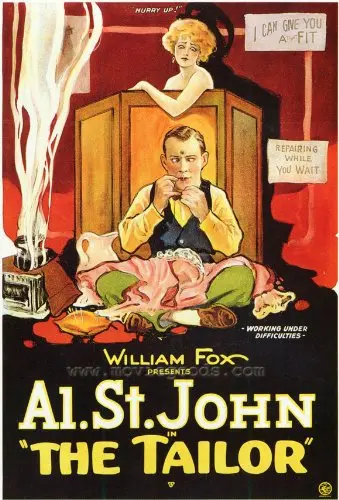
The opening sequence of The Tailor is a visual ode to the austere beauty of the American West, rendered in a palette that feels simultaneously nostalgic and fresh. The camera lingers on the dust‑kissed streets, the creaking wooden storefronts, and, most importantly, the modest workshop where Elise (Kerner) fashions garments for the townsfolk. The director’s choice to frame the tailor’s shop in low‑angle shots subtly underscores the power dynamics that will later unravel.
A recurring motif is the interplay of dark orange (#C2410C) and sea blue (#0E7490) in the mise‑en‑scene. The orange hue, often seen in the flickering lanterns that illuminate the shop, evokes warmth and the promise of creation. Conversely, the sea‑blue shadows that creep across the town’s alleys hint at the looming moral ambiguity. This chromatic tension is not merely decorative; it functions as a visual metaphor for Elise’s internal conflict between duty and desire.
Victoria Louise Kerner delivers a performance that is both restrained and explosive. Her eyes, often narrowed against the harsh sunlight, convey a quiet resilience that words cannot capture. The subtle shift in her posture—when she stands behind the cutting table versus when she confronts the sheriff—mirrors the film’s central theme: the transformation of identity through labor.
Al St. John’s drifter, whose name remains deliberately ambiguous, is a study in paradox. He oscillates between charming rogue and tragic outcast, a duality that is amplified by his physical comedy—a nod to his silent‑film heritage—yet grounded in a palpable sense of desperation. This blend of levity and gravitas makes his interactions with Elise feel like a dance, each step measured, each misstep resonant.
The sheriff, portrayed with a steely veneer, is not a mere antagonist; he embodies the institutional decay that the film critiques. His confrontations with Elise are less about law enforcement and more about the suppression of feminine agency. The townspeople, though peripheral, serve as a chorus that reflects the social mores of the era, their murmurs echoing the same disquiet that pervades the main plot.
The story’s architecture is meticulously crafted, with each act functioning like a distinct garment. Act One introduces the atelier as a sanctuary; the audience is invited to observe the rhythmic cadence of needle and thread, establishing a baseline of order. Act Two disrupts this equilibrium when the drifter arrives, slipping a cryptic note into a bridal gown—a moment that functions as the narrative’s inciting incident.
Act Three escalates the stakes: the sheriff discovers discrepancies in the town’s ledger, prompting a raid that forces Elise to confront her complicity. The climactic market showdown is staged with kinetic camera movements, the bustling stalls a chaotic tapestry against which the characters’ destinies are finally cut and re‑stitched.
When placed beside Baccarat, which also explores the interplay of chance and destiny, The Tailor distinguishes itself through its focus on domestic craft as a metaphor for societal construction. Similarly, the moral ambiguity of The Railroad Raiders finds a quieter echo in the drifter’s ambiguous motives, yet the latter’s lack of emotional depth pales in comparison to the nuanced chemistry between Kerner and St. John.
The film’s thematic resonance aligns with The Woman Above Reproach, where a female protagonist navigates patriarchal constraints. However, while the latter leans heavily on melodrama, The Tailor opts for a restrained, almost documentary‑like realism that amplifies its emotional impact.
The director’s choice to employ long takes during the sewing sequences invites the viewer into a meditative space, allowing the tactile sounds of fabric sliding across the table to become a percussive undercurrent. This auditory texture is complemented by an original score that weaves traditional folk motifs with a subtle, modern underlayer—an aural representation of the film’s temporal duality.
Cinematographer unnamed utilizes natural light to its fullest, capturing the golden hour glow that bathes the workshop in a honeyed sheen. The contrast between the bright interior and the oppressive shadows of the town’s streets is a visual embodiment of the film’s central conflict.
The editing rhythm mirrors the act of tailoring itself: deliberate cuts, precise joins, and occasional frayed edges that hint at underlying tension. The pacing never feels rushed; instead, it allows each character’s arc to unfurl organically, much like a fabric being stretched on a loom.
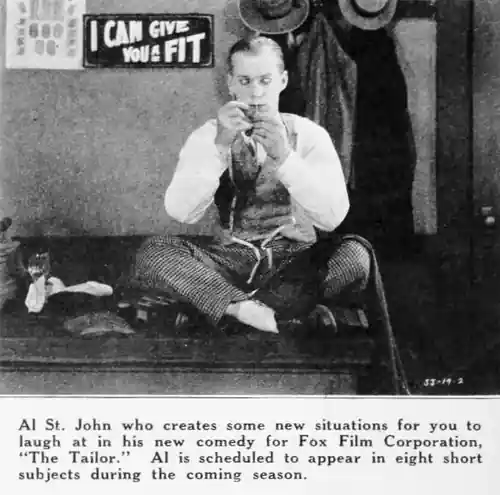
At its core, The Tailor is an exploration of how labor—especially feminine labor—serves as both a means of survival and a conduit for resistance. Elise’s mastery over cloth becomes a silent form of protest against the patriarchal structures embodied by the sheriff. The film subtly interrogates the notion that the act of creation can be a radical political statement.
The drifter’s presence introduces a counterpoint: his itinerant lifestyle challenges the town’s static social hierarchy, yet his reliance on Elise’s skill underscores a paradoxical dependence that blurs the lines between savior and exploiter.
The needle, often seen glinting in the low light, functions as a symbol of agency. When Elise uses it to stitch a hidden pocket into a coat, she is literally embedding secret knowledge within the fabric of the community. The thread, red in hue during moments of violence, turns ivory during scenes of intimacy, visually encoding emotional tone without dialogue.
Kerner’s subtle facial micro‑expressions—particularly the fleeting smile that appears when she discovers the drifter’s true intentions—reveal a depth of feeling that transcends the script’s brevity. St. John’s physical comedy, a homage to his silent‑film roots, is deftly balanced with moments of raw vulnerability, especially during the scene where he confesses his past transgressions over a shared bottle of whiskey.
Their on‑screen chemistry is palpable; each glance carries subtext, each touch a promise or a warning. This relational dynamism elevates the film beyond a simple western melodrama, positioning it as a study in human connection amidst societal turbulence.
The sheriff’s actor, though not named, delivers a performance that is both menacing and pitiable. His occasional moments of doubt—captured in close‑ups of his weathered hands—hint at an internal conflict that the screenplay leaves tantalizingly unresolved.
Compared to the more conventional storytelling of Colorado Pluck, which leans heavily on action set‑pieces, The Tailor opts for a slower, character‑driven narrative. This choice may alienate viewers seeking high‑octane thrills, but it rewards those who appreciate thematic depth and visual poetry.
In contrast, Det blaa vidunder employs surrealist imagery to explore similar themes of identity, yet its abstract approach can feel inaccessible. The Tailor strikes a middle ground, grounding its symbolism in tangible craft while still allowing room for interpretive speculation.
The film’s examination of gendered labor resonates strongly in today’s discourse on women’s agency in traditionally male‑dominated industries. By foregrounding a female protagonist whose skill is both economically essential and politically subversive, the narrative aligns with modern feminist critiques without sacrificing historical authenticity.
Moreover, the drifter’s ambiguous morality mirrors contemporary conversations about redemption and the complexity of personal histories, offering a nuanced perspective that avoids binary moral judgments.
Scholars of film studies might find the film’s use of textile metaphors a fertile ground for semiotic analysis. The recurring motif of stitching together fragmented lives can be read as an allegory for post‑colonial reconstruction, making the work relevant beyond its genre confines.
The Tailor is a cinematic tapestry woven with precision, emotional resonance, and visual flair. Its strength lies not in explosive set‑pieces but in the deliberate, almost surgical, crafting of each narrative strand. The film invites repeated viewings, each time revealing a new seam, a hidden stitch, or a subtle hue previously unnoticed.
For aficionados of westerns seeking a fresh perspective, for admirers of character‑driven drama, and for anyone fascinated by the intersection of art and labor, this film offers a richly textured experience that lingers long after the final credit rolls.
IMDb 5.1
1931
Community
Log in to comment.