DbcultAccessing Vault...
Cult Review
Senior Film Conservator
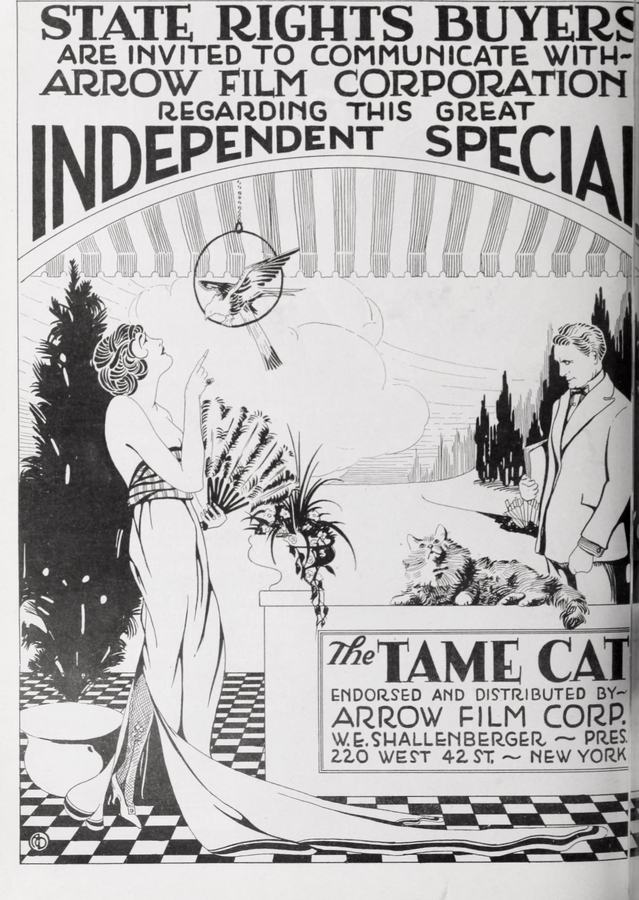
There are films that merely tell a story, and then there are those that etch themselves onto the very fabric of your being, resonating with an almost primal understanding of the human condition. Tom Bret’s The Tame Cat, a cinematic revelation from a bygone era, unequivocally belongs to the latter category. It is not just a film; it is an experience, a slow-burning, meticulously crafted character study that dares to peer beneath the genteel surface of early 20th-century society and uncover the simmering volcanoes of individuality often suppressed within. From its opening frames, the film establishes a mood of quiet contemplation, drawing the viewer into the seemingly unremarkable life of Eleanor Vance, a woman whose existence is as meticulously arranged as the porcelain figurines on her mantelpiece. This is a narrative that eschews bombast for nuance, allowing the profound emotional currents to ripple just beneath the surface, gradually building to a crescendo that is both inevitable and deeply satisfying.
At the heart of this compelling drama is Marion Harding, whose portrayal of Eleanor Vance is nothing short of a masterclass in understated power. Harding doesn't just play a character; she inhabits her, breathing life into every subtle gesture, every fleeting expression of longing or frustration. Her Eleanor is initially a woman defined by her environment, a creature of habit, whose days unfold with predictable regularity. We see her meticulously arranging flowers, hosting polite afternoon teas, and engaging in conversations that skim the surface of genuine emotion. Yet, even in these early scenes, Harding injects a flicker of something more, a barely perceptible tremor in her eyes, a slight hesitation in her posture, hinting at the vast, unexplored landscapes within. It's a performance built on internal monologue, communicated through the precise language of the body and the soul. This isn't the overt theatricality often associated with period dramas; rather, it's a deeply internalised performance, reminiscent of the quiet intensity found in later works like Viviette, where the protagonist's inner turmoil drives the entire narrative without needing a cacophony of external events. Harding captures the essence of a woman stifled by expectation, a 'tame cat' indeed, whose purr of contentment is merely a well-practiced façade.
The genius of The Tame Cat lies in its profound exploration of societal constraints and the insidious ways they can erode individual spirit. The world Eleanor inhabits is one of rigid decorum, where a woman's value is often measured by her domestic proficiency and her ability to maintain a serene household. The film subtly critiques this patriarchal framework, portraying it not with overt anger, but with a quiet, almost mournful understanding of its suffocating effects. The screenplay, penned by Tom Bret and drawing a surprising, yet effective, psychological depth that feels almost like a spiritual successor to the character studies that pepper the works of Robert Louis Stevenson, masterfully constructs a narrative where the 'villain' isn't a single person, but the collective weight of expectation. Eleanor's journey is one of self-liberation, a gradual shedding of the layers of docility she has adopted. This theme resonates powerfully, perhaps even more so today, reminding us of the timeless struggle for authenticity in a world often determined to define us. It’s a thematic core that aligns with the quiet rebellion seen in films like Clothes, where the protagonist similarly navigates and ultimately challenges the sartorial and social dictates of her time.
Tom Bret's direction is a study in restraint and visual storytelling. He understands that the most impactful dramas often unfold in the quiet spaces between words, in the lingering shots of a protagonist's face, or the symbolic arrangement of objects within a scene. The cinematography, though rooted in the techniques of its era, possesses a remarkable modernity in its psychological acuity. Bret uses light and shadow not just to illuminate, but to reveal the inner state of his characters. There are moments of profound visual poetry: a shot of Eleanor gazing out a window, her reflection superimposed over the vibrant world she cannot fully touch; or a close-up of her hands, nervously twisting a forgotten letter, each crease and tremor speaking volumes. His pacing is deliberate, allowing the audience to truly inhabit Eleanor's world, to feel the slow creep of her discontent and the eventual surge of her resolve. This careful construction of mood and atmosphere elevates The Tame Cat beyond a mere melodrama, transforming it into a poignant and resonant piece of art. It stands in stark contrast to the more overtly adventurous narratives of the time, such as The Flaming Sword, which relied on grand gestures and external conflict; Bret's film finds its epic sweep in the internal landscape of its heroine.
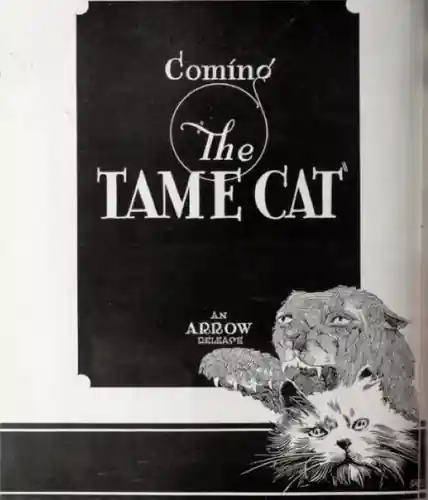
The influence of Robert Louis Stevenson, while perhaps unexpected for a domestic drama, is palpable in the screenplay's meticulous character development and psychological depth. Though Stevenson is famed for adventures like 'Treasure Island,' his lesser-known works and his keen understanding of human nature's duality find an echo here. The script delves into the hidden facets of Eleanor's personality, exploring the 'Jekyll and Hyde' within, not through monstrous transformation, but through the quiet emergence of a suppressed, more assertive self. Tom Bret, as a writer, takes this literary sensibility and translates it into a compelling cinematic language, crafting dialogue that, when present, is precise and meaningful, and scenes that convey volumes without a single uttered word. The narrative arc, from quiet desperation to a blossoming defiance, is handled with an exquisite sensitivity, ensuring that Eleanor's transformation feels earned and authentic. This isn't a sudden, unearned epiphany, but a painstakingly slow awakening, a testament to the writers' profound understanding of human psychology. Their collaboration creates a tapestry of emotional nuance that few films of the period could boast, making it a cornerstone for future character-driven dramas.
The supporting cast, particularly Rea Irvin as Arthur Penhaligon, plays a crucial role in highlighting Eleanor’s journey. Irvin’s portrayal of Arthur is subtly menacing, a man whose charm is a thin veil over a deeply controlling nature. He represents the societal forces that seek to keep Eleanor 'tamed,' offering her a form of intellectual companionship that is ultimately patronizing and stifling. His interactions with Harding are charged with a quiet tension, a battle of wills fought with polite smiles and barbed compliments. Irvin avoids the trap of making Arthur a caricature; instead, he presents a believable, albeit insidious, antagonist whose influence underscores the urgency of Eleanor’s need for independence. The chemistry, or rather, the lack of genuine connection between them, serves to further isolate Eleanor and amplify her internal struggle. It’s a testament to both actors' capabilities that their scenes together are so compelling, even when the dialogue is seemingly innocuous. This dynamic is a powerful counterpoint to the more straightforward romantic entanglements seen in films like The Great Romance, showcasing a different, more complex kind of relationship at the heart of the narrative.
What truly elevates The Tame Cat is its timeless relevance. While set in a specific historical context, its themes of self-discovery, personal liberation, and the courage to defy societal expectations are universal. It speaks to anyone who has ever felt constrained by circumstances, or who has yearned for a life beyond the one prescribed for them. The film doesn't offer easy answers or simplistic resolutions; instead, it celebrates the messy, often painful, process of becoming one's true self. It's a powerful argument for the inherent worth of individual experience and the profound beauty of unleashed potential. The lasting impact of Harding's performance, combined with Bret's visionary direction and the insightful screenplay, ensures that The Tame Cat remains a vital and compelling watch. It challenges viewers to look beyond superficial appearances and to appreciate the rich, complex inner lives that often lie hidden beneath the surface. Much like the quiet intensity of Das Schweigen am Starnbergersee, which explores unspoken emotions and simmering tensions, The Tame Cat masterfully crafts a narrative where silence speaks volumes.
In an era that often glorified overt heroism or tragic romance, The Tame Cat dared to present a different kind of hero: the woman who finds her strength not on a battlefield or in a grand declaration, but in the quiet rebellion of her own spirit. The film's legacy lies not just in its artistic merit, but in its pioneering spirit, paving the way for countless future narratives that would explore the intricate tapestry of female experience. It is a film that demands to be seen, to be contemplated, and to be felt. It reminds us that sometimes, the most profound transformations occur not with a roar, but with a quiet, resolute purr of independence, a purr that grows into a formidable growl. This cinematic gem, with its rich characterization and poignant thematic resonance, cements its place as an enduring classic, a testament to the power of cinema to explore the most intimate corners of the human heart. It is a triumphant exploration of what it means to truly live, beyond the confines of convention and expectation.
IMDb 4.8
1922
Community
Log in to comment.