DbcultAccessing Vault...
4.4/10
Senior Film Conservator
A definitive 4.4/10 rating for a film that redefined the boundaries of cult cinema. Barnaby Rudge remains a cornerstone of transgressive art.
Stepping back into the nascent days of cinema, Thomas Bentley's 1915 rendition of Barnaby Rudge offers a fascinating glimpse into the ambitious scope of early British filmmaking. To embark on a cinematic journey with Charles Dickens is always a formidable undertaking, and to do so in the silent era, relying solely on visual storytelling and intertitles to convey the intricate tapestry of character, plot, and socio-political commentary, speaks volumes about the creative courage of Bentley and his team. This film, a product of a time when the language of cinema was still being forged, tackles one of Dickens's lesser-known, yet profoundly relevant, historical novels, plunging viewers into the tumultuous backdrop of the 1780 Gordon Riots. It’s a narrative rich with suspense, moral quandaries, and the ever-present specter of mob mentality, themes that, regrettably, remain startlingly pertinent today.
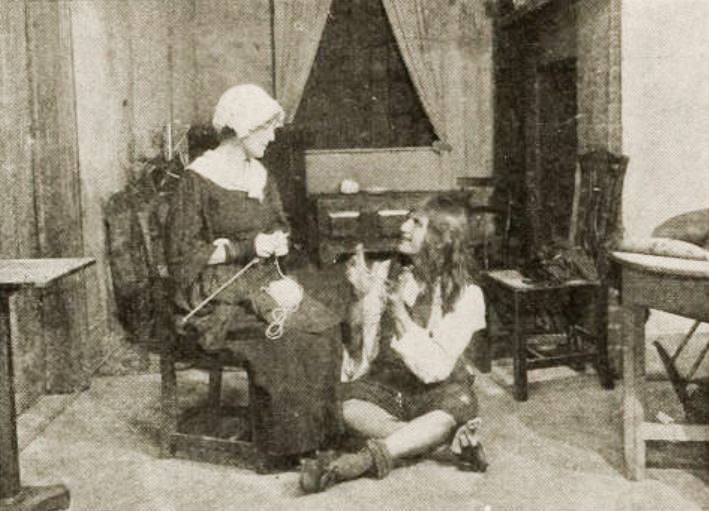
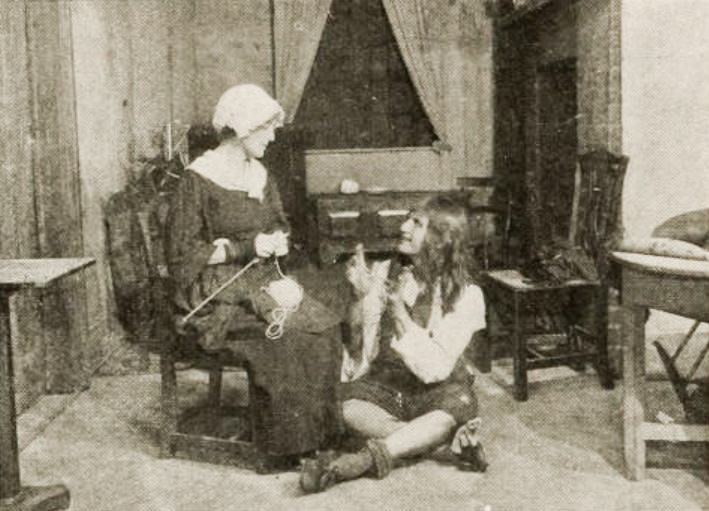
The very essence of Barnaby Rudge lies in its sprawling narrative and its critique of societal fervor. Dickens, ever the keen observer of human nature and societal ills, paints a vivid picture of a London teetering on the brink, where religious intolerance and class resentment boil over into widespread destruction. Bentley's challenge was to distill this sprawling epic into a digestible visual experience, a task he approaches with a commendable, if occasionally constrained, vigor. The film, like its literary progenitor, centers on the titular character, Barnaby, portrayed with a poignant innocence by Harry Gilbey. Gilbey's performance, relying heavily on exaggerated gestures and facial expressions typical of the period, captures the simple-mindedness of Barnaby, making him a sympathetic figure caught in a maelstrom far beyond his comprehension. His unwavering companion, the raven Grip, a character famed for its prophetic pronouncements in the novel, translates onto screen as a curious, almost mystical presence, adding a layer of the uncanny to the unfolding drama.
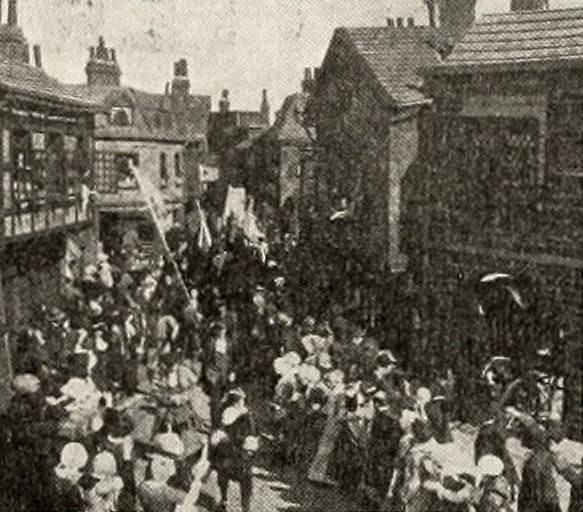
The narrative unfurls against a canvas of mounting tension, beginning years before the riots with a mysterious murder that casts a long shadow over the Rudge family. This foundational crime, a classic Dickensian device, intertwines the personal fates of characters with the larger historical upheaval. We see the gradual descent into madness of a city, catalyzed by Lord George Gordon's anti-Catholic movement. The film meticulously, for its time, attempts to depict the escalating fear and violence. While modern audiences accustomed to lavish historical epics might find the scale somewhat modest, the sheer ambition to recreate such a significant historical event with the technical limitations of 1915 is genuinely impressive. The burning of Newgate Prison, a pivotal moment in the riots, is conveyed with a sense of urgency and danger, utilizing early cinematic techniques to evoke chaos and destruction. One might draw parallels to other early historical dramas like The Life and Death of King Richard III, which similarly grappled with bringing grand historical narratives to the screen, albeit with different thematic concerns. Both films represent significant early attempts to leverage the nascent power of cinema for historical storytelling.
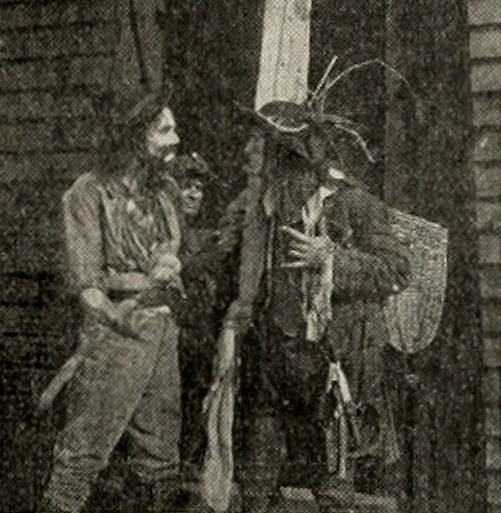
The ensemble cast, a hallmark of Dickensian adaptations, brings to life a gallery of memorable characters. Violet Hopson, as the steadfast Dolly Varden, injects a necessary vivacity and moral compass into the often grim proceedings. Her presence, alongside Harry Royston as Joe Willet, provides a romantic subplot that offers moments of respite from the pervasive darkness. Lionelle Howard, Chrissie White, and Harry Buss fill out the supporting roles, each contributing to the rich tapestry of the narrative. Stewart Rome's portrayal of the villainous Hugh, Barnaby's true father and the instigator of much of the film's early tragedy, is particularly chilling, embodying the darker undercurrents of the novel. His performance, through a combination of menacing physicality and subtle expressions, captures the character's depravity without the aid of spoken dialogue, a true testament to the silent film actor's craft.
The film's strength lies not just in its dramatic portrayals but also in its audacious attempt to capture the psychological and social dimensions of Dickens's work. The depiction of mob mentality, the way fear and prejudice can swiftly transmute into uncontrolled violence, resonates with a disquieting familiarity. Bentley's direction, while perhaps lacking the kinetic energy of later filmmakers, possesses a deliberate pacing that allows the tension to build. The use of close-ups, though sparse by modern standards, is effective in highlighting moments of emotional intensity or critical plot points, drawing the viewer into the characters' internal struggles. The intertitles, carefully crafted to convey Dickens's distinctive prose and advance the intricate plot, serve as vital bridges for understanding, though they inevitably condense much of the novel's rich descriptive detail and internal monologue.
One cannot discuss Barnaby Rudge without acknowledging the broader context of early cinema. This was an era of experimentation, where filmmakers were still discovering the grammar and syntax of the moving image. Bentley's film stands as an important artifact in this evolutionary process, showcasing how complex literary adaptations were approached before the advent of sound. Compared to simpler narrative structures found in contemporaries like Mister Smith fait l'ouverture or even more straightforward melodramas, Barnaby Rudge represents a significant leap in narrative ambition. It attempts to weave multiple storylines, character arcs, and historical events into a cohesive, albeit silent, whole. The film's ability to maintain a degree of narrative clarity, despite the absence of dialogue and the sheer density of Dickens's original plot, is a credit to both Bentley's adaptation and the inherent strength of the source material.
The climax of the film, where Barnaby, condemned as a rioter, faces execution on the scaffold, is handled with a dramatic intensity that transcends its silent medium. The impending doom, the raw emotion of the characters, and the last-minute reprieve are conveyed through powerful visual cues and the actors' expressive performances. This moment, central to the novel's themes of arbitrary justice and the fragility of life, is rendered with a pathos that still resonates. It's a stark reminder of the power dynamics at play in society and the precariousness of individual existence when caught in the grip of collective hysteria. The scene, while lacking the visceral shock of modern cinematic depictions, achieves its emotional impact through careful staging and the heightened theatricality characteristic of the period.
However, it's also important to view Barnaby Rudge through a critical lens that acknowledges its limitations. The necessity of condensing a lengthy novel into a relatively short film means that many of Dickens's nuanced character developments and intricate subplots are inevitably streamlined or omitted entirely. For those deeply familiar with the novel, the film might feel somewhat abridged, a mere sketch of the richer, more detailed canvas of the original. Yet, for an audience unacquainted with the literary source, it still manages to convey the core dramatic thrust and the essential moral dilemmas. The film serves as an accessible entry point to a complex narrative, much like other early literary adaptations aimed at bringing classic stories to a broader, burgeoning cinematic audience.
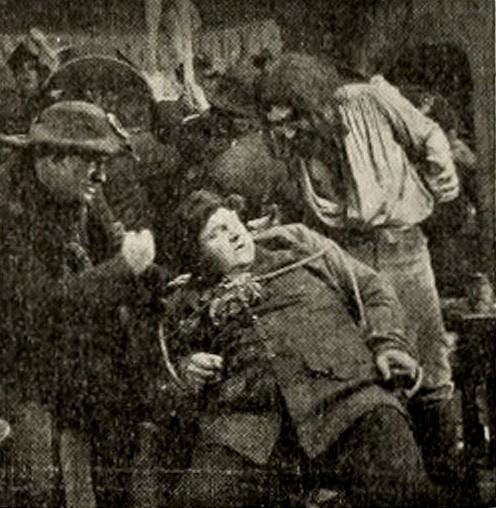
The technical aspects, while primitive by today's standards, reveal the ingenuity of early filmmakers. The sets, though clearly studio-bound, manage to evoke a sense of period London, and the use of natural light or early artificial lighting techniques contributes to the atmospheric quality of certain scenes. The editing, while largely functional, demonstrates an understanding of continuity and pacing necessary to guide the audience through the narrative. One can observe the evolving craft, comparing it to other contemporary works like The Spy, which perhaps focused more on individual intrigue, whereas Barnaby Rudge attempted to capture a broader societal drama. The challenge of depicting large-scale crowd scenes without the benefit of modern special effects is evident, yet the filmmakers manage to convey a sense of the riots' destructive power through their compositions and the sheer number of extras deployed.
Beyond its historical and cinematic significance, Barnaby Rudge offers a timeless commentary on the dangers of unchecked fanaticism and the vulnerability of the innocent. Barnaby's journey, from unwitting participant to condemned man, serves as a powerful allegory for how easily individuals can be swept up by populist movements, often with devastating personal consequences. The film, in its silent eloquence, prompts reflection on the cyclical nature of history and the enduring human capacity for both cruelty and compassion. The ultimate pardon, an act of grace or perhaps political calculation, provides a glimmer of hope, suggesting that even in the darkest hours, redemption, however fragile, remains possible. This thematic depth is what elevates the film beyond a mere historical curiosity, cementing its place as an important, if often overlooked, early adaptation of a literary titan.
In conclusion, Thomas Bentley's Barnaby Rudge is more than just a relic from the silent era; it is a testament to the enduring power of Dickens's storytelling and the nascent potential of cinema. While it undoubtedly bears the hallmarks of its time – the theatrical acting, the reliance on intertitles, the relatively simple camera work – it still manages to convey the essence of a complex historical drama. It invites us to consider the early efforts of filmmakers like Bentley, who dared to translate intricate literary worlds onto the silver screen, paving the way for the cinematic language we understand today. For enthusiasts of classic literature and early film, it offers a rich, if challenging, viewing experience, reminding us of the foundational steps taken in the art of storytelling through moving images. It's a film that deserves to be revisited, not just as a historical document, but as an earnest attempt to capture the human condition amidst historical upheaval, a tradition continued by countless films thereafter. The ambitious scope, the earnest performances, and the profound social commentary ensure its lasting, if quiet, resonance in the annals of film history.
The portrayal of London itself, a character in its own right in Dickens's novels, is another area where Bentley's film makes a valiant effort. While the studio sets naturally limit the expansive vision of the novel, the film manages to convey the claustrophobia and the stark class divisions of the era. The contrast between the opulent homes of the gentry and the squalid streets inhabited by the common folk, though subtly depicted, reinforces the underlying social tensions that fuel the riots. This visual dichotomy, even without the detailed descriptions of Dickens's prose, speaks volumes about the societal injustices that festered beneath the surface of Georgian England. It’s a testament to the visual narrative power that even in a silent film, such intricate societal structures could be hinted at and understood by the audience. The meticulous attention to period costumes and props further aids in immersing the viewer in this historical setting, despite the inherent limitations of the medium. The film, in its own way, becomes a window into a past both distant and eerily familiar, much like the best of historical dramas. It asks its audience to look beyond the theatricality of early cinema and engage with the profound human drama at its core. The sheer audacity of such an adaptation in 1915, when the medium itself was barely a few decades old, should not be underestimated. It is a vital piece of the cinematic puzzle, demonstrating how early filmmakers grappled with complex narratives and sought to elevate film beyond mere novelty. And in doing so, they left us with a captivating, if imperfect, legacy.
IMDb 5.7
1933
Community
Log in to comment.