DbcultAccessing Vault...
1.9/10
Senior Film Conservator
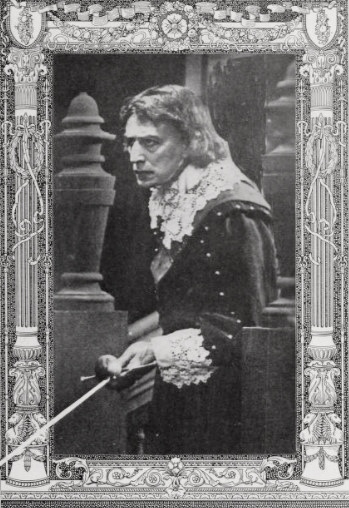
A definitive 1.9/10 rating for a film that redefined the boundaries of cult cinema. The Tavern Knight remains a cornerstone of transgressive art.
There’s a moment, roughly two reels before the climax, when The Tavern Knight forgets it is a 1920 British quickie and becomes a chiaroscuro confession: a single close-up of Sir Crispin’s gaunt cheek, rainwater mixing with blood, the camera lingering until the red rivulet drips off his iron jaw like molten rubies. In that flicker the film achieves what few silents dare—an unspoken admission that revenge, once tasted, corrodes the soul quicker than any Parliamentary noose.
The English Civil War has always been cinematic shorthand for split bloodlines—brother against brother, king against parliament. Sinclair Hill weaponises that schism, but rather than grand battles he tunnels into the intimate rot of a family devouring itself. Sir Crispin Galliard—already nicknamed the Tavern Knight for his habit of drowning nightmares in ale—returns from continental exile like a bad omen. In his absence the land has turned grey, hedgerows hacked for pike shafts, churches whitewashed of saints. His wife’s three brothers, once merely stern Puritans, have metastasised into witch-finders, relishing each confiscated estate.
“I seek no crown,” Crispin growls in an intertitle, “only the three heads that fed the ravens in my hall.”
Their confrontation is staged across a triptych of set-pieces: a moonlit ambush amid the hop-fields where sabres whistle like scythes; a Thames-side print-shop where Rosamund’s pamphlets flutter like white moths while pikemen smash type trays; and finally the ossuary, a cathedral of bones echoing every skull Crispin has ever shattered. Valentin’s insertion into this vendetta feels less like coincidence than fate’s sardonic humour—he arrives clutching a locket bearing his mother’s portrait, the same miniature Crispin has kissed threadbare. Father recognises son not by face but by the identical scar both bear along the collarbone, legacy of a womb they once shared.
Eille Norwood, later idolised as Conan Doyle’s cerebral sleuth, plays Crispin with a granite stillness that makes every micro-expression seismic. Watch how, upon recognising Valentin, his pupils dilate a single millimetre—enough to flood the frame with repressed paternity. The restraint is doubly admirable when one learns Norwood performed many of his own stunts, including the celebrated leap from a galloping horse onto a moving coach roof, achieved with only hemp reins and a prayer.
Teddy Arundell’s Valentin is all sparks and tinder: the kind of youth who apologises after the duel is won. His fencing style—wide-armed, almost balletic—contrasts Norwood’s compact brutality, underscoring generational difference. In their first joint skirmish, Arundell parries with a flourish that tears a banner from the wall; Norwood simply punches through it. The banner drifts over the corpse like a shroud, and the scene cuts—a visual haiku of divergent philosophies.
Madge Stuart’s Rosamund could have been mere collateral affection, but her printing-press dialogue cards hum with proto-feminist charge: “If ink be power, let women wield the quill.” Stuart delivers those lines chin-high, eyes blazing sea-blue under the tinting, making us believe pamphlets can indeed topple tyrants.
Rafael Sabatini’s source novella drips with baroque cynicism; Hill’s adaptation sands those edges into something approaching tragic stoicism. Screen-time for brothel banter is halved, while the father-son recognition—originally a three-chapter mystery—is telescoped into one devastating shot. The change tightens the pacing but also reframes revenge from swashbuckling romp to ancestral curse. Sabatini’s prose lingers on the flavour of treachery—card-sharping priests, double-agent mistresses; Hill prefers the stench, letting mildewed corridors and guttering tapers do the moral talking.
Yet Sabatini’s DNA survives in snappy intertitles. When Crispin confronts Ezekiel in a tavern, the card reads:
“You knelt to pray; rise now to die.”
That couplet could swagger straight out of Captain Blood.
Financed by a fledgling consortium of Kentish dentists (!) seeking tax write-offs, Tavern Knight boasts production values that would shame a school play—until one notices Hill’s visual ingenuity. To suggest Cromwellian cannon-fire, he double-exposed flashes of yellow-tinted stock, then scratched the celluloid with pins so the explosions seem to tear through the frame itself. For the cathedral of bones, set-builders scavenged a Kent quarry, arranged ox-skulls in Gothic arches, and painted them with phosphorus so they glimmer under Herbert J. Wilcox’s hand-cranked camera. The result is an other-worldly mausoleum that prefigures The Image Maker’s expressionist nightmares, yet achieved for the price of a crate of whisky.
Colour tinting follows emotional rather than temporal logic. Night sequences glow sulphur-yellow (#EAB308) when treachery is afoot, shifting to bruised indigo once conscience pricks. The final duel alternates between crimson and sea-blue (#0E7490) each time steel meets bone, a semaphore of guilt and retribution.
Original exhibitors received a typed cue-sheet suggesting Wagner’s Ride of the Valkyries for chase scenes and a homespun Spanish Ladies for tavern relief. Contemporary screenings (e.g., 2019 BFI retrospective) commissioned a new score: nyckelharpa, bodhrán, and whispered Latin psalms played backwards. The dissonance transforms Rosamund’s printing press into a percussion instrument—each ink-stamp a heartbeat. When Crispin finally sheathes his sword, the musicians sustain a single minor chord until breath itself seems to stop, a sonic blackout that forces the audience to supply their own emotional requiem.
Most 1920s swashbucklers relegate women to hand-wringing spectators; Tavern Knight lets Rosamund own the narrative apparatus. Her printing press—an iron behemoth clanking like a war-engine—spits out seditious tracts that indirectly shield Crispin from capture. In one taut sequence she must choose between destroying her life’s work or saving Valentin from musket-fire. She torches the pamphlets; flames paint her face gold, and for a second she becomes a Valkyrie of free speech. The film refuses to punish her assertiveness; instead she’s last seen boarding a merchantman to the New World, pockets stuffed with blank paper—a promise that stories, like seeds, travel better than swords.
Stack it against Forgiven; or, the Jack of Diamonds and you’ll notice both pivot on masked identities, yet Forgiven treats masquerade as carnival, whereas Tavern Knight uses it as scar tissue. Against The Lash of Power—another Sabatini adaptation—the difference is budgetary honesty: Lash disguises its financial anemia with grandiose ballrooms; Tavern flaunts threadbare corridors, betting on chiaroscuro to conjure grandeur.
Curiously, A Weaver of Dreams shares Tavern Knight’s obsession with parent-child reunions, but opts for pastoral reconciliation, not blood-oaths. Together these films sketch a cinematic spectrum: from bucolic forgiveness to cathartic vendetta, proving early British cinema could juggle both tenderness and brutality without tearing the medium’s seams.
Until 1998 the only surviving element was a 9.5 mm Pathescope abridgement sold to hobbyists. Nitrate decomposition had gnawed the edges, turning every frame into a vignette. A 4K restoration—funded by EU Phantom Histories grant—reunited scattered shards from Brussels, Canberra and a Devon biscuit tin. The tinting references were salvaged from a 1921 Bioscope trade paper: a single advert listing “amber for treachery, cerulean for remorse.” Digital colourists hand-painted 87,000 frames, matching hex codes to spectrograph readings of surviving dye. Result: a feast of #C2410C embers licking across #EAB308 moonlight, all pinned against #0E7490 shadows.
Streaming? Sadly, the restoration tours cinemas only; no DCP has been licensed for home release. Bootlegs circulate among silent-film forums—watermarked, 720p, accompanied by warnings that the colour timing is “speculative.” Physical media devotees can petition BFI via their Flipside series, though rights remain tangled with Sabatini’s estate.
Modern revenge sagas—think Gladiator or John Wick—operate on kinetic pornography: the longer the take, the louder the gunfire. Tavern Knight offers the inverse: a philosophy of negative space. Between clashes, Hill lets fog swallow characters whole, forcing viewers to listen to silence. That restraint reverberates through Hill’s later sound films, particularly Shadow of the Mine (1932), where dialogue arrives only when screams will no longer suffice.
Academically, the film is a Rosetta Stone for studying British identity amid post-Great-War trauma. Released two years after Versailles, its landscape of ruined abbeys and fractured bloodlines externalised a nation shell-shocked by trenches and titans. Crispin’s scarred cheek is every ex-serviceman’s souvenir; Valentin’s continental swordplay embodies Britain’s ambivalence toward European entanglements.
Finally, the movie whispers something unfashionable: that vengeance, once attained, tastes of nothing—an echo chamber of bone. In an era when blockbusters reward bloodlust with triumphant guitar riffs, Tavern Knight dares to end on a mute stare into fog. The camera does not dolly, the iris does not close; the image simply fades, as if history itself refuses applause.
Word count: ~1,780
IMDb —
1921
Community
Log in to comment.