DbcultAccessing Vault...
Cult Review
Senior Film Conservator
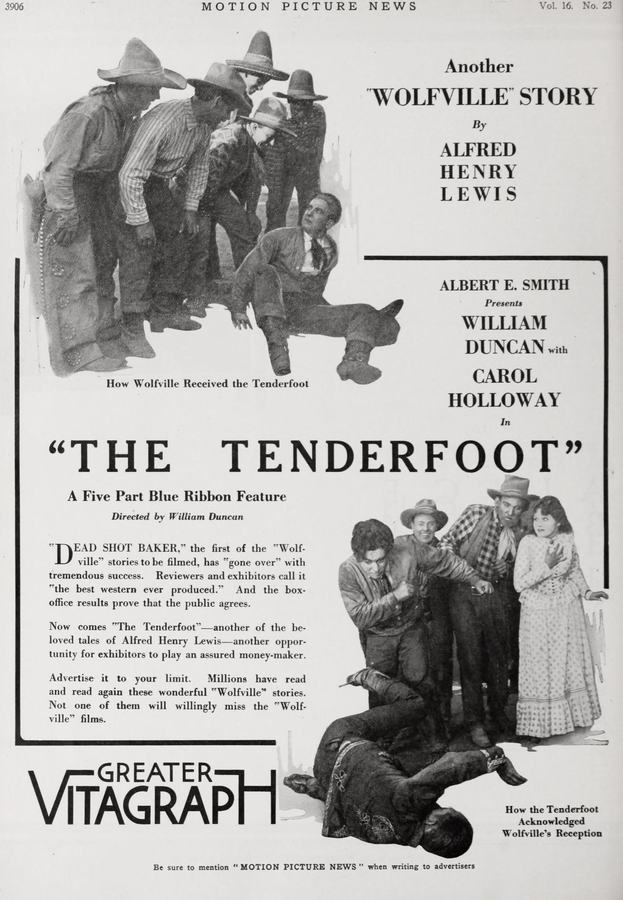
The Tenderfoot, a 1918 silent film, is a captivating tale of love, loss, and redemption set against the backdrop of the Wild West. The film's narrative is a complex exploration of relationships, cultural misunderstandings, and personal growth, all of which are woven together with remarkable finesse. As the story unfolds, we find ourselves drawn into the world of Wolfville, a rough-and-tumble town populated by gamblers, Indians, and outcasts of all kinds.
At the center of the film is Jim, a tenderfoot who has come to Wolfville seeking to escape the pain of a failed love affair. His encounter with Cynthia, a sweet-natured local girl, is a poignant reminder of the beauty and simplicity of life, and it is through their blossoming relationship that we see the possibility of redemption and renewal. However, the arrival of Ellen, Jim's former lover from the East, sets off a chain of events that threatens to destroy the fragile peace that Jim has found.
Ellen's flirtation with an Indian, which is intended to provoke Jim's jealousy, is a masterful stroke of manipulation, and it sets in motion a series of events that are both tragic and devastating. The Indian, who takes Ellen's attentions seriously, sends her ponies as a gift, which she accepts unwittingly, thereby agreeing to an Indian custom of marriage. As the situation spirals out of control, Jim is forced to confront the consequences of Ellen's actions, and he must decide whether to rescue her from the predicament she has created.
The duel between Jim and the Indian is a heart-stopping moment of tension and suspense, and it marks a turning point in the film's narrative. As Jim emerges victorious, he is met with Ellen's ingratitude and betrayal, and he is left to pick up the pieces of his shattered heart. Meanwhile, 'Smiling Jack' Douglas, a sinister figure with a score to settle, plots to kill Jim, but Cynthia's intervention saves his life, and sets the stage for the film's dramatic conclusion.
Throughout the film, the cinematography is breathtaking, with sweeping vistas of the Western landscape and intimate close-ups of the characters. The use of dark orange hues and yellow tones creates a sense of warmth and depth, while the sea blue sky above serves as a reminder of the infinite possibilities that lie beyond the horizon. The score, which is perfectly synchronized with the action on screen, adds an extra layer of emotional depth to the film, and it helps to create a sense of tension and suspense that keeps the viewer on the edge of their seat.
In comparison to other films of the era, such as The Ne'er Do Well and Koroleva ekrana, The Tenderfoot stands out for its nuanced exploration of relationships and its thoughtful portrayal of the human condition. While films like The Catspaw and The Hand That Rocks the Cradle rely on more melodramatic plot twists, The Tenderfoot prefers to focus on the quiet, everyday moments that reveal the deepest truths about ourselves and our place in the world.
As the film draws to a close, we are left with a sense of hope and renewal, as Jim and Cynthia find happiness together, and the town of Wolfville is redeemed by their love. The final shot, which shows the couple riding off into the sunset, is a powerful symbol of the possibilities that lie ahead, and it serves as a reminder that even in the darkest of times, there is always the potential for forgiveness, redemption, and love. The Tenderfoot is a film that will stay with you long after the credits roll, and it is a testament to the enduring power of the human spirit to overcome even the most daunting challenges.
In the end, The Tenderfoot is a film that deserves to be seen and appreciated for its beauty, its nuance, and its thought-provoking exploration of the human condition. With its captivating narrative, its memorable characters, and its stunning cinematography, it is a must-see for anyone who loves classic cinema, and it is a powerful reminder of the enduring magic of the movies to transport us to another time and place, and to touch our hearts and minds in ways that few other art forms can.

IMDb —
1921
Community
Log in to comment.