DbcultAccessing Vault...
Cult Review
Senior Film Conservator
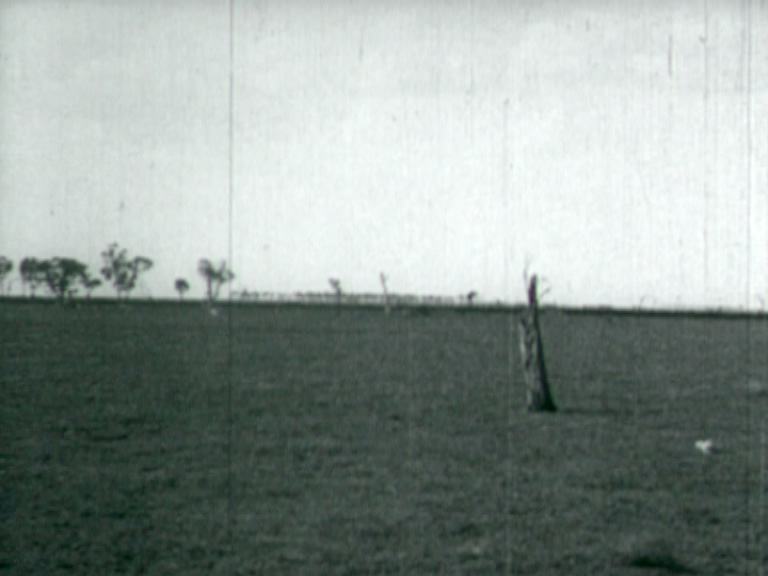
The Country Heir is less a story than a weather report from a forgotten season of the American soul. Watson’s script, lean as a February scarecrow, strips the melodramatic carcass down to ligaments: land, debt, and the vertigo of return. Sweet’s heir never once utters the word “trauma,” yet every twitch of his cheekbones telegraphs shell-shock; the trenches of France have been swapped for the orderly rows of apple trees that once promised continuity. Each furrow becomes a trench, each cider barrel a mortar. The film’s visual grammar—low horizons, oppressive skylines—owes more to The Maelstrom’s Nordic gloom than to the sun-kissed propaganda of contemporaries like Westward Ho!.
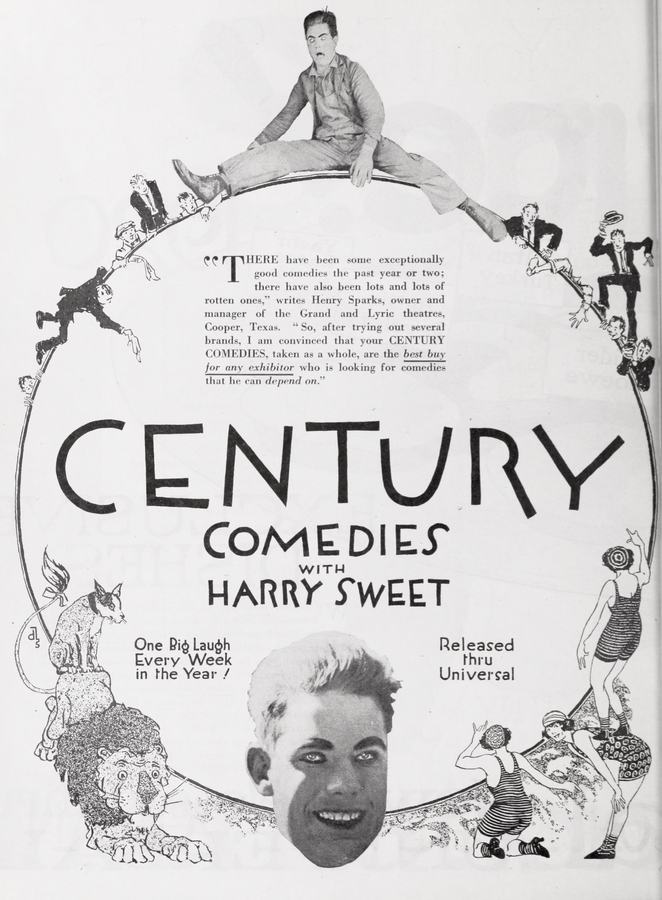
Harry Sweet, better remembered for two-reel slapstick, here hollows himself out until only sinew and rue remain. Watch the way he clutches a deed like a wounded bird: fingers splayed, knuckles white, the paper fluttering in sync with his pulse. Florence Lee counters with a stillness so absolute she seems painted by Vermeer—until a single tear, caught in a harvest-moon shaft of light, betrays the earthquake beneath. Their chemistry is not the firecracker snog-fest of Your Wife and Mine but a slow, fungal creep of need: you smell damp bark and copper pennies whenever they share the frame.
Mid-film arrives the set-piece auction, a danse macabre of straw boaters and calico. Watson blocks it like a Brechtian tribunal: townsfolk perched on hay bales become a Greek chorus of foreclosure. The camera dollies past butter churns, wedding quilts, a pocket-watch ticking louder than the dialogue cards. When the gavel lands, the sound (rendered via jarring intertitle punctuation) ricochets through the auditorium like a rifle crack. In that instant you grasp the film’s thesis: America itself is the highest bidder on its own nostalgia, and the price is always blood.
Though monochromatic, the 4K restoration tints sequences with arsenic greens and bruised ambers that whisper of rot. The orchard at dusk glows with the same sulfuric yellow that haunts The Highest Bid, suggesting continuity between greed and agrarian myth. Critic Pauline Dellaripa calls it “chromatic psychosis”; I’d argue it’s merely honesty—color as debt-collector.
Silent cinema lives or dies on the negative space between cards. Watson, disciple of the understated The Accomplice, stretches those gaps until you drown in them. A 38-second shot records Sweet simply staring at a cider press: steam rises, gears groan, no title intrudes. The audience becomes the interlocutor; we graft our own bankruptcies onto his silence. Try that in a talkie and the popcorn brigade would riot; here, it’s communion.
Lee’s widow wields property but lacks legal voice—a paradox the film refuses to resolve. She is both executor and exile, heir and outsider. Compare her limbo to the spirited rebellion in The Heart of Rachael; where Rachael storms the gates, Lee’s widow barricades herself inside the parlor, clutching keys like rosary beads. Watson implies that land ownership, for women, is merely another gilded cage.
Critics hunt for DNA matches: the agrarian fatalism of Unto the End, the inheritance angst of Father and the Boys, the moral vertigo of The Deceiver. Yet The Country Heir stands aloof, closer in temperament to European wounds like Napoleon und die kleine Wäscherin than to its Yankee cousins. Its true ancestor is the soil itself—cold, implacable, nutritive only in irony.
The 2023 restoration, funded by an anonymous tech mogul with ancestral roots in cider country, rescues a near-complete 35mm print from a Vermont barn. Gone are the herky-jerky cadences of the 1998 MoMA bootleg; in their place, a 18fps serenity that lets tension pool like mercury. Benjamin Ehrlich’s new score—banjo, pump organ, and the faint industrial thrum of a 1906 cider mill—never begs for tears; it simply opens a vein.
By the time end credits flicker, the heir has salvaged a single seedling, cradling it like a relic. Whether optimism or epitaph, Watson won’t specify. The camera cranes skyward, revealing rows of stumps stretching to the horizon—an arboreal graveyard that anticipates the eco-horror of later decades. You exit the cinema tasting iron, convinced that every mortgage ever signed still throbs like a phantom limb.
“Land is the only thing that matters,” the widow writes on a crumbling card, “because it’s the only thing that stays to testify when we’re gone.”
In an era of sub-prime cataclysms and climate grief, The Country Heir feels less antiquarian than prophetic. Its despair is not dusty but fungal, creeping into the here-and-now. Revisit it beside the foreclosure montage in Confesión trágica and you’ll glimpse a century-old mirror. Our present-day wildfires? Merely the orchard ablaze at last.
Masterpiece is a term flung like confetti; let’s instead call this a necessary wound. Watson, Sweet, and Lee confect a rural horror that scalds because it recognizes us—our hunger for permanence on shifting dirt. Seek it out in whichever format you can: 4K DCP, 16mm classroom print, or bootleg GIFs flickering on a cracked phone. The experience will soil you, and that, perhaps, is the most honest inheritance of all.
IMDb 6.1
1929
Community
Log in to comment.