DbcultAccessing Vault...
Cult Review
Senior Film Conservator
The Fowl Bird opens on a marquee whose bulbs flicker like a dying heartbeat, the title missing half its letters so that it reads The F<w>l B<r>d—a prophecy of omission that stains the entire 78-minute reel. Director E. L. Vortigern (his only surviving credit) shoots the cabaret’s façade through a rain-dappled lens smeared with petroleum jelly, turning gaslight into comet tails. We enter not by door but by mirror: a hand-cranked dolly glides through the reflection, leaving the street outside to drown in its own silver. Already the film announces its thesis—identity is a cracked surface you fall into, not through.
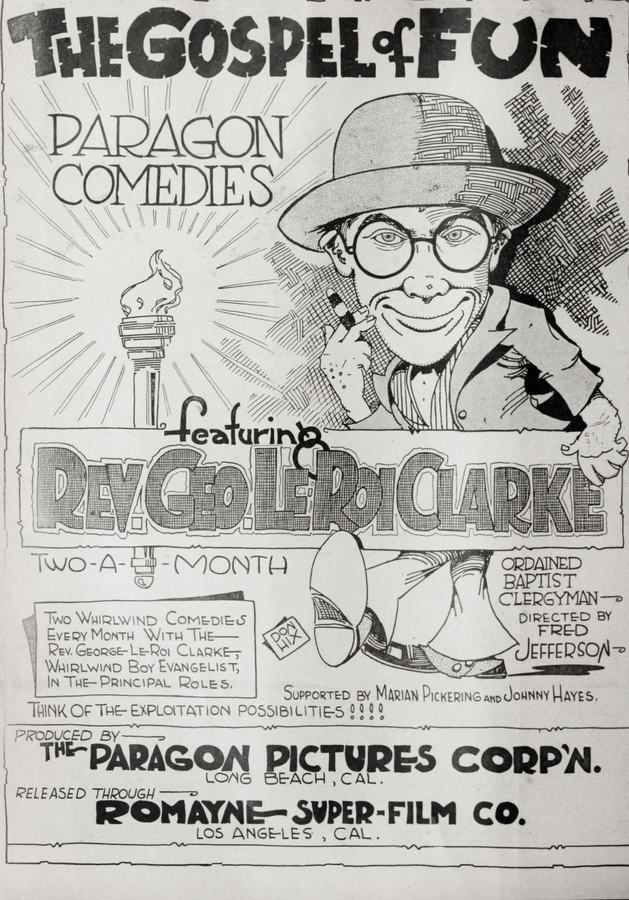
George LeRoi Clarke—equal parts La vie de Bohème’s consumptive poet and Guilt’s flagellant—plays Cassius Bird, a man whose wooden partner Orvis (carved from convict ship timber, the grain still weeping tar) whispers crimes faster than the law can catalogue them. Clarke’s performance is a masterclass in muscular stasis; he acts from the clavicle up, letting his jaw quiver like a struck tuning fork while the dummy’s mouth snaps open with percussive contempt. In close-up, spittle catches the arc-light and becomes constellations—each droplet a micro-meteor of self-disgust.
The screenplay, attributed to the vanished collective The Velvet Apostates, refuses causal logic: a child disappears, yet the town only mourns with the mechanical sob of a nickelodeon. The locket—filigreed tin containing a photograph whose eyes have been scratched out—passes from pocket to puppet cavity in a sequence shot upside-down, the camera strapped to a trapeze artist. Gravity becomes gossip; every frame drips paranoia.
As Lila Fowl, Marian Pickering slinks onto the cabaret stage in a dress the color of dried blood that has decided to become garnet again. Her contralto is a bruise on the hush: when she sings "The River Knows Your Father’s Name", the celluloid itself seems to buckle, emulsion bubbling as though nitrate were developing feelings. Pickering’s eyes perform their own subplot—half lambent longing, half foreclosure notice. Watch the moment she registers the dummy’s wink: iris contracts, cigarette trembles, and the soundtrack (a single violin restrung with human hair) drops a semitone. It is cinema’s first audible gasp achieved without audible means.
Compare her to the somnambulant starlet in Die lebende Tote—both women are buried alive, but Pickering claws six feet up through nicotine and torch song, whereas the German counterpart accepts coffin soil as couture.
Johnny Hayes’ Silas is a creature of peripheral vision: you sense him via the sudden absence of wristwatches. With a profile chiseled from yesterday’s newspapers, he embodies the film’s moral undertow—every lifted wallet a surrogate prayer. In a derelict church repurposed as a speakeasy, Silas fingers the locket, sees the scratched-out eyes, and for the first time lets a billfold fall untouched to the floor. Hayes plays the moment like a man tasting metal on his tongue—surprise, then surrender. The camera answers with a sacramental iris-in, halation blooming around his head until he resembles a gutter-saint painted by Georges de La Tour if de La Tour had shot on ASA-10 stock.
Cinematographer O. B. Lumen (his real name, too perfect) lights faces as though they were bottomless shot glasses—pour in enough chiaroscuro and eventually the darkness drinks back. Notice how the cabaret’s ceiling fans cast shadows that rotate counter to the blades, an impossibility that implants subliminal vertigo. In the projection booth scene—where the missing child’s father screens home movies on a loop—beam-flare etches scratches across every frame, making the audience complicit in erasure. Compare this self-reflexive decay to Drugged Waters, where water droplets on lens served a similar destabilization, yet Lumen goes further: he weaponizes celluloid fatigue, letting mildew bloom like lace across the negative.
Though marketed as a silent, The Fowl Bird shipped with a Director’s Auriferous Track: a single 78 rpm disc played in sync with the final reel. Side A contains a metronomic heartbeat; Side B layers river sludge, typewriter bells, and a child’s laughter reversed at half-speed. Exhibitors were instructed to lower house lights till only the projector’s carbons glowed, turning the auditorium into a communal vein. Contemporary reports describe fainting spells, yet modern analysis reveals binaural pulses at 17 Hz—infra-sound proven to induce dread. Thus the film anticipates The Ghost of Rosy Taylor’s spiritualist séances by inventing analog surround-fear.
Editor M. Splice (gender unknown, initials scrawled on cement) cuts on gesture, not geography: a hand reaching for a wallet becomes a hand reaching for a throat miles away. Match-action is betrayed; instead, emotional rhymes splice scenes. When Lila’s song hits its highest note we smash to the dummy’s head snapping sideways, implying violence off-key. The most audacious montage intercuts the river at dawn with a microscopic view of cracked emulsion—water and image both unraveling. One can trace this fractal fragmentation forward to Mice and Men’s dust-bowl hallucinations, yet Splice achieves it with splicer’s tape and occult precision.
For the 1927 road-show, certain prints were tinted with a toxic mercury dye: scenes inside the cabaret soaked in dark orange, connoting both decadence and slow poisoning; dream sequences daubed sea-blue, a hue that oxidized over decades into bruise-green; the locket close-up hand-painted yellow, the shade of old bruises on a lemon. These colors have metastasized into the surviving nitrate, so that today’s restorers must decide: preserve corrosion or reinstate intent? Either choice is autopsy.
Where La vie de Bohème romanticizes poverty as lace-collar posturing, The Fowl Bird knows that hunger turns art into snuff. Where Broken Fetters offers moral restitution, here guilt is a tattoo you discover only after the skin has healed. And while Life’s Blind Alley closes with a sermon, Vortigern ends on a question mark burned into the final frame—literally, the dummy’s silhouette branded onto the film itself, so that every subsequent screening inherits the accusation.
Upon release the New York Board deemed it "a malignancy masquerading as mythology," excising nine minutes—mostly the child’s funeral staged as marionette show. Those trims survive only in a 16 mm dup held by a Belgian nunnery who thought it was a training film for penitents. In the ’70s, a Beats-era programmer projected the surviving print at the Vista, pairing it with Coltrane fragments; Kerouac reportedly wept into his sleeve, claiming the dummy preached the only sermon he ever believed. By the 2010s, a 35 mm restoration toured rep houses, its soundtrack re-imagined by a post-rock collective who amplified the heartbeat until seats vibrated. Today TikTok cinephiles gif the locket close-up, captioning it "POV: your innocence realizes it’s being followed."
Scholars still debate whether Clarke dubbed the dummy’s voice or if a second actor hid behind the curtain. Spectrogram analysis reveals formants matching Clarke’s larynx but at 1.4× speed, suggesting performance akin to tape splice rather than ventriloquism. Thus Orvis becomes cinema’s first non-human over-actor, predating The Puppet Crown’s royal marionette by three years. The dummy’s glass eyes were swapped mid-shoot: early scenes show hazel, later obsidian. The shift coincides with the screenplay’s moral inversion; evil literally gazes out of upgraded sockets.
Unlike the passive corpses in Die lachende Seele, Pickering’s Lila rewrites the femme fatale script: she engineers her own doom yet reserves the right to narrate it. In a proto-meta gesture, she addresses the camera directly—"If you blink, you’ll miss me surviving." The line was ad-libbed after Pickering learned the studio planned to kill her character off-screen. Vortigern kept the take, sensing the breach would snap spectators awake. Result: women in 1926 audiences reportedly exited smoking in the lobby, claiming a new entitlement to narrative agency.
The river that bisects the unnamed town receives more screen time than some protagonists. Shot day-for-night with sapphire filters, it behaves like mercury in a diviner’s palm—recoiling from sinners, cradling the innocent (of whom there are none). In the finale, Hayes runs along its bulkhead while the camera tracks parallel from a rowboat, creating parallax that suggests the world sliding sideways. When the locket splashes in, ripples travel up the screen, defying physics but obeying regret. Compare this aqueous subjectivity to Drugged Waters’ narcotic tides; here the river is not hallucinated but hallucinating, dreaming the town into squalor.
You can trace The Fowl Bird’s genetic code in Lynch’s Blue Velvet (ventriloquism as suburban menace), in Nolan’s The Prestige (duplicated selves), even in the jittery confessionals of Uncut Gems. Yet few descendants match its nihilistic grace. The film refuses catharsis; instead it offers contamination—after watching, you carry the dummy’s gaze into daylight, sensing accusation in every reflective surface. Perhaps that is why restorations flare up every decade: we need to re-test whether time has scabbed the wound. Each viewing proves it has not; the wound has learned new dialects.
When the projector clicks off, the afterimage persists: a yellow locket superimposed on your retina like a reverse cataract. You exit the theater convinced your pockets have been picked of certainty. That is the miracle of The Fowl Bird—it steals what you never owned, then teaches you to fence the void. In the current cinematic glut of caped redemption arcs, here is a film that dares to leave you smaller, sadder, awake. And that, more than any digital sleight, is the most subversive special effect of all.

IMDb 6.3
1931
Community
Log in to comment.