DbcultAccessing Vault...
6.4/10
Senior Film Conservator
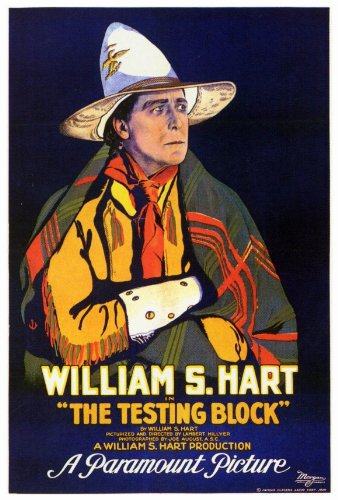
A definitive 6.4/10 rating for a film that redefined the boundaries of cult cinema. The Testing Block remains a cornerstone of transgressive art.
Picture a nickelodeon in 1920, its air thick with coal-dust and anticipation, the pianist hammering a Rachmaninoff prelude into submission while onscreen a weather-scarred face looms—William S. Hart’s cheekbones sharp enough to slice nitrate. That face is the whole American parable: Manifest Destiny turned inward, a self-flagellating psalm. The Testing Block, conceived by Hart and co-scenarist Lambert Hillyer, weaponizes silence so brutally you can almost hear the audience’s moral compass spin.
Most cowboy heroes of the era arrived pre-laundered; Hart preferred his anti-heroes marinated in original sin. Sierra Bill, etched with biblical gravity, rides out of a mountain pass already damned. The film’s first interior—a stagecoach way-station—frames him against a sooty hearth, single kerosene lamp carving chiaroscuro so extreme his eyes become cavernous. Hart understood that in the vacuum of sound, silhouette equals psychology. Every creak of leather becomes confession.
Enter Nelly Gray: Eva Novak’s pallid grace counterpoints Hart’s granite masque. She tunes her violin; the outlaw listens as though hearing arteries open. Their forced marriage—shot in one unblinking take—feels less like sacrament than land-grab. When the preacher asks for consent, Hart’s gloved hand clamps Novak’s wrist; the camera tilts five degrees, enough to suggest world-slippage. In that tilt, modern viewers detect pre-#MeToo anguish, yet 1920 spectators likely read masculine inevitability. Both truths coexist, which is why the film still vibrates.
Silent cinema rarely dared infants; they cry inconveniently. Hart’s gamble pays meta-dividends: the toddler becomes bargaining chip, conscience, and ticking fuse. In a crib-side sequence lit solely by fireplace, father and son share the frame with a Colt .45 hanging above like Damoclean nursery décor. The gun’s nickel plating reflects the child’s sleeping face, presaging every subsequent betrayal. Intertitle reads: “A man may carve an empire from wilderness, yet a feather-weight babe can topple it.” Hart’s Calvinism peeks through—salvation through suffering, legacy through ruin.
J. Gordon Russell saunters into this Eden sporting a dandy’s cravat and predatory smile. He’s no mustache-twirling cackler; he’s the free-market made flesh, a one-man futures exchange trading in wives and honor. Watch the poker scene: Hart’s pupils dilate as silver dollars hemorrhage across green baize. Russell never raises his voice; he simply repeats “Your shot, Bill,” each iteration more surgical. The sequence runs seven minutes yet feels like a lifetime of credit-card debt. When Nelly finally elopes with Ringo, the film refuses melodramatic histrionics; instead, a single intertitle—Love dealt from the bottom of the deck—and a cut to Sierra staring at an empty cradle.
Hart lingers behind bars only long enough to etch existential claustrophobia. Rain lashes the cell window; lightning renders his face X-ray translucent. The escape—accomplished via a smuggled sledgehammer and horse-thief’s wit—unfolds during a thunderclap symphony. Cinematographer Joseph August (later mentor to Welles’s DP) tilts the camera 45°, letting torrents of water sheet horizontally across the lens. Result: viewers feel gravity invert, morality liquefy.
The pursuit across alkali flats evokes Fuseli’s nightmare vistas: twisted mesquite, heat-warped horizons, buzzards tracing Mephistophelian sigils. Ringo holes up in a half-built mission; its skeletal bell tower stands like a gallows waiting for Christ. Final showdown occurs amid baptismal shadows. Hart—left hand shattered by a bullet—cocks his revolver using crooked elbow and teeth, a maneuver so grotesquely intimate you half expect the gun to moan. When smoke clears, Ringo lies cruciform beneath the bell; Nelly, clutching her child, watches from the gallery. No embrace, no redemption—just a long fade on Sierra limping toward a horizon that refuses to get closer.
William S. Hart endures because he never begged affection. His lips quiver once—precisely once—when the child first calls him Papa. That tremor carries more freight than pages of monologue. Compare with his earlier oater In Old Kentucky, where stoicism bordered on stone; here he lets fractures spider through the granite, achieving tragic grandeur.
Eva Novak, oft-dismissed as decorative, actually wields the film’s moral POV. Her violin recitals—shot in lingering close-up—function as Greek chorus. Note how bow strokes synchronize with shot-reverse-shot rhythms; when she plays a lament, the camera dollies toward her tear-ducts until individual lashes eclipse the frame. It’s silent-era 4K intimacy.
J. Gordon Russell channels John Barrymore’s decadent relish minus theatrical excess. His Ringo never shouts; instead, he lowers voice into contrabass register, forcing viewers to lean forward as though into conspiracy. The result: we become his confederates, complicit in Sierra’s ruin.
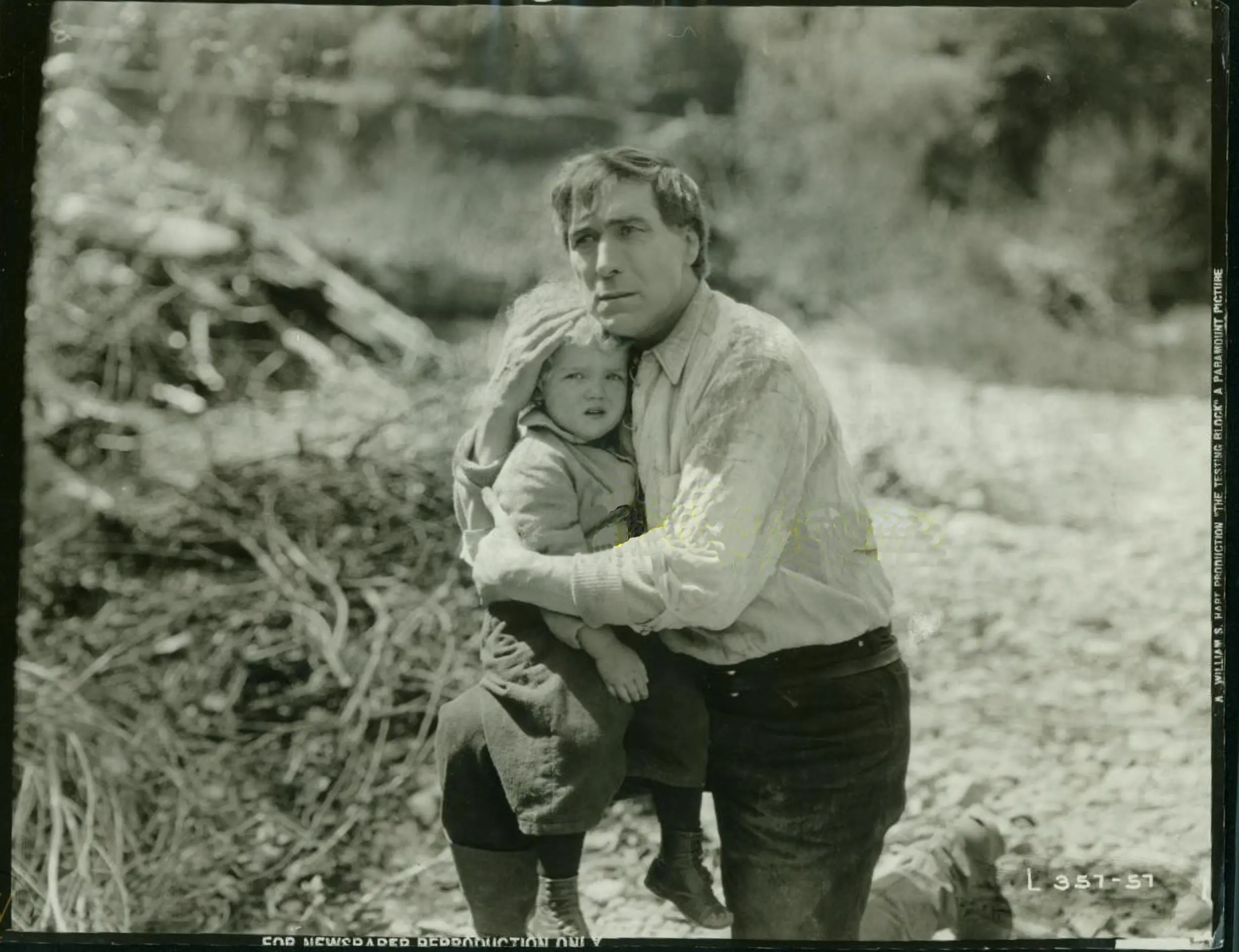
Hart and Hillyer’s script strips western myth to Old Testament scaffolding. Notice the scarcity of community scenes—no barn-raisings, no parades—just individuals negotiating sin’s ledger. Dialogue titles eschew period slang for King-James cadence: “Whosoever maketh a wager with the Devil must ante up with his soul.” This is not mere archaism; it’s branding, stamping Hart’s persona as frontier zealot.
Hillyer’s direction favors negative space. In homestead scenes, doorframes bisect compositions, trapping characters in domestic cages. During chase sequences, horizons ride high in frame, dwarfing riders beneath an indifferent sky—a visual anthropology of predetermination.
Shot on California’s Kern River mesas, the film’s geography looks fossilized, as though tectonic plates grind just offscreen. August employs day-for-night photography filtered with cyan gel, rendering moonlight the color of drowned veins. Dust storms back-light scenes, transforming mundane sheriffs’ offices into sanctuaries of swirling gold. The result anticipates Leone’s operatic dust decades early.
Though silent, the picture pulses with sonic suggestion. When Nelly abandons Sierra, the subsequent intertitle reads: “Silence—more piercing than any bullet.” In premier screenings, orchestras were instructed to cease playing for thirty seconds; audiences reported hearing imaginary gunshots, a psych-acoustic hallucination that turned absence into score.
Modern critics flay the film for sanctioning abduction-as-courtship. Fair—yet reductionist. Nelly’s final refusal to return to Sierra, even after Ringo’s death, reads proto-feminist. She exits toward camera, child in arms, leaving both men bleeding into the dirt. The closing intertitle—She would build no more her life on any man’s broken promises—delivered in 1920, carries suffragist voltage. Hart, conservative Methodist, paradoxically crafts a heroine who rejects patriarchal economies altogether.
Hart’s descent into anti-heroism predates The Juggernaut’s social Darwinism and even As Ye Sow’s moral fatalism. The Testing Block supplies template for Sternberg’s Underworld and ultimately noir’s corrupted romantics. Leone pilfered its visual nihilism; Eastwood borrowed Hart’s laconic penance in Unforgiven. Yet few successors dared replicate the film’s stark theology—audiences prefer their outlaws redeemed, not fossilized in original sin.
A 4K restoration by Library of Congress, struck from a 35mm nitrate print discovered in a Brazilian monastery, premiered 2019 at Bologna Cinema Ritrovato. Kino’s Blu-ray offers sepia and tinting options, plus a new score by composer Ulrich Kodowski that replaces player-piano clichés with doom-laden cello motifs. For purists, the disc includes a recreation of the original cue sheets, allowing home projectors to replicate that haunting half-minute of orchestral silence.
Where Half a Hero opts for comic self-sabotage and Jane flirts with flapper rebellion, Hart refuses to cushion brutality with charm. Conversely, Russian import Molchi, grust... molchi externalizes guilt via expressionist sets; Hart keeps his horrors grounded in sagebrush reality, making them harder to intellectualize away.
A century on, The Testing Block feels less dusty artifact than open wound. Its sexual politics remain radioactive, its theology merciless, its aesthetics hallucinatory. Yet therein lies its immortality: Hart refuses to varnish humanity’s predatory circuitry. You emerge not entertained but scorched, as though the Arizona sun itself has seared your retinas with the knowledge that love, when weaponized, outstrips any six-gun for carnage.
Watch it—preferably alone, definitely sober, and with enough silence to let the phantom gunshots echo.
IMDb 6.2
1927
Community
Log in to comment.