DbcultAccessing Vault...
Cult Review
Senior Film Conservator
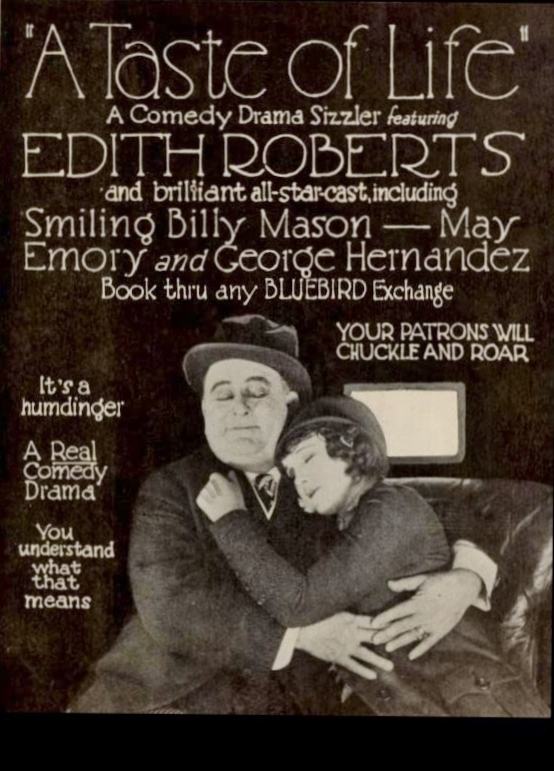
Step into the captivating world of early 20th-century cinema, where silent films, with their exaggerated gestures and evocative intertitles, painted vivid pictures of human foibles and societal norms. Among these cinematic relics, 'A Taste of Life' emerges as a delightful, if somewhat forgotten, domestic comedy that offers a fascinating glimpse into the comedic sensibilities and marital anxieties of its time. Released in an era grappling with the aftermath of a global war and the burgeoning Roaring Twenties, this film, penned by a collaborative quartet of Maximilian Foster, Waldemar Young, Fred Myton, and Paul West, presents a narrative that, while ostensibly lighthearted, subtly probes the undercurrents of desire, financial strain, and the often-absurd lengths people go to for perceived happiness or to rectify perceived wrongs within the confines of matrimony.
At the heart of 'A Taste of Life' lies Kitty Dillingham, portrayed with an effervescent energy by May Emory. Kitty is not merely a housewife; she embodies a particular kind of early modern woman, one whose desires extend beyond the strictly utilitarian. Her 'insatiable desire for expensive cherries' is more than a mere culinary preference; it's a potent symbol of a yearning for luxury, for a life unburdened by financial constraints, a foreshadowing of the consumerist culture that would soon define the decade. This seemingly trivial demand becomes the fulcrum upon which the entire plot pivots. Her husband, Horace Dillingham, played by Billy Mason, is a struggling lawyer whose professional endeavors, despite his best efforts, fail to match Kitty's escalating material aspirations. This economic disparity, a relatable tension even today, forces Kitty into Horace's office as a stenographer—a move that, while intended to alleviate their financial woes, inadvertently throws her into a vortex of comedic misadventure.
The film truly ignites when Horace is away, leaving Kitty to manage the office. It's here that the classic comedic trope of mistaken identity takes center stage. Kitty, in a moment of professional zeal and perhaps a touch of naiveté, mistakes Jonas Collamore (Harry Todd), a man embroiled in a contentious divorce suit for which Horace is counsel, for an important new client. This misidentification sets the stage for a lunch invitation that promises to be anything but ordinary. The ensuing meal, described as a cocktail-fueled affair where Kitty partakes liberally of both libations and, inevitably, more maraschino cherries, descends into a delightful state of inebriation. This scene, while played for laughs, also hints at the societal loosening of mores, even if presented through a moralistic lens that will ultimately see the characters 'straighten out' their problems.
Jonas, seizing the opportunity presented by Kitty's compromised state, escorts her to a nearby inn, undoubtedly with ulterior motives. His plan to create a compromising situation, presumably to aid his own divorce proceedings or simply to stir marital discord, is a testament to the era's dramatic conventions where such schemes were ripe for cinematic exploration. However, the best-laid plans of conniving men often go awry, especially in the hands of a clever, if tipsy, heroine. Mrs. Collamore (Edith Roberts), clearly no stranger to her husband's perfidies, has her own detectives on the case, and they are quick to follow. The subsequent arrival of Mrs. Collamore herself, accompanied by none other than Horace, her lawyer, creates a perfect storm of comedic tension. Kitty, with remarkable clarity despite her intoxication, grasps Jonas's manipulative intentions. Her escape through a window, leaving behind only the tantalizing clue of her hairpin, is a moment of quick-witted agency, turning what could have been a scandalous exposure into a clever evasion.
What follows is perhaps the most intriguing turn in 'A Taste of Life': Kitty and Jonas, instead of becoming adversaries, forge an unlikely, conspiratorial alliance. Their mutual predicament, born from Jonas's initial scheme, leads them to a shared goal: to entrap their respective spouses. This symmetrical plot device is a hallmark of comedic writing, creating a parallel structure where both couples engage in a complex dance of deception, designed to expose flaws, provoke jealousy, or simply force a confrontation that might lead to a resolution. The film, through this intricate web of schemes, explores the delicate balance of power within marriage and the lengths to which individuals will go to assert their will or reclaim their perceived happiness.
The beauty of such a narrative lies in its ability to teeter on the brink of domestic disaster, only to pull back at the last possible moment. The 'last minute' resolution, where both couples manage to 'straighten out their domestic problems,' is a common trope in comedies of manners, particularly those from the silent era. It reassures the audience that despite the chaos, the established social order and the sanctity of marriage will ultimately prevail. This kind of ending, while perhaps simplistic by today's standards, offered comfort and a sense of moral rectitude to contemporary viewers, reinforcing traditional values even as it playfully challenged them through its comedic scenarios. The journey, however, is far more engaging than the inevitable conclusion, showcasing the delightful absurdity of human behavior when pushed by desire, misunderstanding, and pride.
While a direct viewing of 'A Taste of Life' might be challenging for many, the very premise and the credited cast offer insights into its potential impact. May Emory, as Kitty Dillingham, was a prominent figure in early cinema, known for her expressive acting style characteristic of the era. Her portrayal of Kitty, a woman driven by a desire for luxury yet possessing a sharp wit, would have required a nuanced performance capable of conveying both vulnerability and cunning without spoken dialogue. One can imagine her gestures, facial expressions, and movements being pivotal in communicating Kitty's intoxication, her sudden realization of Jonas's deception, and her decisive escape. Such a role demands a performer who can command the screen with their presence alone, much like other leading ladies of the period who could convey complex emotions through a glance or a subtle shift in posture.
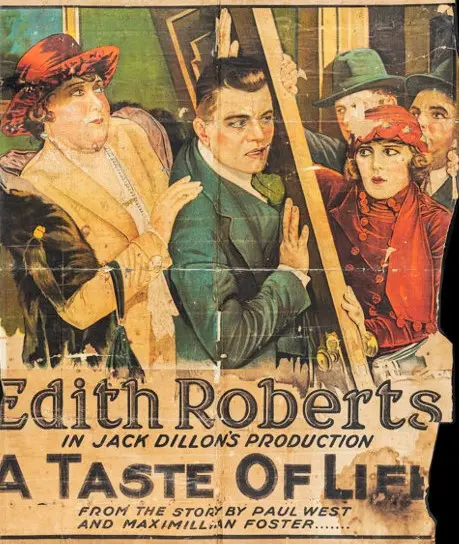
Billy Mason, as Horace, would have needed to embody the beleaguered husband, struggling to keep pace with his wife's desires while maintaining his professional integrity. The comedic tension between his earnest attempts and Kitty's more extravagant tastes would have been a significant source of humor. Harry Todd, as the opportunistic Jonas Collamore, likely played his role with a blend of charm and duplicity, a common villainous archetype in melodramas and comedies alike. The supporting cast, including Edith Roberts as Mrs. Collamore and George Hernandez, would have contributed to the ensemble's dynamic, each playing their part in the elaborate charade. Silent film acting, often characterized by its broader, more theatrical style, was an art form in itself, relying heavily on pantomime, clear emotional cues, and a deep understanding of visual storytelling to engage an audience without the aid of sound.
'A Taste of Life' can be contextualized within a broader landscape of silent-era films that explored themes of marriage, social expectations, and the burgeoning independence of women. The idea of a wife seeking more than her husband can provide, leading to dramatic consequences, resonates with other films of the time. For instance, one might find thematic parallels with films like For Husbands Only, which likely delved into the complexities and expectations placed upon spouses in marital unions, or perhaps even Princess Virtue, which might have explored a woman's agency and moral compass in challenging situations. While 'A Taste of Life' leans into the comedic, its underlying commentary on materialism and marital fidelity was a pervasive topic across genres.
The film's writers, Maximilian Foster, Waldemar Young, Fred Myton, and Paul West, were all prolific contributors to the silent film industry, each bringing their unique storytelling flair. Their collaboration here likely resulted in a script that balanced intricate plot mechanics with accessible humor. The careful construction of the mistaken identity, the escalating farce, and the ultimate, symmetrical resolution speaks to a sophisticated understanding of comedic structure, even in an era where cinematic language was still in its formative stages. The 'cherry' motif, initially a symbol of desire and luxury, transforms into a comedic device, a tangible representation of the escalating absurdity of Kitty's circumstances. This kind of symbolic shorthand was frequently employed in silent films to convey deeper meanings without relying on dialogue.
Beyond its immediate comedic value, 'A Taste of Life' offers a valuable lens through which to examine the societal norms and gender dynamics of the early 20th century. Kitty's desire for expensive goods, though played for laughs, reflects a nascent consumer culture where women were increasingly targeted as consumers. Her decision to work as a stenographer, while born of necessity, also hints at the changing roles of women in society, moving from purely domestic spheres into the professional world, even if only in a supporting capacity. The film's resolution, where domestic problems are 'straightened out,' underscores the era's prevailing emphasis on marital harmony and the restoration of traditional order, even after it has been thoroughly disrupted by comedic chaos.
The intricate plot, with its double-crossing and counter-schemes, also highlights the era's fascination with legal dramas and the often-sensationalized world of divorce. Jonas Collamore's initial attempt to engineer a compromising situation is a plot device ripped straight from the headlines and popular fiction of the day, where such tactics were not uncommon in contentious marital separations. The film cleverly uses these dramatic elements as a springboard for comedy, subverting expectations and turning potential tragedy into farce. The hairpin left behind by Kitty, a seemingly insignificant detail, becomes a crucial piece of evidence, a silent witness to her daring escape, and a symbol of her defiant spirit.
While 'A Taste of Life' may not possess the grand scale of an epic like Judith of Bethulia or the political urgency of The Kaiser, the Beast of Berlin, its charm lies in its intimate focus on domestic life and its comedic execution. It's a reminder that even in the absence of sound, filmmakers were adept at crafting engaging, character-driven narratives that resonated with audiences. The film's ability to weave together themes of desire, deception, and reconciliation through a series of escalating comedic events is a testament to the enduring power of good storytelling.
In conclusion, 'A Taste of Life' offers more than just a fleeting glimpse into a bygone cinematic era; it provides a vibrant, humorous commentary on human relationships and the pursuit of happiness. From Kitty's initial cherry-fueled desires to the intricate schemes designed to mend broken trusts, the film is a testament to the ingenuity of silent cinema. It stands as a charming example of how early filmmakers tackled universal themes with wit and visual flair, leaving a lasting impression through its clever plot and memorable characters. It's a taste of life, indeed—a taste of the complexities, absurdities, and ultimate resilience of the human heart, all wrapped up in a delightful, silent package.
IMDb 5.6
1931
Community
Log in to comment.