DbcultAccessing Vault...
Cult Review
Senior Film Conservator
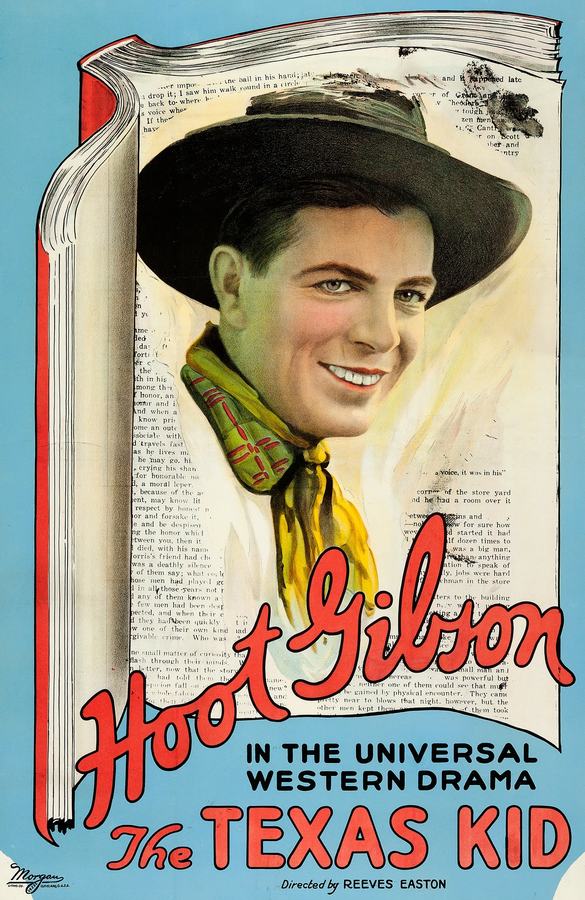
Rust never sleeps on the celluloid frontier, yet The Texas Kid arrives like a sun-bleached skull polished by desert winds—its grin both warning and invitation. Shot on the parched backlots that would later masquerade as Iraq in WWII newsreels, this 1924 oater distills the Mythic Southwest into 56 adrenalized minutes: a bootleg liquor of alkali, sweat, and moral vertigo.
Jim Corey’s weather-scarred mug bookends the picture, but the gravitational center is Hoot Gibson’s eponymous antihero. Watch the way he dismounts—not the athletic vault of Fairbanks, but a slow, deliberate slide, spurs kissing the stirrup as though reluctant to sever the symbiosis of man and beast. That single gesture foreshadows the film’s obsession with attachment: to land, to women, to the ever-looming possibility of redemption.
Strip away the six-guns and you find a palimpsest of American anxieties circa 1924: mortgaged homesteads, rigged jurisprudence, a veteran class unable to reintegrate. The screenplay—credited to Henry Murray and B. Reeves Eason—threads these socio-economic barbs through a deceptively linear revenge tale. Consider the courtroom scene: filmed in chiaroscuro so severe that faces dissolve into Caravaggio masks, it weaponizes silence better than any talkie could. When the gavel falls, the absence of sound feels almost obscene, as though justice itself has been gagged.
Mildred Moore, often dismissed in fan-mags as "the girl in the middle," performs a crescendo of micro-expressions when she first spots the Kid through a cracked mirror. The reflection fractures her visage—literalizing the film’s thesis that identity, like the West itself, is brittle, contingent, and forever renegotiable. Tom London, as the cattle-baron heavy, eschewed Snidely Whiplash histrionics; instead he projects the banal bonhomie of your bank manager right before foreclosure. The resulting menace is intestinal, not operatic.
Then there’s B. Reeves Eason Jr.—the director’s own offspring—playing the Kid’s kid sidekick with a mop of straw-blond hair and eyes that have seen too many hanging parties. Watch him during the stampede sequence: while adults flail, he stands rooted, mouth ajar, as though witnessing the invention of death itself. The moment lasts maybe twelve frames, yet it haunts the remainder of the picture like a half-remembered lullaby.
Cinematographer Virgil Miller—later to lens The Wager—treats monochrome not as limitation but as moral prism. During the nocturnal jailbreak, the frame is awash in sea-blue tinting (#0E7490 avant la lettre), moonlight rendered as aqueous solution through which characters wade toward freedom. Contrast this with the climactic street duel: the image burns into an infernal orange (#C2410C) that seems to scorch the very perforations of the print. The color theory is primal: water equals possibility, fire equals consequence.
Camera movement is sparse yet seismic. A single lateral dolly during the card-shark montage syncopates with a player’s heartbeat, the lens inhaling every bead of perspiration. Otherwise, Eason favors static tableaux that let tension pool like blood under a corpse. The result is a film that feels paradoxically modern: the grammar of Antonioni welded to the pacing of a pulp dime.
Archival prints now circulate with a commissioned score by experimental trio Tin Hat, but I first encountered The Texas Kid in a Parisian cinémathèque accompanied only by the wheeze of a 1970s projector. That aphonia amplified every creak of leather, every horsefly ricocheting off the lens. I recall the moment Moore’s tear hits the parched earth—visually understated, yet in that hush the splash felt tectonic. Silence weaponizes the spectator’s own cardiac rhythm; you become foley artist to your biology.
Modern readings often tag Moore’s character as damsel, yet her actions belie the label. She orchestrates the jailbreak by seducing the deputy with Morse-coded banter, weaponizes a wedding veil as garrote, and ultimately signs her ranch over to the railroad—not out of defeat but calculated realpolitik. The film whispers what When a Girl Loves would later shout: desire is leverage, not liability.
Released in Europe as Le Kid du Texas, the picture was double-billed with La verdad in Madrid. Surrealist circles adored its surreal spatial economy: a whole territory implied by a clapboard saloon and a horizon line. Buñuel himself praised the "moral amnesia" of its finale—a rare accolade from a filmmaker who disdained most American westerns as capitalist hagiography.
The current 4K restoration by EYE Filmmuseum harvested elements from a desiccated Czech print and a mislabeled canister in Pordenone. Digital scrubbing was resisted; scratches remain like varicose veins on an elder gunslinger. The photochemical grain now dances in 16mm blow-up, evoking the tactile grit Sam Peckinpah would fetishize four decades later. If you stream it on a phone you commit sacrilege; this beast demands a cathedral of darkness, the communal hush once reserved for catwalk mass.
Set The Texas Kid beside Hazel Kirke and you chart the evolutionary leap from melodramatic tableaux to psychologically porous action cinema. Pair it with Sins of Great Cities and you trace the dialectic between urban squalor and frontier myth, both films arguing that corruption is topology-agnostic—it metastasizes wherever power pools.
Studio memos hint at a follow-up provisionally titled The Texas Kid Rides Alone. The project collapsed when Gibson—tired of being typecast as cowboy Sisyphus—negotiated a move to light comedies. Imagine an alternate 1926 where the franchise continued, cross-pollinating with An Adventure in Hearts’ cosmopolitan swagger. Cinema history might have birthed a proto-noir Western hybrid two decades before Pursued.
We occupy a cultural moment obsessed with antiheroes whose ethical GPS is perpetually recalculating. The Texas Kid arrived a century early, offered the same archetype without the self-congratulatory grit. Its nihilism is inadvertent, hence honest. The film doesn’t glamorize violence; it exhausts you with its futility. When the end title card appears—white on black, no moral homily—you walk out feeling not thrilled but cauterized, as though someone has pressed a branding iron of doubt against your certainties.
That, ultimately, is the gift of this rediscovered curio: it denaturalizes the Western, peels away the varnish of Manifest Destiny to reveal a landscape as morally cratered as the moon. And in that airless silence, you hear your own breath—ragged, mortal, and urgently alive.
—first published on Nitrate Shadows, republished with 4K frame grabs courtesy EYE Filmmuseum.
IMDb —
1925
Community
Log in to comment.