DbcultAccessing Vault...
Cult Review
Senior Film Conservator
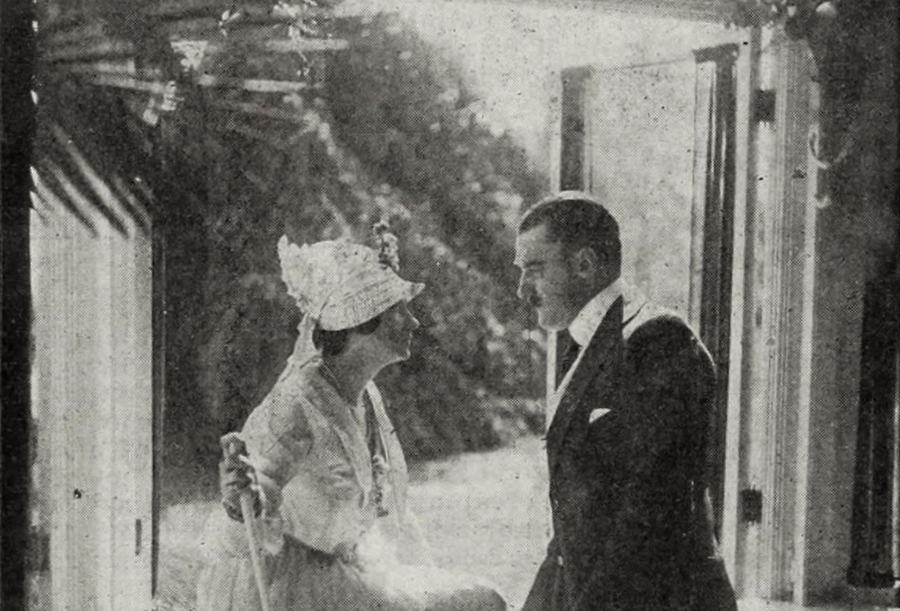
The year 1915 was a watershed moment for cinematic storytelling, a period when the medium began to shed its stage-bound origins for a more nuanced, visual vocabulary. The Woman Pays, written by Harry Chandlee and Florence Gerald, serves as a quintessential artifact of this era. It is a film that doesn't merely chronicle a marriage in crisis; it dissects the very fabric of the American class aspirationalism that would eventually define the century. Unlike the more fantastical escapism of The Adventures of Kathlyn, this narrative is rooted in the psychological dirt of domesticity and the corrosive nature of social envy.
At the heart of the film lies Beth Coventry, portrayed with a delicate yet increasingly frantic energy by Valli Valli. Beth is not a simple victim; she is a complex figure whose 'one failing'—vanity—becomes the engine of her destruction. The film masterfully establishes her suitors as symbolic choices. The Marquis de Tourville (Edward Brennan) represents the allure of the Old World, a 'social lion' whose polish masks a lack of substance. Philip Murdock (Paul Lawrence) is the burgeoning face of predatory capitalism, a broker who views human relationships as assets to be liquidated. In contrast, John Langton (John Bowers) represents the 'promising' yet vulnerable middle class. This setup mirrors the moral landscape found in The Country Boy, where the innocence of the rural spirit is constantly threatened by the cynical machinery of the city.
The introduction of Mrs. Connie Beverly (Mae De Metz) injects a dose of Shakespearean villainy into the proceedings. Her infatuation with Langton is portrayed not as love, but as a pathological need to possess, leading her to engineer a rift between the couple. The theft of the letter—a classic melodramatic trope—is handled here with a palpable sense of dread. It serves as a reminder of how easily a woman's past, no matter how innocent, could be weaponized against her in the pre-suffrage era. One might find thematic echoes here of Leah Kleschna, where the weight of one's history determines their social mobility.
The spatial dynamics of the film are particularly striking. The 'Love Cottage' is depicted as a sanctuary of authentic emotion, characterized by modest set design and intimate framing. However, as Murdock and Beverly whisper into Beth’s ear, the cottage becomes a prison of perceived inadequacy. The move to a 'pretentious home' marks the beginning of the end. This shift in setting is accompanied by a change in the film’s visual rhythm; the scenes become more crowded, the lighting harsher, reflecting the 'lavish' but hollow social life Beth now commands. The pressure she exerts on John to maintain this facade is a chilling depiction of how consumerist desire can override empathy.
John’s descent into financial criminality—specifically the misappropriation of bonds—is portrayed with a sympathetic lens that was somewhat rare for the time. He is the 'man who pays' just as much as Beth is the woman. His desperation is palpable, reflecting the anxieties of a generation struggling with the volatility of the stock market. This financial ruin is a recurring motif in 1915 cinema, seen in works like The Fighting Hope, where the ethics of banking and the sanctity of the home are inextricably linked.
"A cinematic lightning bolt that strikes not just at the body, but at the very soul of societal vanity, forcing a reckoning that only the ruins of a 'Love Cottage' can heal."
The turning point of the film—the lightning strike—is a masterpiece of early special effects and narrative symbolism. As lightning crashes through the window during the height of a ball, it serves as a literal and figurative 'shattering' of Beth’s world. The scarring of her face is the ultimate punishment for her vanity. In a society that valued women primarily for their aesthetic appeal, this disfigurement is treated as a social death. The pathos Valli Valli brings to these scenes is extraordinary; her retreat into seclusion is not just a flight from her husband, but a flight from a self she no longer recognizes.
This sequence invites comparison to the visual grandeur of Joan of Arc or the atmospheric tension in The Fatal Night. The use of nature as a moral arbiter is a hallmark of the era, suggesting that when human laws fail to correct hubris, the universe itself intervenes. The subsequent misunderstanding—where Beth mistakes John’s pity for disgust—is a tragic commentary on the fragility of communication within a marriage built on superficial foundations.
In many ways, The Woman Pays acts as a precursor to the gritty realism that would emerge in later decades. While it maintains the moralistic tone of its time, its exploration of debt and social climbing is remarkably modern. When compared to Damaged Goods, which dealt with the physical consequences of social indiscretion, The Woman Pays focuses more on the spiritual and financial fallout. It shares a certain DNA with Samson in its depiction of a man brought low by his devotion to a woman’s whims, though here, the redemption is mutual rather than sacrificial.
The film’s pacing is deliberate, allowing the audience to feel the slow-motion car crash of John’s financial decisions. The inclusion of the Marquis de Tourville as a red herring for Beth’s alleged infidelity is a clever narrative device, emphasizing how social expectations of 'the rake' often clouded the reality of a woman’s character. This exploration of reputation is also central to The Devil's Daughter, though The Woman Pays offers a more redemptive conclusion than the former's darker cynicism.
The cinematography, though limited by the technology of 1915, manages to capture the stark contrast between the naturalistic 'Love Cottage' and the artificiality of the ballrooms. The framing of Beth’s scarred face, often partially obscured or shown in shadow, adds a layer of psychological depth to her convalescence. John Bowers provides a sturdy, grounded performance as Langton, making his descent into embezzlement feel like a tragic inevitability rather than a simple lapse in character. His chemistry with Valli Valli is the anchor of the film; without their believable affection, the final reconciliation would feel unearned.
The writing by Harry Chandlee and Florence Gerald deserves significant praise. They avoid the trap of making Beth an unlikable protagonist. Instead, they frame her vanity as a societal byproduct—a lesson she must unlearn through suffering. This nuance is what elevates the film above standard melodrama. It isn't just about a woman paying for her sins; it's about the cost of living in a world that demands impossible standards of beauty and wealth. This thematic depth is also present in A Welsh Singer, which similarly explores the tensions between humble origins and the allure of fame.
The climax of the film, where Beth protects John from the legal consequences of his theft, is a powerful reversal of roles. Throughout the first two acts, Beth is the taker and John is the provider. In the final act, Beth becomes the savior, using her inherited fortune not for social climbing, but for the restoration of her husband’s honor. This circularity—returning to the 'Love Cottage' to renew their vows—is a satisfying narrative conclusion that emphasizes the film's core message: true value lies in the unseen, not the external.
As we look back at The Woman Pays, it stands as a fascinating companion piece to other 1915 features like The Shooting of Dan McGrew or the documentary-style With Our King and Queen Through India. While the latter captures the external world, the former captures the internal landscape of the human heart. Even international titles like Champagneruset or Hans Faders Ære share this preoccupation with honor and the social consequences of one's actions.
In the final analysis, The Woman Pays is a poignant reminder of the enduring power of silent cinema to convey complex emotional truths. It is a film that demands to be seen not just as a historical curiosity, but as a vibrant, breathing piece of art. The performances, particularly those of Valli Valli and John Bowers, transcend the limitations of the silent medium, delivering a story that is as relevant today in our age of social media vanity as it was in the era of ballrooms and 'Love Cottages.' Like the evocative imagery in Impressioni del Reno, the film leaves a lasting mark on the viewer's consciousness, proving that while the woman may pay, the audience is the one who truly gains from this cinematic experience.
IMDb 6.8
1930
Community
Log in to comment.