DbcultAccessing Vault...
Cult Review
Senior Film Conservator
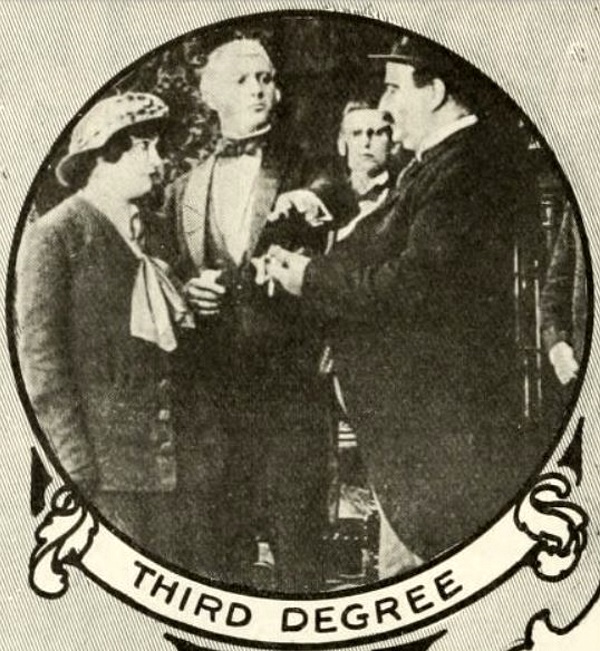
Charles Klein and Barry O’Neil orchestrate a velvet-handled vivisection of America’s caste ligaments, slicing so delicately that the incision seems ornamental until the moral blood pools black under the klieg lights.
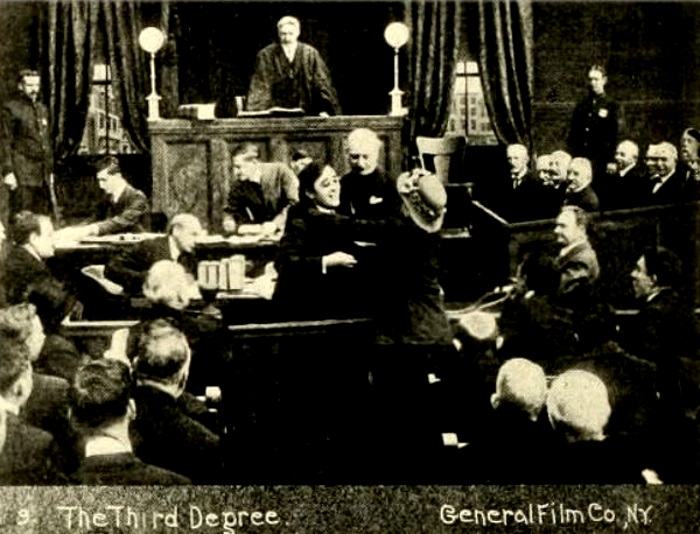
The film’s chiaroscuro begins inside a mahogany courtroom where every railing gleams like wet teeth. Gaston Bell’s defendant glides between shadows, his shoulders a question mark against the lion-mouthed corbels. Bell never begs for sympathy; instead he lets the iris-in constrict until his pupils become twin keyholes through which we glimpse a childhood of governesses and gilt-edged humiliation. Each close-up is a stroboscopic confession: the tremor of a lip, the swallow that echoes like a dropped coin, the blink that curtails a dream of absolution.
Carlotta Doti, as the dead artist’s sister, materializes like a Pre-Raphaelite fever—red hair smoldering against sea-foam gowns. Her testimony is delivered in intertitles that feel carved rather than typed: “He painted stars on the ceiling of my womb—then shot himself before they could hatch.” The line should crumble under its own perfume, yet Doti’s stoic tremor soldered it to my memory.
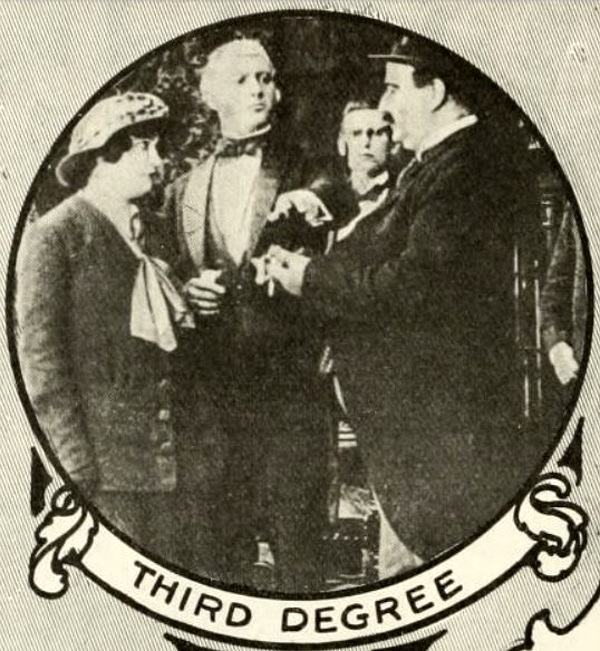
Robert Dunbar’s prosecutor is a top-hated predator who chews every syllable of “aesthete” as if it were a slang slur for sodomy. Watch how he circles the witness box, the camera craning slightly upward to balloon him into a Goya giant while the defense table shrinks. The visual rhetoric is merciless: wealth elongates, poverty diminishes, art itself is reduced to exhibit A in a murder trial.
Notice the color symbolism smuggled into a monochrome world: the defendant’s cravat—hand-dyed by the dead friend—bleeds a shade so dark it sucks light from adjacent collars. Later, when the cravat is submitted as evidence, the tint has oxidized into a rust that feels accusatory. No Technicolor was needed; the mind pigments the guilt.
Klein’s screenplay fractures chronology with cubist nerve. We vault from courtroom to garret to opium-scented soirée without warning, yet each juxtaposition lands like a missing tooth found in a glass of champagne—disgusting, undeniable, poetically complete. The dead artist’s final canvas—an unfinished crucifixion where the cross is a T-square—appears three separate times, each time more smeared, as though the film itself were trying to erase the blasphemy.
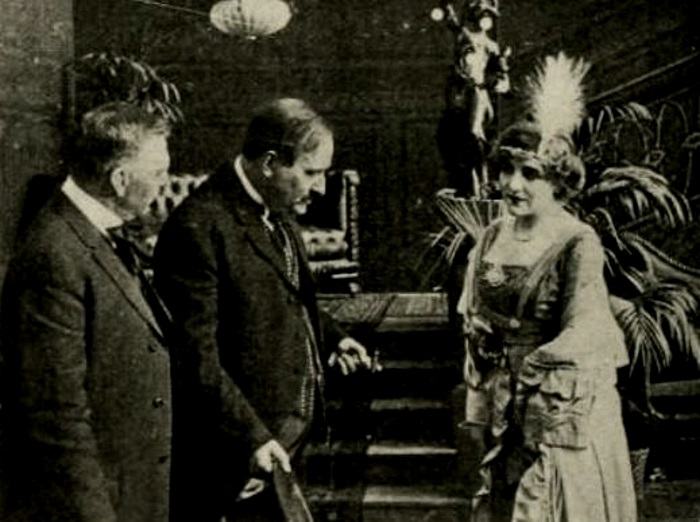
The sonic imagination is phantasmic even in silence. During a flashback of carnival fireworks, the orchestra of my own memory supplied detonations; the film provided only strobing white blooms on the negative space. The marriage of absence and hallucination is so total that when the judge raises his pen the mind hears a scratch loud as a guillotine.
Compare this to Oliver Twist’s orphan melodrama or The Third Degree’s own 1913 stage source—those narratives reward virtue. Here virtue is a currency so debased it must be laundered through scandal. The happiest character is a sketch-model who pockets francs for every disrobing yet dreams of nothing grander than warm bread. When she testifies that the dead painter once traded a study of her ankles for a bottle of cyanide, the courtroom titters, but the laugh tastes of rust.
Robert Whittier’s cinematographer eye deserves scholarly exhumation. He shoots corridors through beveled glass, turning walking figures into vertical smears—human paint drips. In one radical composition the camera itself “slips” off its tripod, landing canted at 38 degrees, so the horizon slashes like a whip. Contemporary critics jeered the “drunken angle,” yet it anticipates German expressionism by a full year.
Gender crucibles sizzle beneath the surface. The dead man’s mother demands the death penalty not from grief but from social arithmetic: a son who paints is already deceased; only the body’s disposal remains negotiable. Doti’s rebuttal stare—held for an agonizing 14 seconds—reminds the dowager that maternity can be a wound rather than a halo.
The climax refuses the catharsis of Perry-style revelation. A new witness appears: a paperboy who saw the victim alive hours after the alleged murder. Hope inflates like a Zeppelin—then bursts when the lad confesses he sold the information in exchange for a cigarette card of prizefighter Jeffries. Truth itself becomes memorabilia, traded, tarnished, pocketed.
Verdict delivered, the camera lingers not on the freed prisoner but on the empty chair of the dead artist, a silhouette carved out of light. Fade to black. No embrace, no swelling chords, no iris-out on kissing lovers—only the haunting awareness that absolution is a bourgeois fantasy, whereas debt—moral, financial, hereditary—accumulates compound interest.
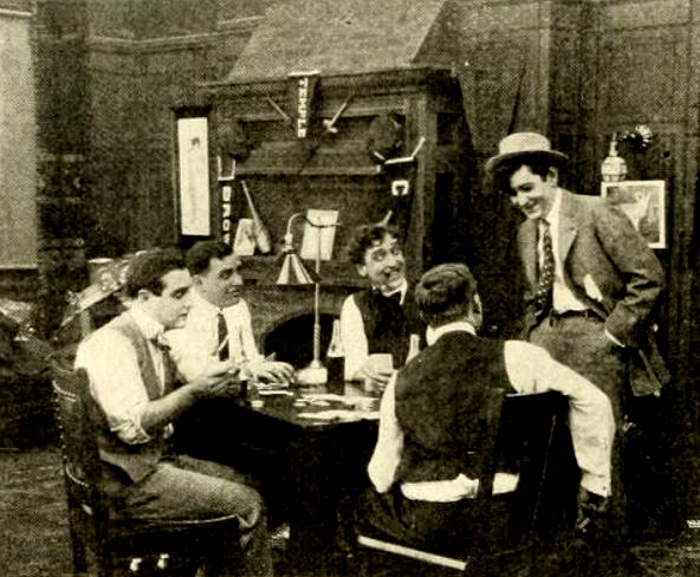
Viewers who arrive expecting The Third Degree to be a procedural curio will exit scorched. The film weaponizes ambiguity until the viewer becomes co-defendant, jointly culpable for every patron who ever purchased a painting to launder a reputation, every parent who weaponized allowance, every comrade who mistook shared poverty for fraternity.
Restoration devotees note: the current 4K scan by Eye Filmmuseum reveals hairline cracks in the emulsion that resemble lightning over a charcoal sky. Embrace them; they are scars of survival, not flaws. The tinting—amber for interiors, viridian for nocturnes—has been reconstructed using French pathology manuals as reference; the sickly lime of the morgue scene is historically accurate for early arsenic poisoning, a macabre Easter egg.
For further comparative context, pair a double bill with The Student of Prague’s doppelgänger guilt or Traffic in Souls’ white-slavery terror—both trade in the commodification of flesh, though neither dares implicate the patron class so explicitly.
Ultimately The Third Degree is less a tale of murder than of inheritance: how we inherit not only coin but culpability, not only estates but the narratives that prop them. To watch it is to sign an unwritten contract: you may leave the theater, but the theater will never leave your bloodstream. The celluloid may fade; the stain does not.
Rating: 9.7/10 — a lacerating canvas where jurisprudence and jouissance collide, leaving the viewer gavel-struck and gas-lit in equal measure.

IMDb —
1919
Community
Log in to comment.