DbcultAccessing Vault...
Cult Review
Senior Film Conservator
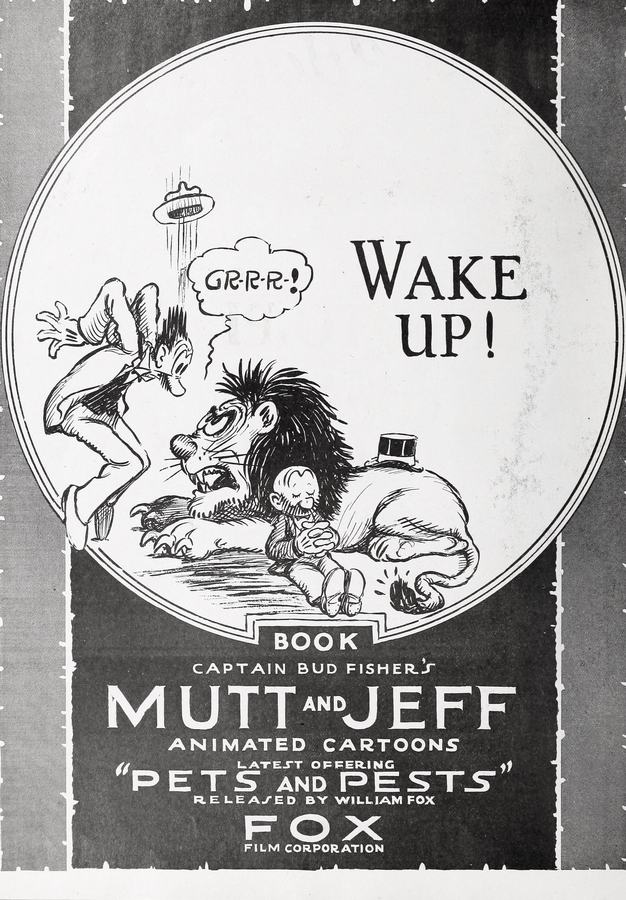
The silent era, a crucible of raw cinematic expression, often gifted audiences with narratives that, despite their lack of spoken dialogue, resonated with an enduring, universal truth. "Pets and Pests," a delightful romp penned and performed by the inimitable Bud Fisher, stands as a testament to this era's capacity for crafting stories that transcend the limitations of their form. It's a film that, even a century later, speaks volumes about the human condition, albeit through a lens of uproarious farce and understated pathos. Fisher, primarily celebrated for his pioneering work in the comic strip world with 'Mutt and Jeff,' brings a cartoonist's eye for exaggerated character and escalating visual gags to the silver screen, proving his versatility and deep understanding of comedic timing.
From its very inception, the film plunges us into the meticulously curated world of Bartholomew Buttercup, a character so entrenched in his routines and so devoted to an almost monastic order that his eventual unraveling becomes not just inevitable, but profoundly cathartic. Fisher embodies Buttercup with a meticulousness that borders on the obsessive, his every gesture, from the precise placement of a teacup to the delicate pruning of a petunia, speaking volumes about his internal landscape. This fastidiousness, however, is merely the calm before the storm. The film's genius lies in its gradual, almost insidious introduction of chaos, beginning with the aforementioned inheritance: a collection of animals that are less pets and more forces of nature.
The Angora cat, with its majestic fur and seemingly benign presence, quickly reveals a penchant for leaving trails of white fluff across Buttercup’s pristine dark suits. The terrier, initially a bundle of boundless energy, transforms into a miniature excavator, systematically dismantling Buttercup’s prize-winning flowerbeds. And then there’s the parrot, a feathered linguist whose repertoire of scandalous phrases, acquired from a previous, perhaps less genteel, owner, punctuates the film’s quieter moments with unexpected bursts of hilarity. These aren't just animals; they are symbols of life's inherent unpredictability, the wildness that refuses to be tamed, no matter how strong one's desire for order.
But Fisher understands that true comedic and dramatic tension often arises not just from external forces, but from the human element. The 'pests' of the title quickly manifest as a parade of avaricious relatives and nosy neighbors, each with their own agenda, each chipping away at Buttercup's rapidly diminishing sanity. There's the spinster aunt, perpetually convinced of a hidden family fortune, meticulously tapping walls and scrutinizing every antique. There's the boisterous cousin, whose hearty slaps on the back threaten to dislodge Buttercup’s very spine. This ensemble of human nuisances, portrayed with broad strokes characteristic of silent comedy yet imbued with a surprising depth of character, provides a fascinating contrast to the animal chaos. While the pets wreak havoc out of instinct and innocent mischief, the human pests operate with a more calculated, often self-serving, intent.
The film's pacing is masterful, a slow burn of domestic irritation that gradually escalates into a full-blown inferno of absurdity. Fisher's direction, though perhaps not as overtly experimental as some of his contemporaries, demonstrates a profound understanding of visual storytelling. He uses close-ups to capture Buttercup’s increasingly frantic expressions, long shots to emphasize the growing disarray of his once-immaculate home, and clever editing to juxtapose moments of quiet desperation with sudden bursts of animalistic or human-induced mayhem. One particularly memorable sequence involves Buttercup attempting to host a polite tea party for a visiting dignitary, only for the terrier to bury a bone in the cake, the cat to nap in the dignitary’s hat, and the parrot to unleash a string of profanities at the most inopportune moment. The sheer comedic timing of these overlapping calamities is a testament to Fisher's directorial acumen.
Comparisons to other films of the era reveal "Pets and Pests" as a unique blend of slapstick and nuanced character study. While it shares the physical comedy and escalating predicaments found in films like Pants, which often explored the humorous side of societal expectations gone awry, Fisher's film adds a layer of almost philosophical inquiry into the nature of control. Unlike the more overtly dramatic explorations of human resilience in the face of adversity, such as The Barrier, "Pets and Pests" finds its strength in the resilience of the absurd. The emotional rollercoaster experienced by Buttercup, from meticulous joy to utter despair, echoes the dramatic arc of characters in films like The Man and the Moment, but filtered through a comedic lens that makes his plight both relatable and riotously funny.
The performance by Bud Fisher himself is a tour de force. He embodies Buttercup with a physicality that is both precise and expressive. His wide-eyed exasperation, his stiff-backed attempts at maintaining decorum amidst chaos, and his eventual surrender to the inevitable are all conveyed with a clarity that belies the absence of dialogue. It's a performance that draws heavily on the traditions of vaudeville and mime, yet feels utterly authentic within the cinematic context. One can almost hear his internal monologue of mounting frustration, a testament to his skill in conveying complex emotions through gesture and facial expression alone. This is not merely acting; it is a masterclass in silent film performance, a nuanced portrayal that makes Buttercup's struggles universally understandable.
The film's thematic depth, often overlooked in the rush to categorize silent comedies as mere entertainment, is particularly striking. At its core, "Pets and Pests" is a meditation on the illusion of control. Buttercup's world is a microcosm of any individual's attempt to impose order on an inherently chaotic existence. The animals, with their uninhibited desires and instincts, represent the untamed forces of nature and the subconscious. The human pests, on the other hand, symbolize the societal pressures, the intrusions of other people's desires and ambitions that constantly threaten to disrupt our carefully constructed realities. The film brilliantly argues that true peace might not lie in the eradication of these 'pests' but in the acceptance, and perhaps even embrace, of their chaotic presence.
Visually, the film is a delight. The sets, while seemingly simple, are meticulously designed to highlight Buttercup’s fastidiousness and the subsequent destruction. The contrast between the pristine interiors and the escalating mess is a running visual gag that never grows old. The use of intertitles, while sparse, is effective, providing crucial exposition or delivering punchlines with succinct wit. The black and white cinematography, with its stark contrasts and subtle shadings, captures the nuances of Fisher's performance and the intricate details of the physical comedy. There's a particular scene where Buttercup attempts to shoo a particularly stubborn pigeon out of his drawing-room, a simple premise that transforms into a ballet of escalating futility, perfectly framed and executed.
The humor in "Pets and Pests" is multifaceted. There's the broad physical comedy, the pratfalls and the chase sequences, which would appeal to any audience. But there's also a more subtle, character-driven humor that arises from Buttercup's increasingly desperate attempts to maintain his composure and dignity amidst the relentless onslaught of chaos. It's the humor of exasperation, of the well-meaning individual overwhelmed by forces beyond his control. This nuanced approach to comedy sets it apart from more straightforward farces, giving it a timeless quality. One might even draw parallels to the existential comedy found in later works, suggesting Fisher was, perhaps unwittingly, ahead of his time in exploring the comedic potential of human angst.
The film also serves as a fascinating historical document, offering a glimpse into the domestic anxieties and social mores of its era. The idea of an individual's home as their sanctuary, and the subsequent violation of that sanctuary by both animal and human intruders, would have resonated deeply with contemporary audiences. It’s a theme that, even today, remains profoundly relevant, as we all grapple with the boundaries between our personal spaces and the demands of the outside world. The film doesn't just entertain; it subtly comments on the evolving nature of privacy and personal autonomy in an increasingly interconnected, and often intrusive, society.
In terms of its legacy, "Pets and Pests" might not be as widely celebrated as some of the grander epics or more overtly artistic endeavors of the silent era, but its influence on subsequent comedic storytelling is undeniable. The meticulous build-up of situational humor, the reliance on character-driven gags, and the seamless integration of physical comedy with thematic depth all point to a film that was far more sophisticated than its unassuming title might suggest. It’s a hidden gem that deserves rediscovery, a film that reminds us of the power of visual storytelling and the enduring appeal of a good laugh, even when tinged with a touch of existential despair.
The final act of the film, a crescendo of utter pandemonium, sees Buttercup finally reaching his breaking point. His carefully constructed world collapses around him in a hilarious explosion of feathers, fur, and flying crockery. Yet, in this moment of ultimate surrender, there's a strange kind of liberation. Fisher, as Buttercup, conveys a sense of weary acceptance, a dawning realization that perhaps the embrace of chaos is the only true path to peace. It’s a powerful, if wordless, message, delivered with characteristic comedic flair. This film, much like Suspense in its ability to build tension, but here in a comedic context, truly showcases the narrative build-up. Its structure, in its own way, is as carefully crafted as the intricate plot of Il processo Clémenceau, albeit with entirely different objectives.
Ultimately, "Pets and Pests" is more than just a silent comedy; it's a profound, albeit lighthearted, exploration of the human spirit's struggle against the inevitable entropy of existence. Bud Fisher, both as writer and performer, crafts a world that is at once familiar and utterly fantastical, a world where the line between beloved companions and infuriating nuisances is delightfully, and hilariously, blurred. It’s a film that encourages us to find humor in our own domestic dramas, to embrace the unexpected intrusions, and to perhaps even welcome the delightful chaos that life inevitably throws our way. Its charm is undeniable, its message timeless, and its comedic prowess a shining example of the silent era's enduring legacy. It stands proudly alongside other character-driven works like Eugene Aram in its dedication to a central figure's journey, though their tonal expressions diverge dramatically. The film's ability to evoke strong emotional responses without dialogue also links it to the powerful storytelling of Woman, Woman! or even the dramatic tension of Shadows of Her Pest, proving that silence could be just as eloquent, if not more so, than spoken words.
The very title, "Pets and Pests," encapsulates the film's central conceit: the arbitrary nature of our classifications. What one person cherishes as a pet, another might perceive as a pest. This fluidity of perception is central to the film's comedic engine, forcing Buttercup, and by extension, the audience, to re-evaluate what truly constitutes an annoyance versus an endearing idiosyncrasy. The film dares to suggest that perhaps the 'pests' in our lives, whether four-legged or two-legged, are simply misunderstood 'pets' waiting for us to broaden our definition of companionship. This nuanced perspective elevates the film beyond mere slapstick, positioning it as a thoughtful, if uproariously funny, commentary on the human-animal bond and interpersonal relationships. It's a comedic gem that resonates with the universal truth of trying to maintain sanity in a world determined to test it, a challenge explored in diverse ways in films from Fan Fan to Der Knute entflohen, each grappling with the pressures of existence through their unique narrative lenses.
Furthermore, the film's subtle commentary on societal expectations is noteworthy. Buttercup, in his relentless pursuit of order, is not just satisfying a personal quirk but also adhering to an unspoken social contract, a need to present a facade of control and respectability. The arrival of the 'pets and pests' shatters this facade, exposing the vulnerability beneath. This struggle between personal desire for order and the chaos of the world around us is a timeless conflict, and Fisher captures it with remarkable sensitivity and humor. It's a testament to the film's enduring power that these themes remain as relevant today as they were upon its initial release, making "Pets and Pests" not just a historical artifact, but a living, breathing piece of cinematic art that continues to charm and provoke thought. It's a comedic triumph that, much like the enduring appeal of Spooks, finds its strength in unexpected places and its humor in the most human of predicaments. The film also invites a dialogue about the nature of freedom and constraint, a theme echoed in the spirited defiance seen in Tempest Cody Bucks the Trust, though their approaches to breaking free from their respective 'pests' are vastly different. In its own way, "Pets and Pests" also explores the 'test' of character, much like The Test of Womanhood, albeit with a farcical rather than dramatic crucible. The spirit of playful rebellion against societal norms, even if accidental, can also be glimpsed in the lighthearted chaos of Vive la France!, solidifying "Pets and Pests" as a multifaceted, enduring work.

IMDb 5.5
1922
Community
Log in to comment.