DbcultAccessing Vault...
Cult Review
Senior Film Conservator
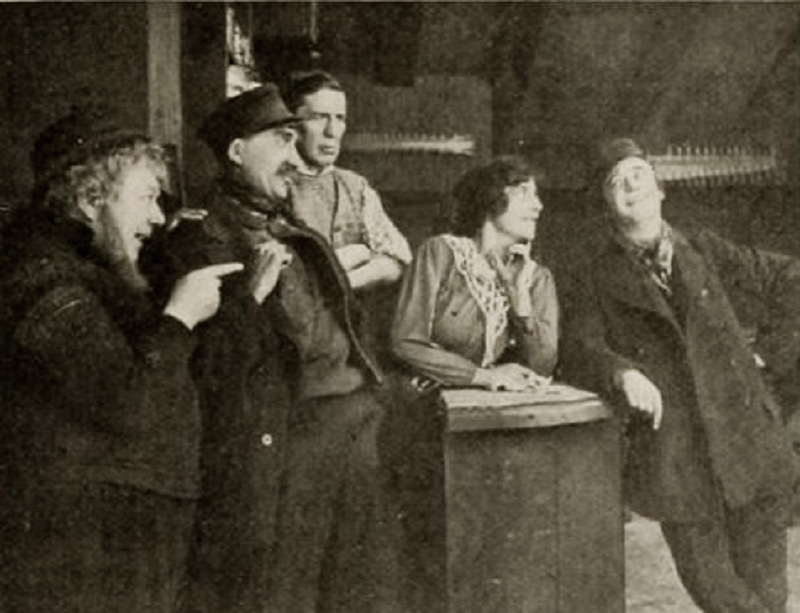
'The Third String' is a cinematic relic that pulsates with the raw nerve endings of early 20th-century storytelling. Directed by W.W. Jacobs, the film is a masterclass in visual economy, using the silent medium to amplify the protagonist’s internal disintegration. The narrative, a taut rope of tension, follows a man whose delusions of grandeur are as flimsy as the paper crown he imagines himself wearing. His charade as a boxer is less a pursuit of love and more a desperate bid to escape the suffocating mediocrity of his existence. The barmaid, portrayed with luminous ambiguity by June Gail, becomes both muse and executioner, her every glance a silent verdict on his crumbling pretense.
The film’s most audacious sequence is the climactic duel with the champion, Charles Rock. Here, Jacobs eschews the typical melodrama of boxing films to focus on the visceral horror of combat. The ring, a gilded cage, becomes a stage for the protagonist’s existential unraveling. Each punch is not just a physical assault but a symbolic erasure of his fabricated identity. The editing, though primitive by modern standards, creates a rhythm that mimics the heartbeat of a man running out of time. The audience is made to feel the sweat of desperation and the sting of reality as the protagonist’s mask cracks, revealing a face both familiar and alien.
Jacobs’ script, a deceptively simple tale, is steeped in the existential dread of the interwar period. The film’s themes—identity as performance, the fragility of social constructs—resonate with unsettling prescience. The barmaid’s role is particularly noteworthy; she embodies the silent society’s judgment, her indifference a mirror reflecting the protagonist’s self-loathing. In a society obsessed with surface, her character is a piercing reminder that the soul cannot be caged by costumes or bravado.
Comparisons to 'The Better Man' (1926) are inevitable, as both films dissect the masculine ego through boxing. Yet 'The Third String' diverges by refusing to offer redemption. Where 'The Better Man' tempers its critique with a bittersweet resolution, Jacobs leaves the protagonist in a state of unresolved tension. This ambiguity is the film’s true power—it refuses to spoon-feed moral certainty, demanding instead that the audience grapple with the uncomfortable truth that some lies cannot be undone.
The performances are a silent film’s triumph. Charles Rock, as the champion, is a statue of menace, his every movement imbued with the authority of inevitability. His presence is a gothic shadow over the protagonist’s farce, a reminder of the brute reality that deception cannot outlast. June Gail’s barmaid, meanwhile, is a study in restraint. Her eyes, wide and unblinking, hold the weight of a thousand unspoken judgments. In a silent film, the eyes are the only language, and Gail uses them to devastating effect.
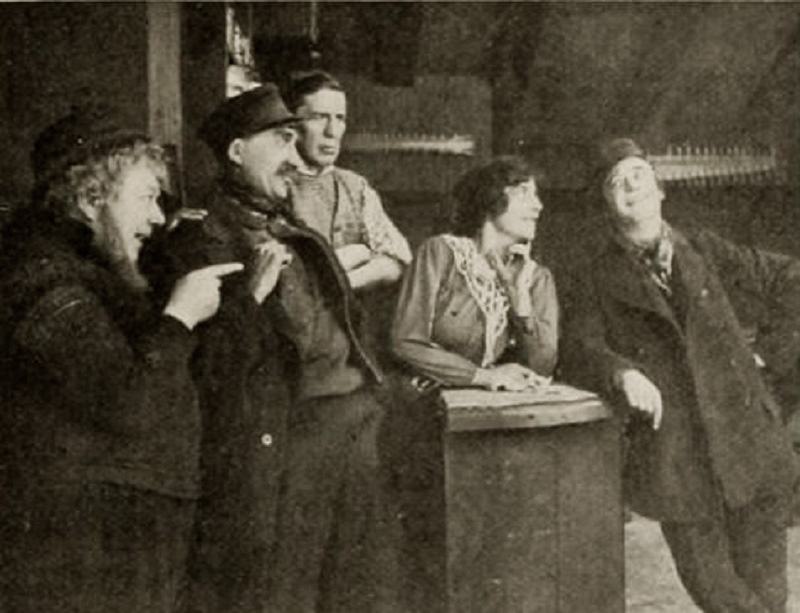
The film’s visual palette, though monochromatic, is rich in metaphor. The boxing ring, a recurring motif, is framed as both a sanctuary and a tomb. The lighting, stark and unyielding, creates a chiaroscuro effect that mirrors the protagonist’s inner conflict. Shadows cling to him like a second skin, while the ring’s ropes—those titular third strings—are both a lifeline and a noose. Jacobs’ use of space is meticulous; the barmaid’s tavern becomes a prison of the protagonist’s own making, its doors as impenetrable as his lies.
In the context of silent cinema, 'The Third String' is a rare gem. It avoids the slapstick excesses of many contemporaries, instead embracing a somber, almost operatic tone. The absence of dialogue forces the audience to confront the rawest emotions—the protagonist’s panic, the barmaid’s pity, the champion’s disdain—all conveyed through expression and gesture. This economy of communication is the film’s greatest strength, a testament to the artistry of the silent era.
For modern viewers, the film is a stark reminder of the timeless human condition. The protagonist’s journey is not a narrative of triumph but a descent into self-awareness, a journey that ends not with a moral epiphany but a haunting silence. In this, 'The Third String' echoes the works of Dostoevsky or Camus, where the search for meaning is as futile as it is inevitable.
Technically, the film’s limitations are its triumphs. The lack of synchronized sound allows for a pure focus on visual storytelling. The editing, though rudimentary, builds a rhythm that mirrors the protagonist’s heartbeat—erratic, desperate, and ultimately still. The cinematography, with its long takes and close-ups, captures the micro-expressions that define a character’s soul.
In conclusion, 'The Third String' is a film that demands to be seen not just for its historical significance but for its unflinching exploration of identity. It is a work that transcends its era, offering a mirror to modern audiences struggling with authenticity in an age of performative culture. For cinephiles, it is an essential text in the canon of silent cinema, a film that lingers like a scar, both beautiful and painful.
IMDb —
1926
Community
Log in to comment.