DbcultAccessing Vault...
6.8/10
Senior Film Conservator
A definitive 6.8/10 rating for a film that redefined the boundaries of cult cinema. Before Breakfast remains a cornerstone of transgressive art.
The early days of cinema, particularly the silent era, were a veritable crucible for comedic talent, a period where physical prowess and expressive pantomime reigned supreme. Among the luminaries who etched their names into the annals of this golden age was 'Snub' Pollard, a master of the bewildered expression and the elegantly executed pratfall. His work in films like 'Before Breakfast' offers a fascinating glimpse into the foundational grammar of screen comedy, a language that, despite its lack of spoken dialogue, communicates with an astonishing clarity and universal appeal. This particular offering, while perhaps not as widely celebrated as the grander epics of Keaton or Chaplin, provides a charming and insightful window into the everyday struggles and triumphs, albeit exaggerated for comedic effect, of a young man confronting the harsh realities of adult responsibility.
At its core, 'Before Breakfast' is a narrative spun from the timeless yarn of generational conflict and the inevitable clash between youthful idealism and paternal pragmatism. Our protagonist, portrayed with a delightful blend of wide-eyed innocence and burgeoning exasperation by 'Snub' Pollard, finds his leisurely mornings and dreamy contemplations abruptly interrupted. His father, embodying the stern voice of societal expectation, insists upon the immediate procurement of employment. This paternal decree, delivered with an air of unassailable authority, acts as the catalyst, thrusting our hero from the comfort of his domestic haven into the bewildering labyrinth of the professional world. It's a scenario instantly recognizable, a comedic mirroring of the universal rite of passage where the abstract notion of 'earning a living' collides head-on with the tangible, often messy, reality of a first job.
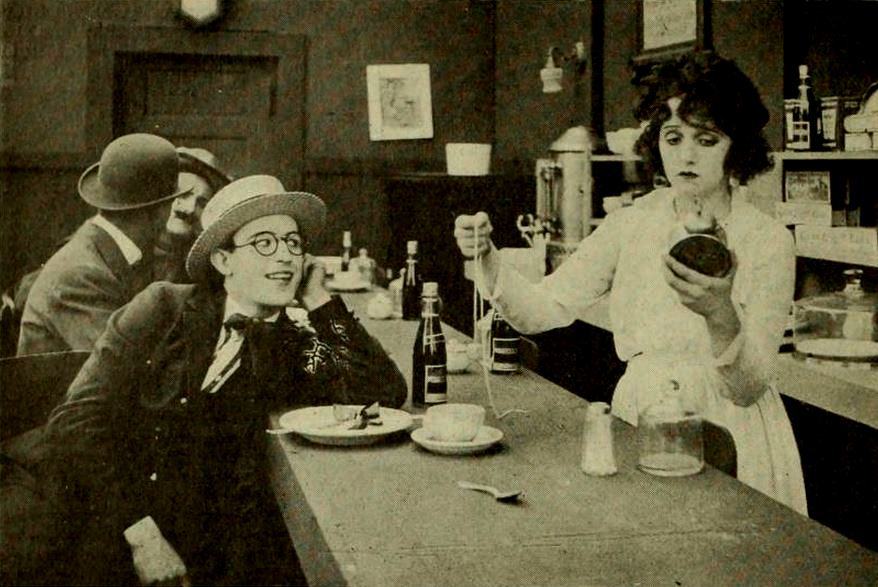
The choice of setting for this forced initiation into the workforce – a bustling restaurant – is nothing short of inspired. A restaurant, with its inherent chaos, its delicate balance of order and potential disaster, serves as the perfect stage for a series of escalating farcical events. Here, the simple act of serving a meal becomes a perilous ballet, each tray a potential instrument of comedic calamity. Pollard, with his signature blend of earnest effort and inevitable clumsiness, navigates this minefield of hungry patrons, impatient chefs, and precariously stacked crockery. The humor doesn't merely stem from the physical gags, though they are plentiful and expertly timed; it also arises from the sheer relatability of the situation. Who hasn't felt overwhelmed by a new role, or found themselves entangled in a web of trivial mishaps that snowball into grand comedic spectacles?
The ensemble cast, while perhaps not all receiving extensive screen time, contribute significantly to the film's vibrant tapestry. Molly Thompson and Bebe Daniels, both notable figures of the era, undoubtedly bring their own distinct energies to the proceedings, potentially as fellow staff members, exasperated customers, or perhaps even romantic interests who witness Pollard's escalating predicaments. The presence of Harold Lloyd, even in what might be a minor or early career role, is particularly intriguing. Lloyd, who would later become synonymous with his own brand of 'thrill comedy' and glasses-wearing everyman persona, likely brought a sharp comedic sensibility to whatever part he played, hinting at the genius that would soon captivate millions. His inclusion, however brief, serves as a fascinating historical footnote, a testament to the interconnectedness of talent within the burgeoning film industry.
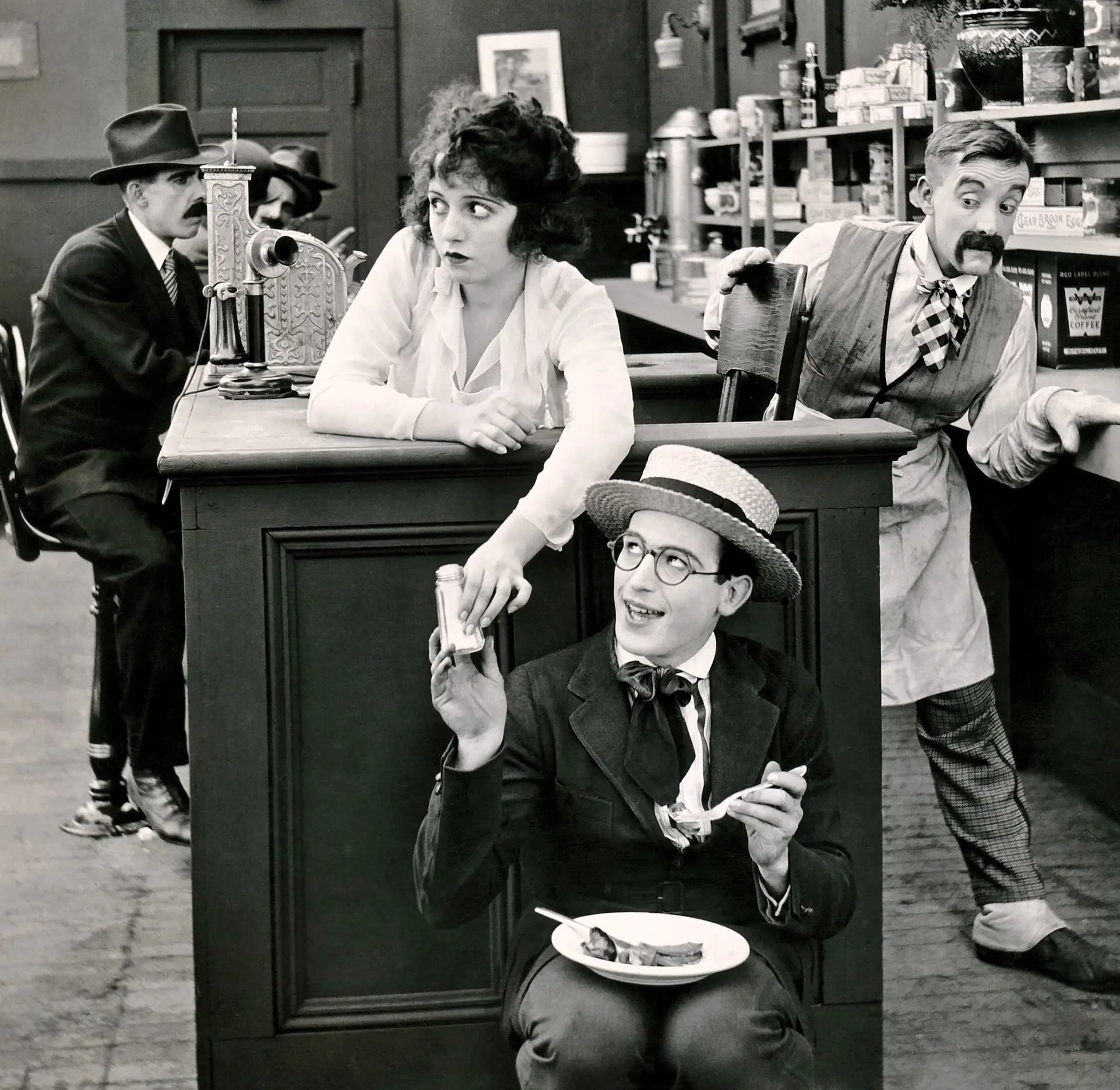
The comedic adventures that unfold within the restaurant are a masterclass in silent film ingenuity. We can easily envision a sequence where Pollard, attempting to carry an impossibly tall stack of plates, invariably loses control, sending them crashing down in a cacophony of porcelain and exasperated shouts. Or perhaps a scene where he misunderstands a complex order, leading to a bewildered customer receiving something entirely unexpected and hilariously inappropriate. There might be a close call with a swinging kitchen door, a near-miss with a tray of hot soup, or an accidental entanglement with a particularly finicky diner's clothing. Each misstep, each moment of discombobulation, is meticulously choreographed to elicit maximum laughter, relying on visual cues and physical comedy to transcend the lack of spoken dialogue. The film doesn't just show him having 'funny adventures'; it immerses the viewer in the palpable tension and release of these escalating predicaments, making every dropped fork or spilled drink a moment of genuine comedic triumph.
The film's exploration of themes is surprisingly robust for a short comedy. Beyond the obvious humor, there's a subtle commentary on the dignity of labor, or perhaps more accurately, the indignity of forced labor. Pollard’s character, initially resistant, slowly but surely becomes embroiled in the rhythm of his new reality, even as he struggles to master its intricacies. This transformation, however slight, speaks to the universal experience of adapting to new circumstances, of finding one's footing in unfamiliar territory. It's a comedic take on the 'pull yourself up by your bootstraps' mentality prevalent in the era, gently poking fun at the earnestness of such demands while still acknowledging the necessity of work. In a broader sense, it touches upon the societal expectation for young men to transition from carefree youth to responsible adulthood, a pressure that resonates even today.
Comparing 'Before Breakfast' to other films of its time helps to contextualize its place in cinematic history. While not as grand in scope as a social commentary like Vanity Fair, which dissects class and ambition with dramatic gravitas, 'Before Breakfast' offers its own lighthearted take on societal pressures. The protagonist's journey of being forced into a new life path, albeit for comedic ends, finds a distant echo in the more serious explorations of destiny found in films like Threads of Fate, where characters grapple with forces beyond their control. Here, fate is less about cosmic design and more about a father's stern command, yet the underlying theme of an individual's agency being challenged remains.
The film's comedic style also draws interesting parallels. The physical comedy, the escalating mishaps in a professional setting, might remind viewers of the structured chaos seen in later, more elaborate comedies, though 'Before Breakfast' maintains a charming, almost innocent simplicity. It's a precursor to the intricate dance of confusion and resolution that would define much of silent and early sound comedy. The film’s focus on a single, relatable predicament – getting a job – allows for a concentrated exploration of comedic potential, transforming mundane tasks into opportunities for laughter. The art of silent film comedy often lay in taking the ordinary and rendering it extraordinary through exaggeration and ingenious staging, a principle 'Before Breakfast' clearly embraces.
The film’s portrayal of work, even in its comedic exaggeration, also offers a fascinating counterpoint to more earnest depictions of duty and societal contribution found in films like Doing Their Bit. While the latter might focus on patriotic service or significant social contributions, 'Before Breakfast' zeroes in on the personal, often awkward, struggle of simply existing within the economic machinery. The transition from idleness to employment, however reluctantly, is a mini-saga of self-discovery, demonstrating that even in the most menial of tasks, character can be forged and comedic gold unearthed. It’s a testament to the versatility of early cinema that it could address such varied facets of human experience, from grand narratives of war and sacrifice to the intimate, humorous foibles of daily life.
Moreover, the film's depiction of a young man thrust into a new social role, albeit a humble one, bears a thematic resonance with films exploring upward (or sideways) mobility, such as The Sudden Gentleman. While Pollard's character isn't necessarily aiming for high society, his forced entry into the working class represents a significant shift in identity and social standing. The humor often derives from the incongruity between his previous state of leisure and his current state of servitude, a common trope in comedies that explore class dynamics. The film cleverly uses this contrast to amplify the comedic effect of his struggles, making his every clumsy move a commentary on the sometimes-unforgiving nature of societal expectations.
The craftsmanship of 'Before Breakfast', typical of its era, relies heavily on visual storytelling. The sets, though likely simple, are effectively designed to facilitate the rapid-fire gags. The editing would have been precise, cutting between wide shots that establish the chaotic environment and close-ups that emphasize Pollard's priceless expressions of dismay or determination. The use of intertitles, while not explicitly detailed in the plot, would have been crucial for conveying dialogue, advancing the plot, and adding punchlines, acting as the narrative glue for the visual spectacle. These elements, combined with the energetic performances, create a cohesive and highly entertaining experience that transcends the limitations of its format.
In reflecting on the broader context of work in early cinema, one might consider films like Our Mrs. McChesney, which, though perhaps more dramatic, also delves into the challenges faced by individuals in professional capacities, particularly women. While 'Before Breakfast' approaches labor from a distinctly masculine, comedic angle, both films touch upon the human experience of earning a living, highlighting the societal expectations and personal sacrifices involved. The beauty of these early cinematic explorations is their ability to capture the zeitgeist of their respective periods, offering both escapism and subtle reflection on the prevailing social conditions.
The enduring appeal of 'Before Breakfast', and indeed many silent comedies, lies in its universal resonance. The struggle against authority, the awkwardness of new experiences, the desire for personal freedom versus the demands of reality – these are themes that transcend time and cultural barriers. 'Snub' Pollard, through his expressive face and agile body, manages to convey a rich spectrum of human emotion, from lazy contentment to utter exasperation, from bumbling incompetence to a surprising flash of resourcefulness. His performance is a masterclass in non-verbal communication, a skill that was paramount in the silent era and remains a powerful tool in storytelling even today.
Ultimately, 'Before Breakfast' is more than just a series of gags; it's a delightful snapshot of a particular moment in cinematic history, a testament to the ingenuity of early filmmakers and performers. It reminds us that laughter often springs from our shared vulnerabilities and the absurdities of the human condition. It’s a film that, despite its age and brevity, continues to charm and entertain, proving that a well-crafted comedic premise, executed with skill and heart, possesses a timeless quality. For anyone seeking a dose of classic slapstick humor infused with a touch of relatable human drama, this film offers a wonderful, albeit chaotic, start to the day.
IMDb —
1931
Community
Log in to comment.